

UiFlow Tutorial
UiFlow1 Quick Start
2. Firmware & Program 1.0
UiFlow1 Development Guide
Project Management
Use LTE network
UiFlow1 Blockly
Event
UI
Unit
Module
Hat
UiFlow2 Quick Start
2. Firmware & Program 2.0
UiFlow2 Development Guide
UI Editor
Device Security & Sharing
UiFlow2 Video Column
PowerHub: Flash Firmware & Run Code
1. UiFlow2 Firmware Burning
Refer to the UiFlow2 Web IDE Tutorial to learn the basic workflow of using UiFlow2 and complete the installation of the M5Burner firmware burning tool.
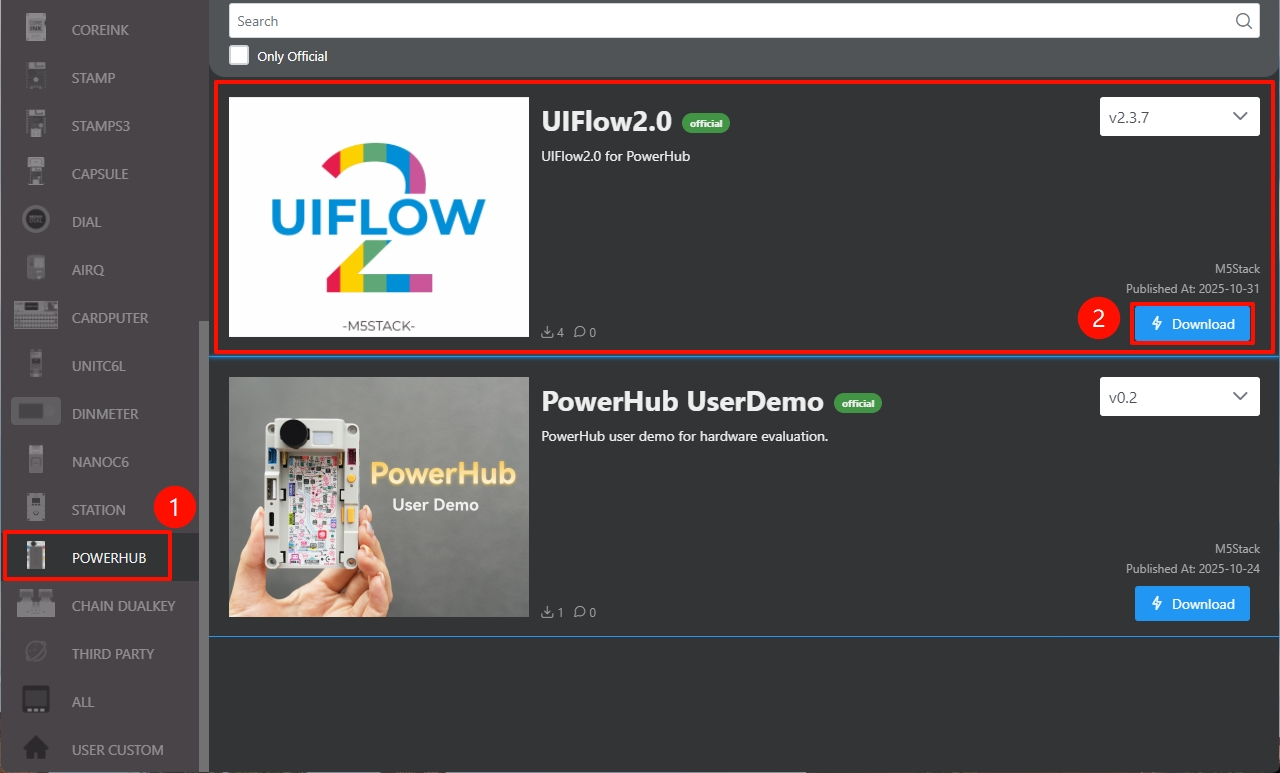
Download the firmware compatible with
PowerHubin M5Burner, as shown below.
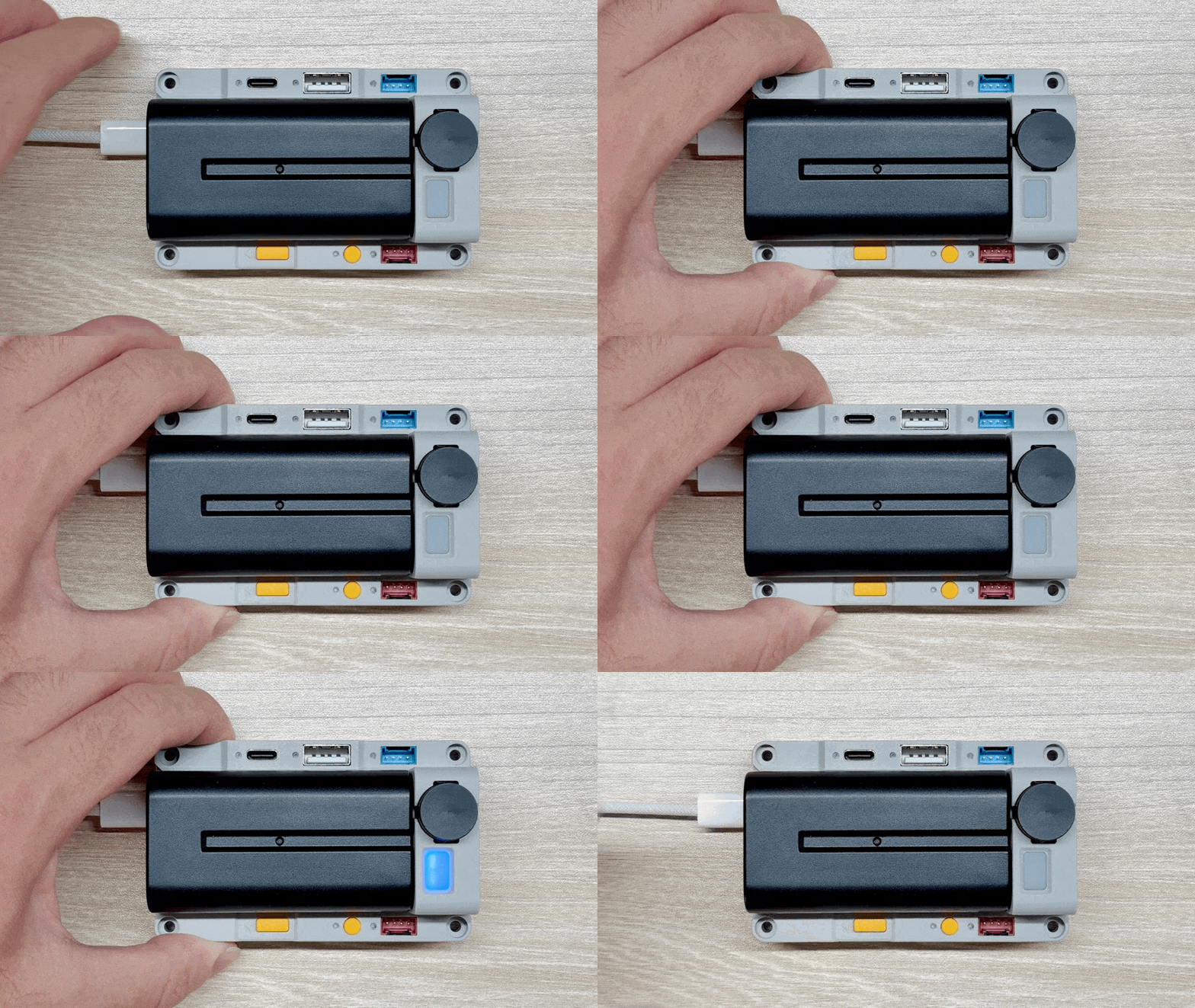
- Connect the device to the computer using a USB-C data cable. Press and hold the side BtnPWR button for 3 seconds until the indicator next to the black antenna flashes blue several times. The device will then enter download mode and wait for burning.
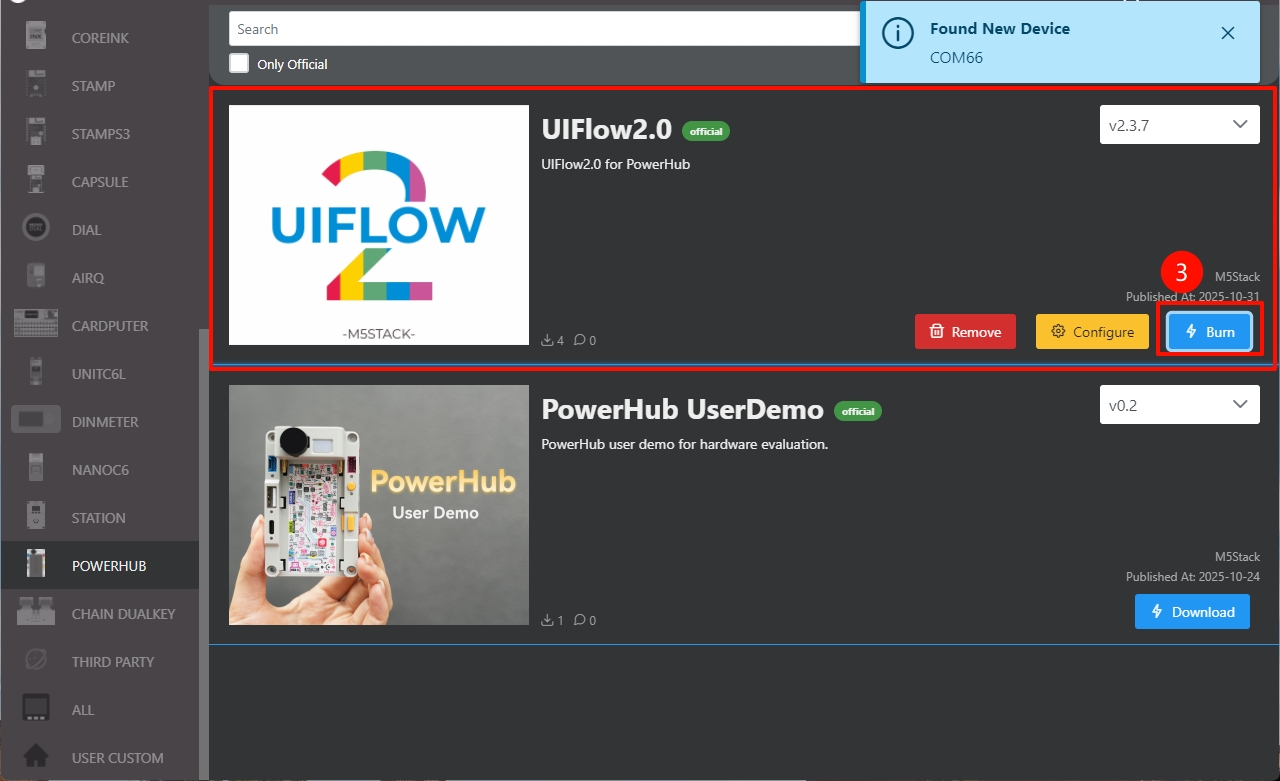
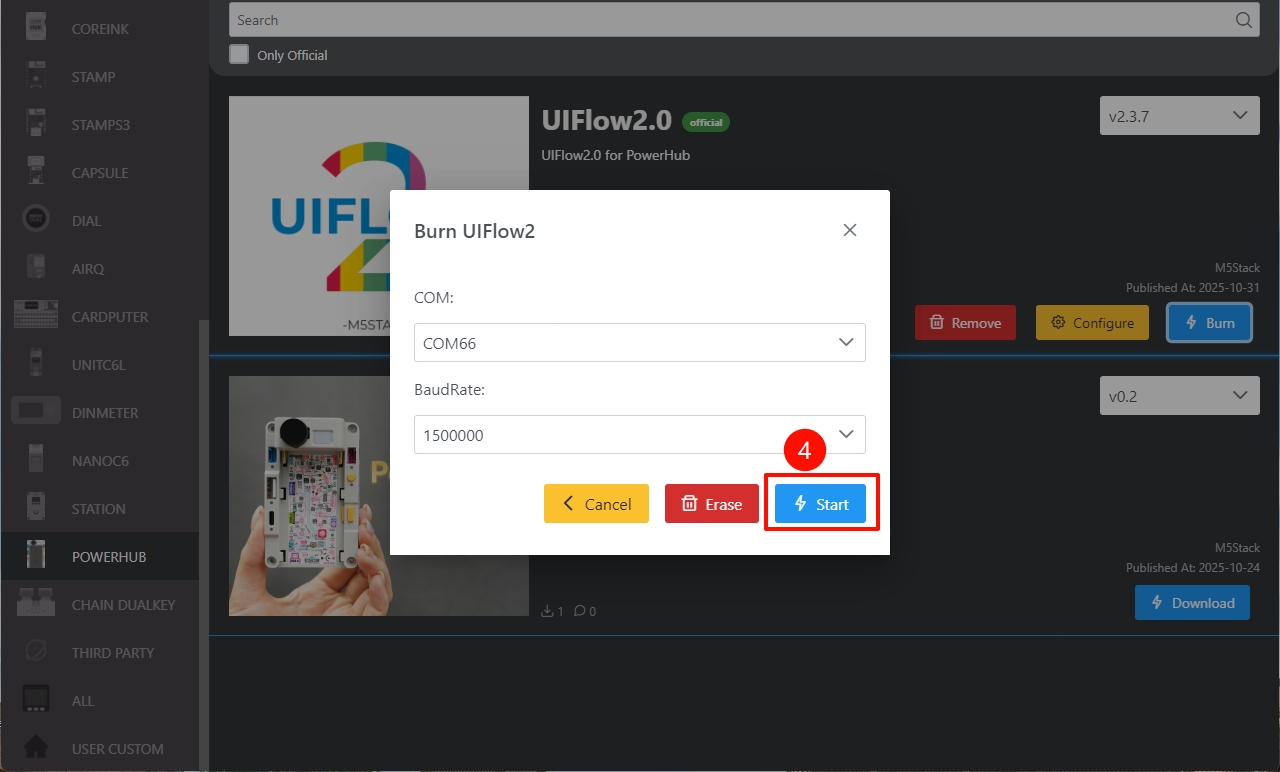
- In M5Burner, click the
Burnbutton for the corresponding firmware, select the corresponding device port, and clickStart.
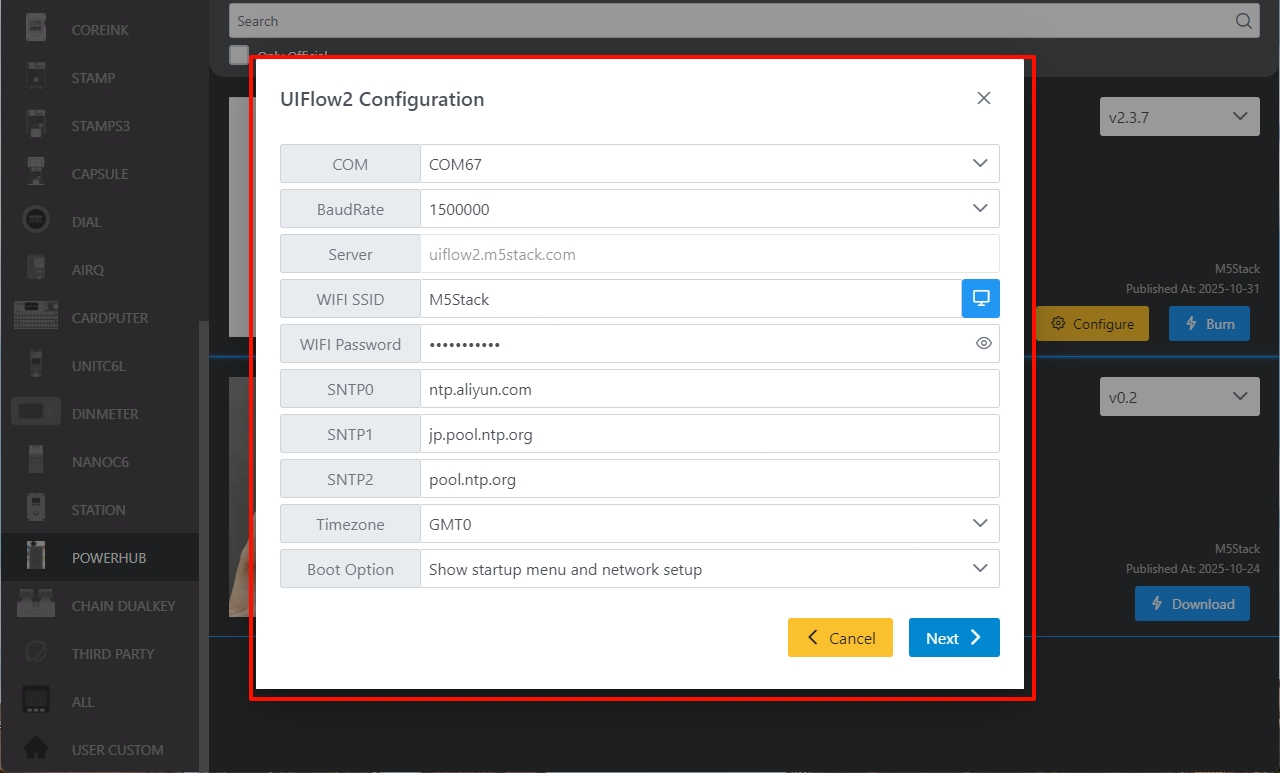
- Fill in the Wi-Fi configuration required by the device, including Wi-Fi SSID and Wi-Fi Password, as well as any other device configurations that need to be added or modified. Then click
Nextto start burning.
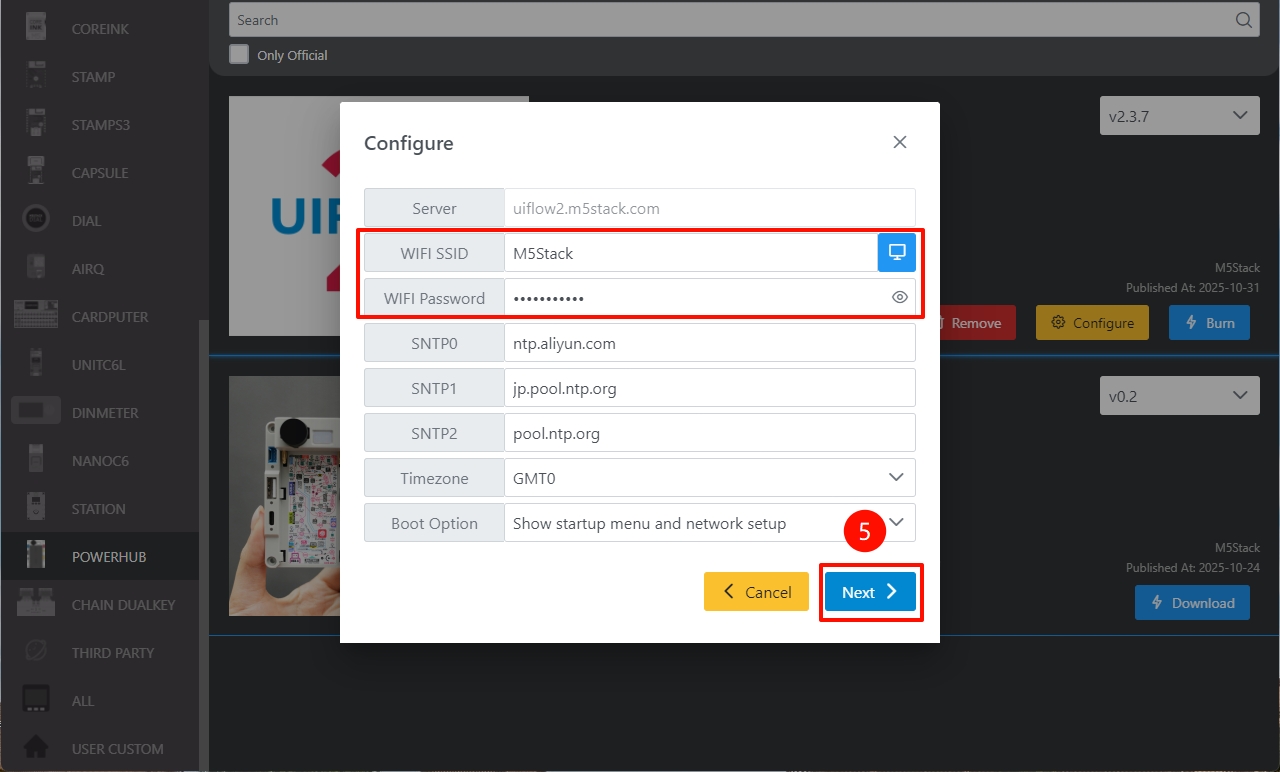
Configuration information description:
- COM: Select the serial port corresponding to the device
- BaudRate: Baud rate for serial communication
- Server: Server address that the device connects to
- WIFI SSID/WIFI Password: Wi-Fi name and password that the device connects to
- SNTP Server
- SNTP0: Alibaba Cloud NTP server (China)
- SNTP1: Japan NTP server pool
- SNTP2: Global public NTP server pool
- Timezone: Time zone setting
- Boot Option: Set the device startup mode after firmware burning is complete
- Run main.py directly: After burning is complete, directly run the program in main.py without connecting to the network or displaying the UiFlow2 startup screen
- Show startup menu and network setup: The device connects to the network, and devices with a screen will display the UiFlow2 startup screen
- Only network setup: The device only connects to the network and does not display the UiFlow2 startup screen
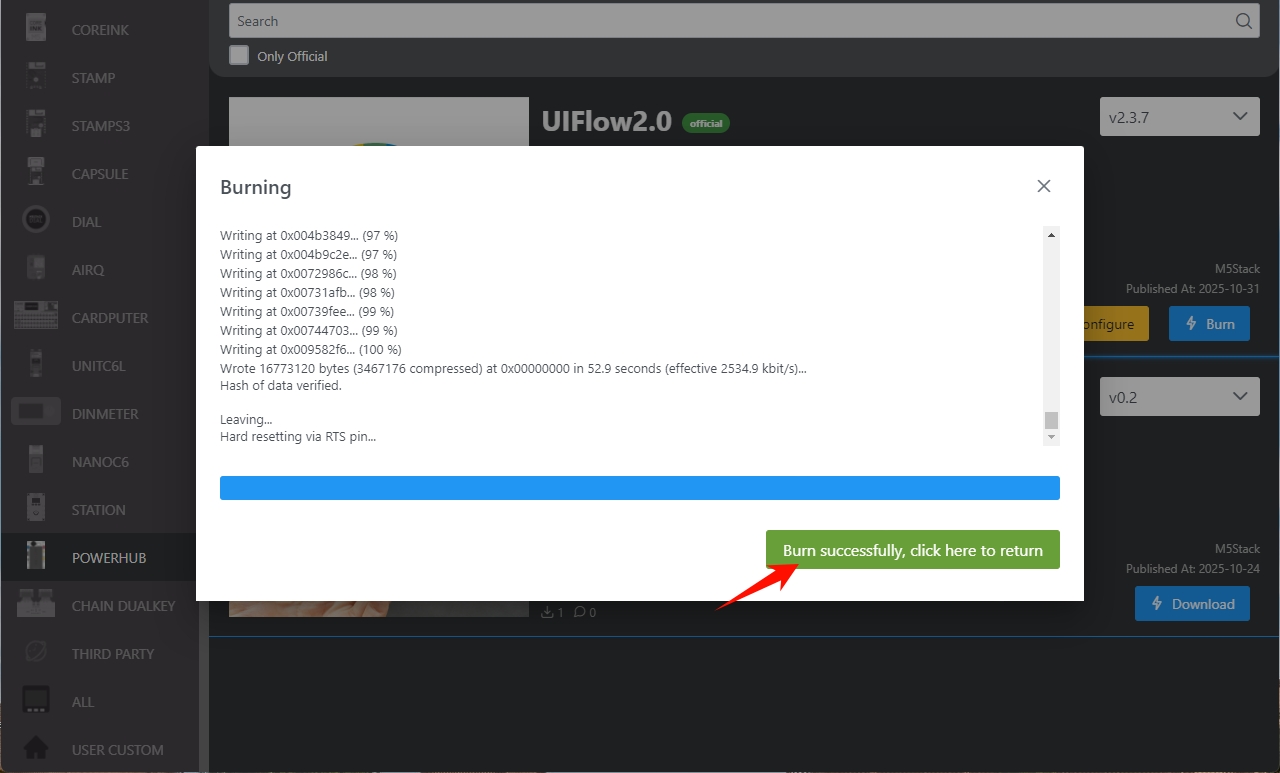
- When the prompt
Burn successfully, click here to returnappears, the burning is successful. Reset the device at this point.
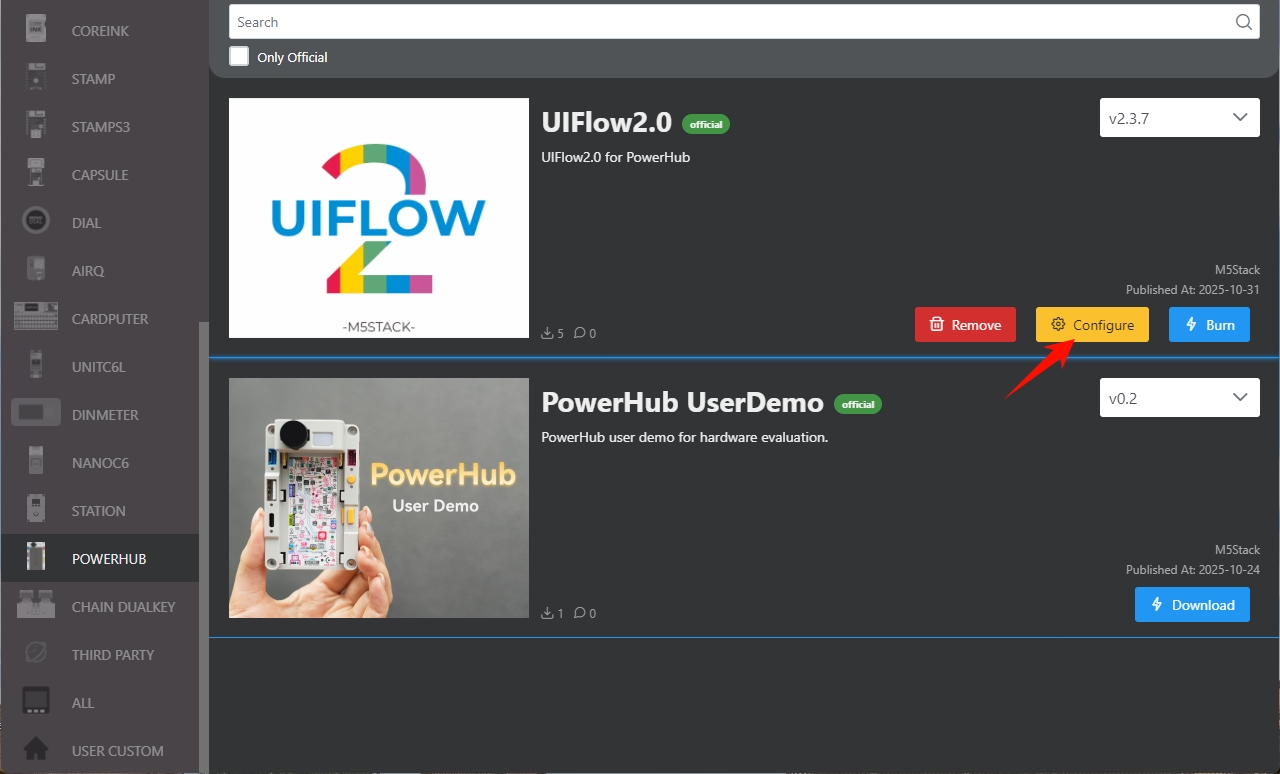
- After firmware burning is complete, if you need to modify the device configuration, keep the USB connection, restart the device, click the
Configureoption, and modify the settings according to the on-screen prompts.
2. Device Connection
The device supports connecting to UiFlow2 via Access Code (over a wireless network) or USB (wired connection to the computer) for program deployment and debugging. Refer to the following tutorial steps for details:
Access Code Wireless Connection
Visit uiflow2.m5stack.com to open the UiFlow2 Web IDE.
Make sure the device is connected to the network and obtain the
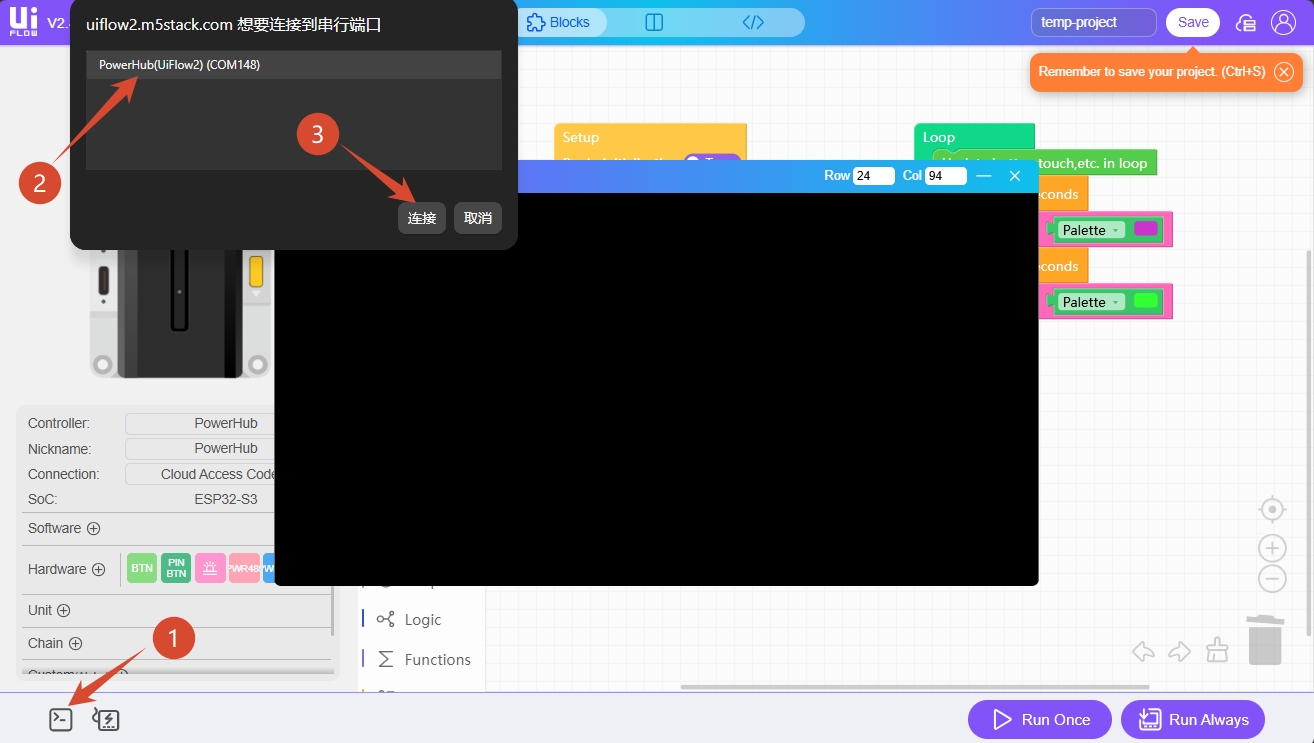
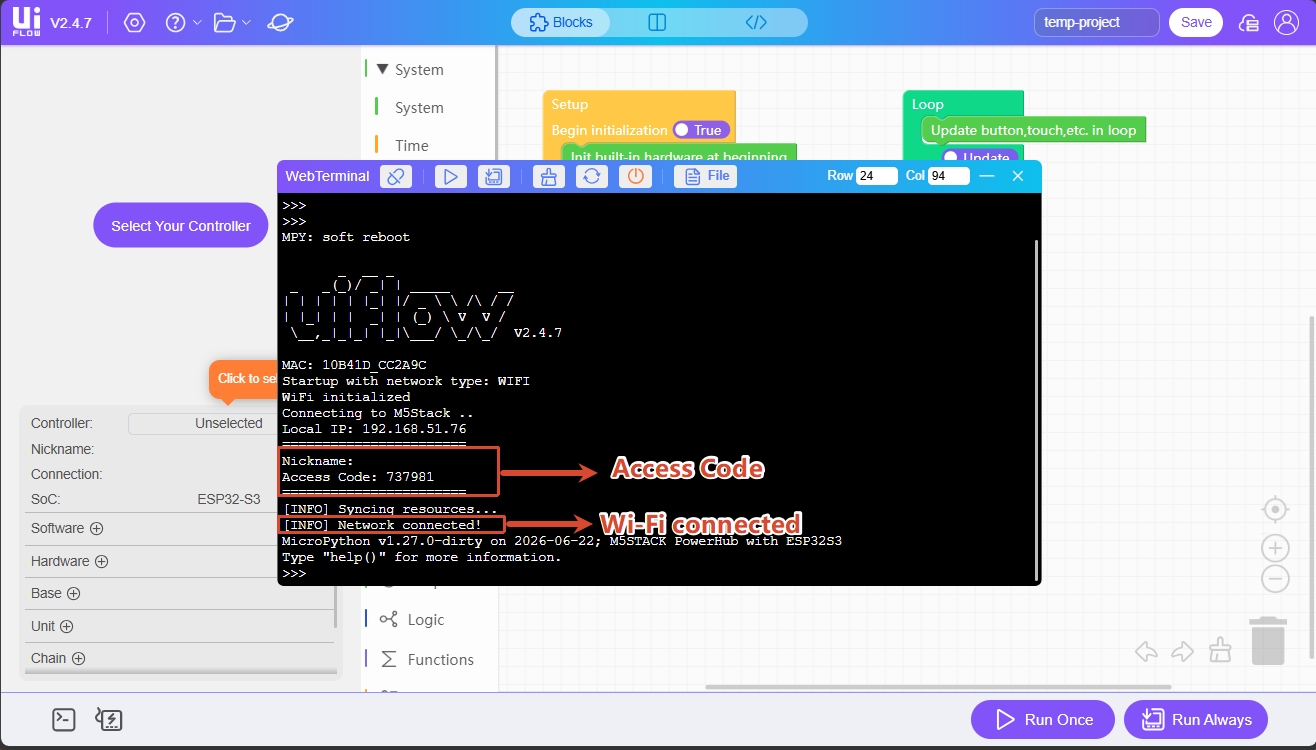
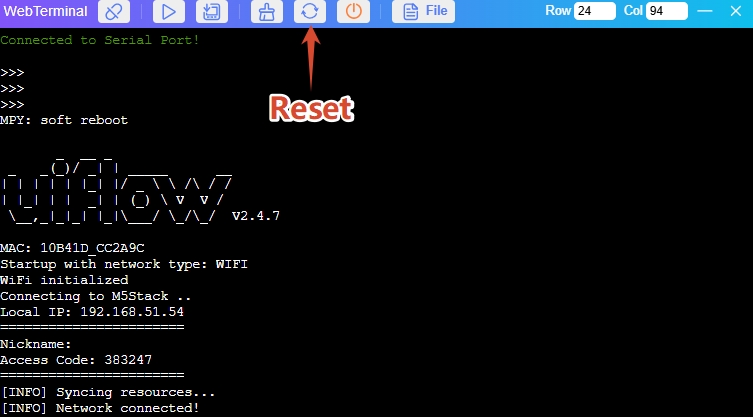
Access Code: clickWebTerminalin the lower-left corner of the interface, select the serial port ofPowerHubin the dialog box, clickConnect, and open the serial monitor. You can view the currently generated validAccess Codeand Wi-Fi connection status. (If the corresponding information is not displayed, click theSoft Resetbutton to perform a soft restart.)
- Click
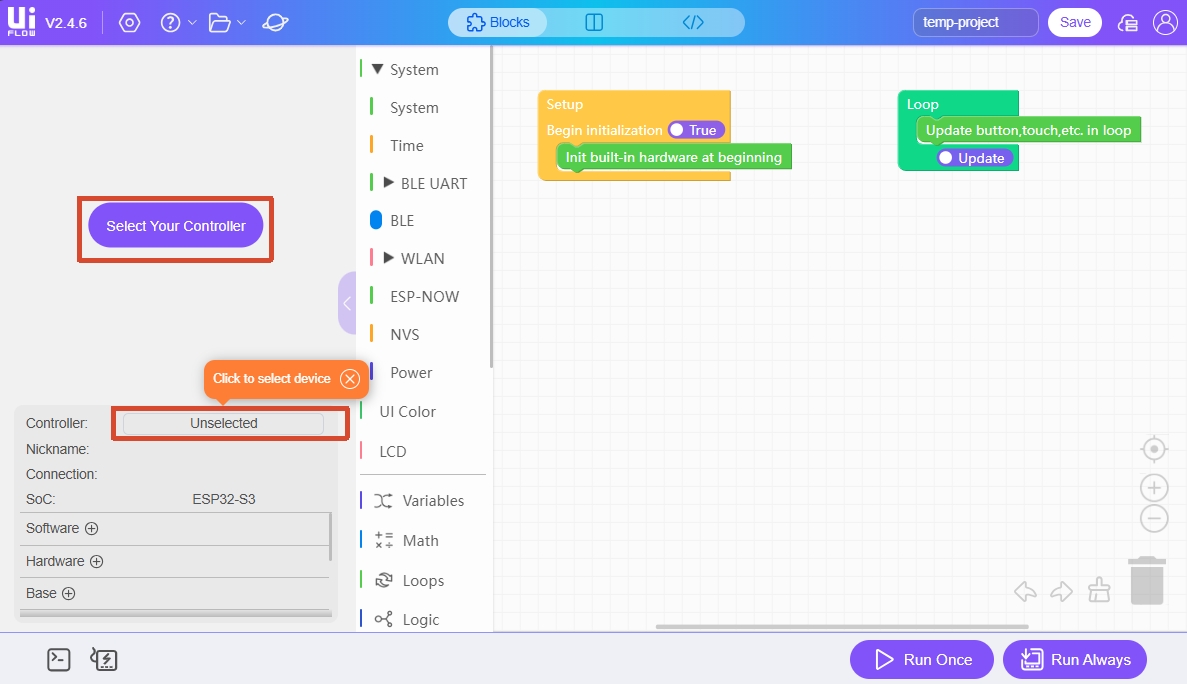
Select Your Controller(displayed when entering for the first time) or theControllerbutton on the page to enter theSelect Devicepage.
- Click
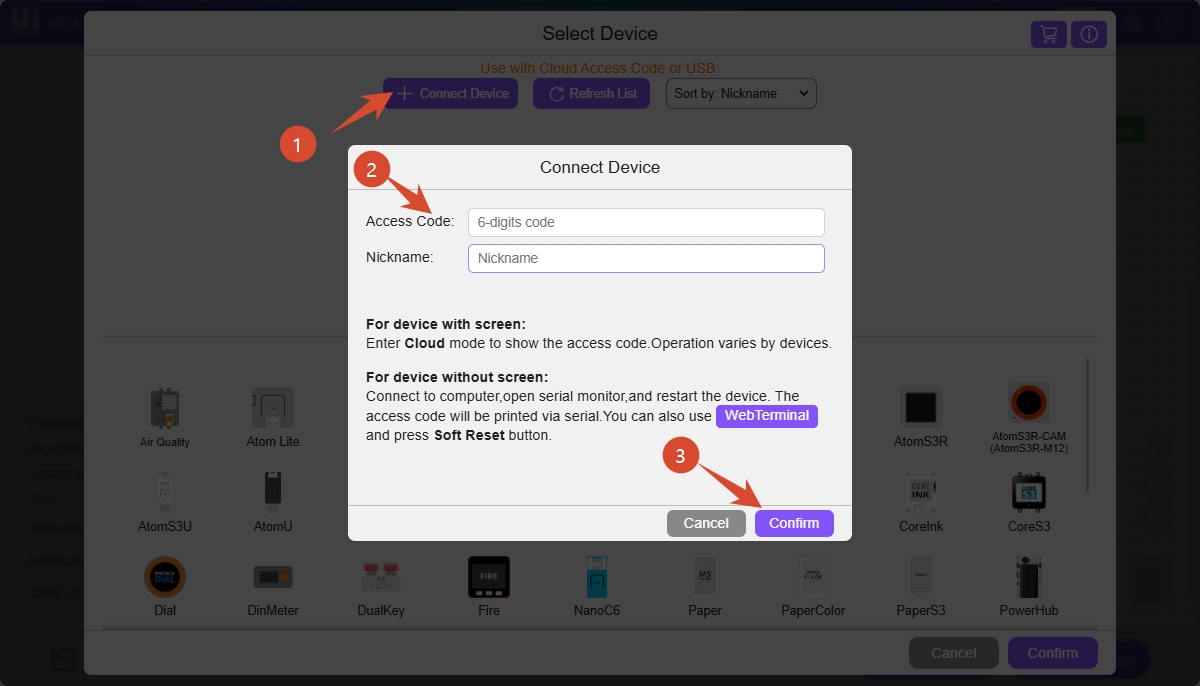
Connect Device, enter the access code and a custom device name, then clickConfirmto connectPowerHubto UiFlow2.
2. Only closing the tab, restarting the browser, logging in, or logging out of the account will not affect the existing bound pairing relationship.
3. Once the device is bound and paired by another browser, the pairing relationship in the original browser will immediately become invalid.
- On the
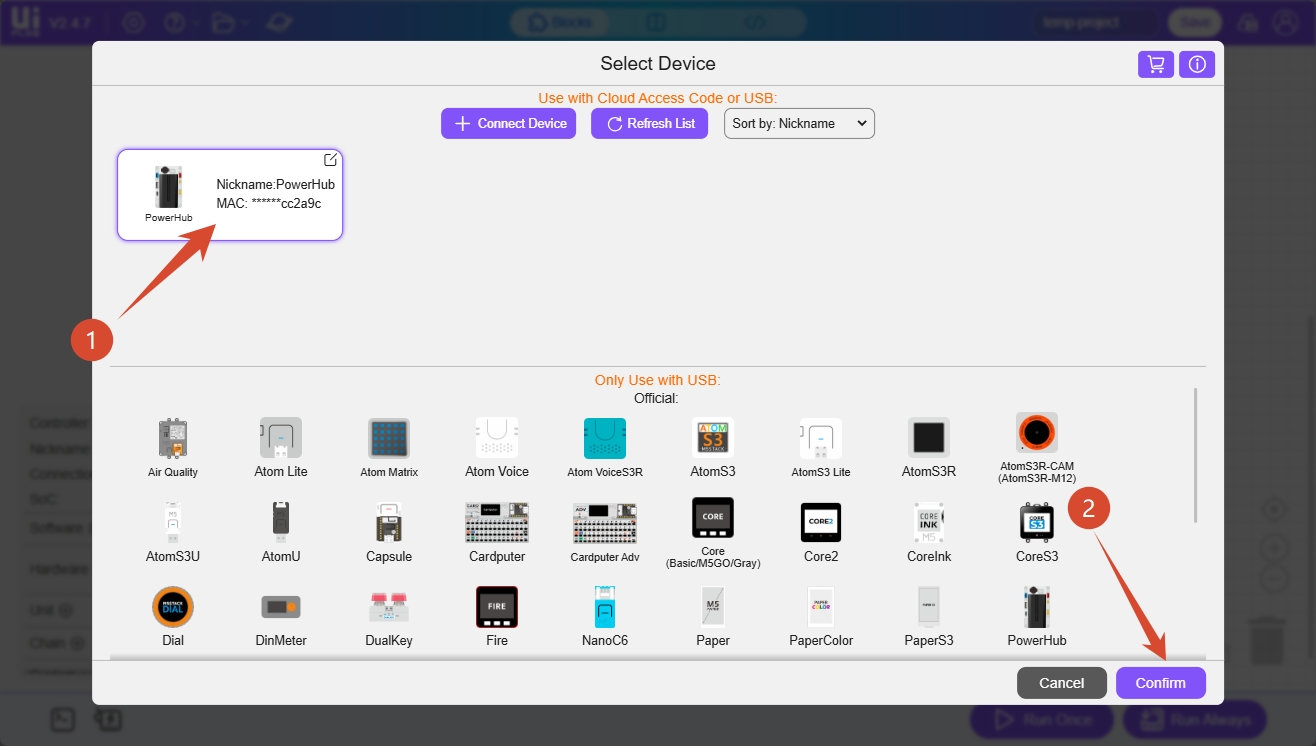
Select Devicepage, select the connectedPowerHubdevice and clickConfirmto enter the UiFlow2 programming interface.
USB Wired Connection
- Visit uiflow2.m5stack.com to open the UiFlow2 Web IDE, and connect PowerHub to the computer via a USB cable.
- Click
Select Your Controller(displayed when entering for the first time) or theControllerbutton on the page to enter theSelect Devicepage.
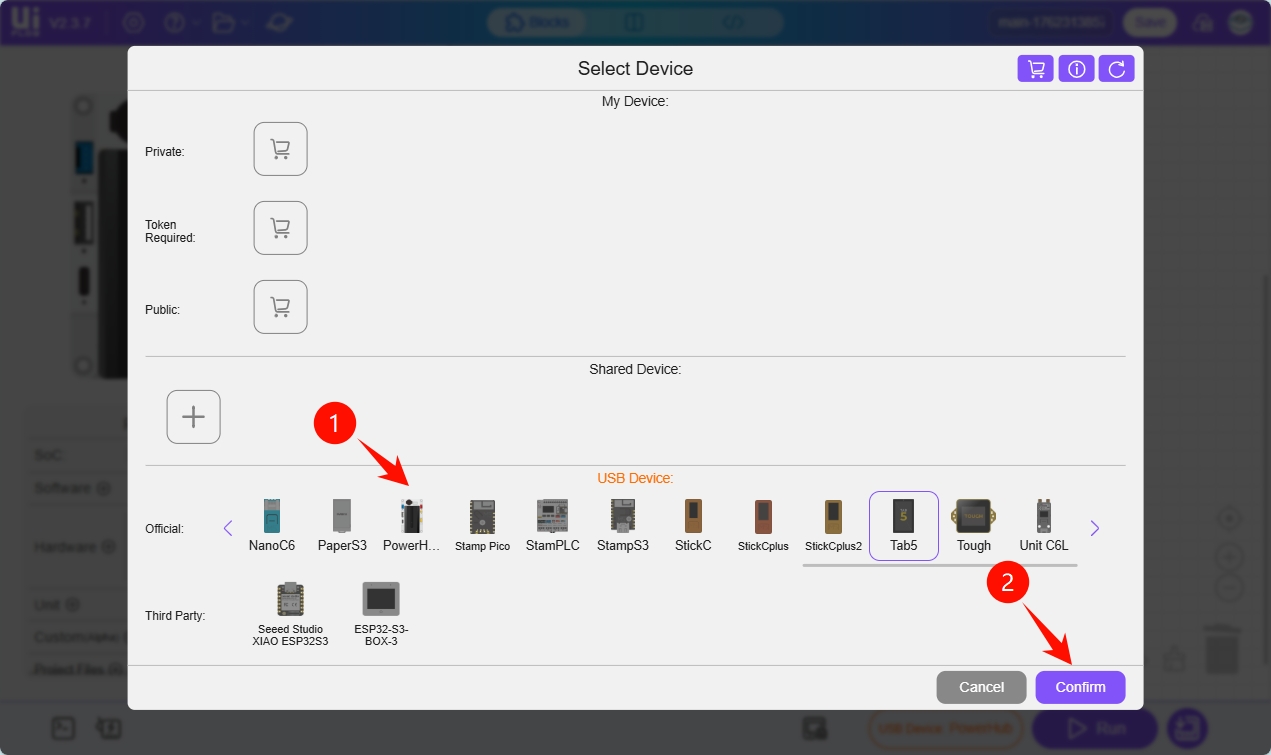
- Select the PowerHub device from the device list, then click
Confirm.
- Click the
WebTerminalbutton, select the serial port ofPowerHubin the dialog box, and clickConnect.
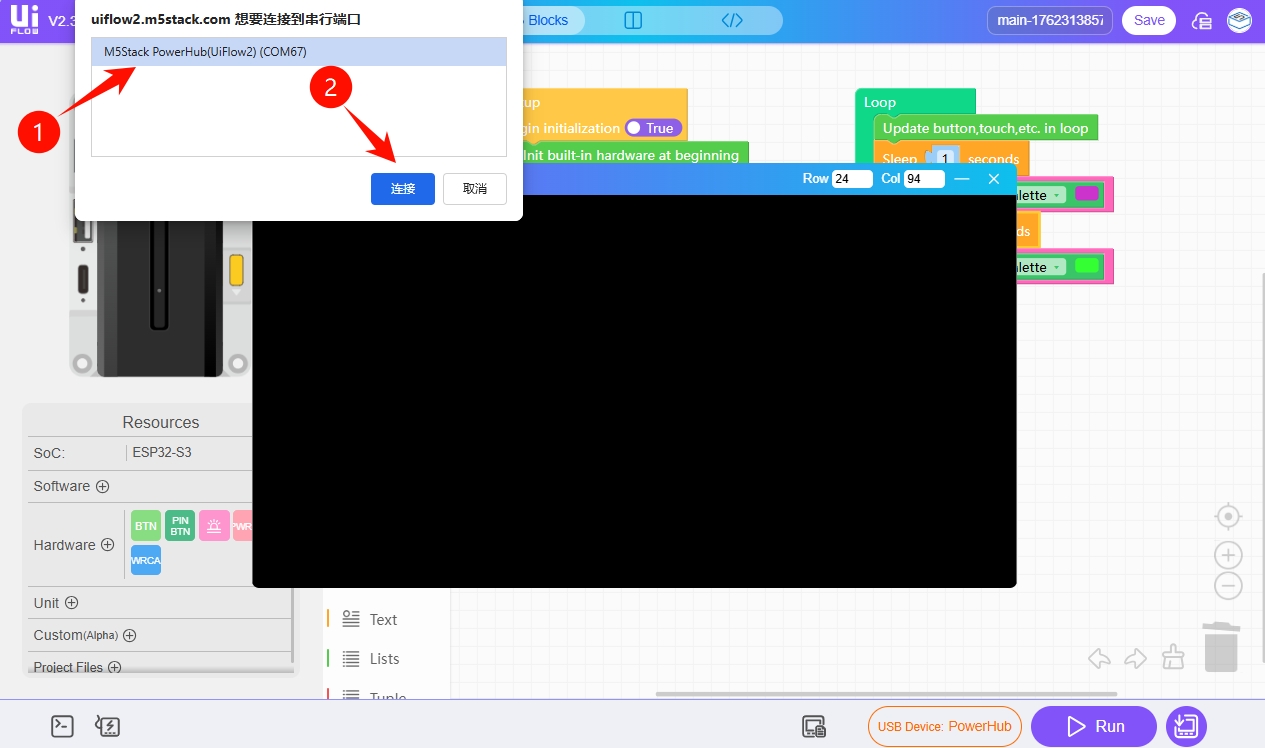
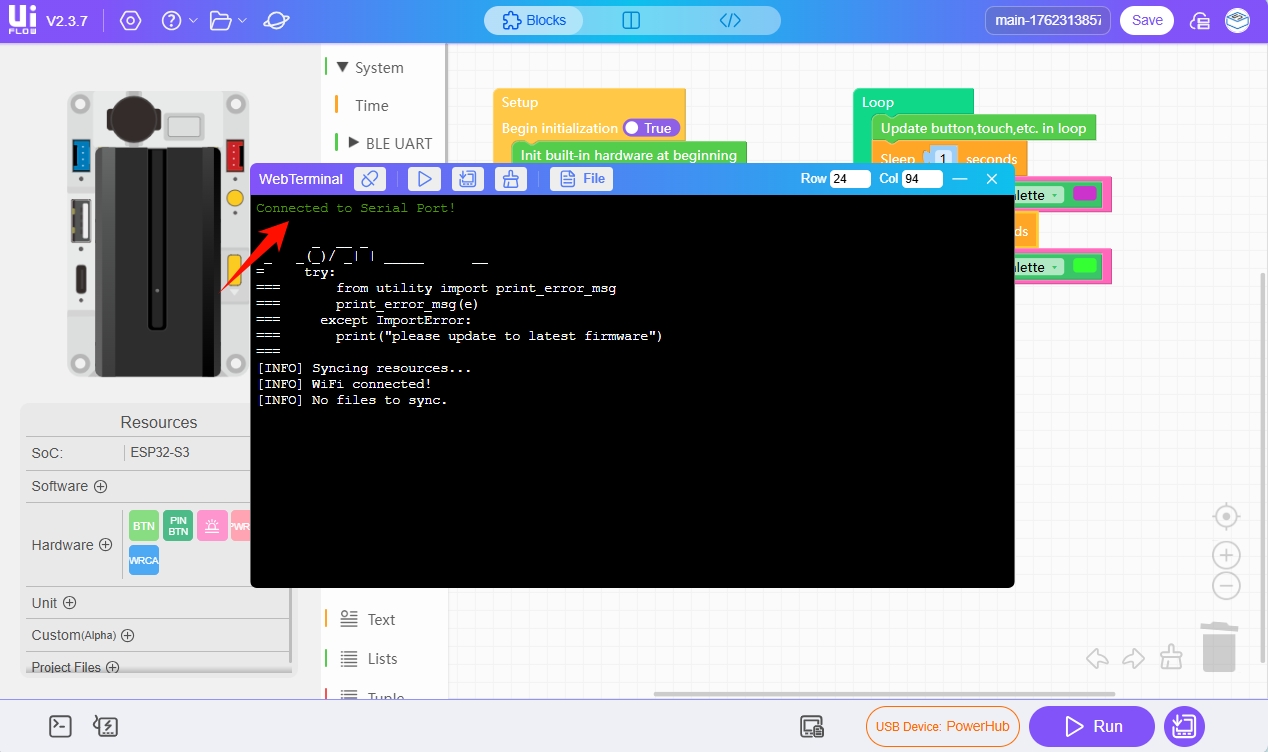
When the WebTerminal screen displays Connected to Serial Port!, the USB connection is successful.
3. Program Running and Downloading
After the device is connected to UiFlow2, you can drag Blockly blocks to edit the program.
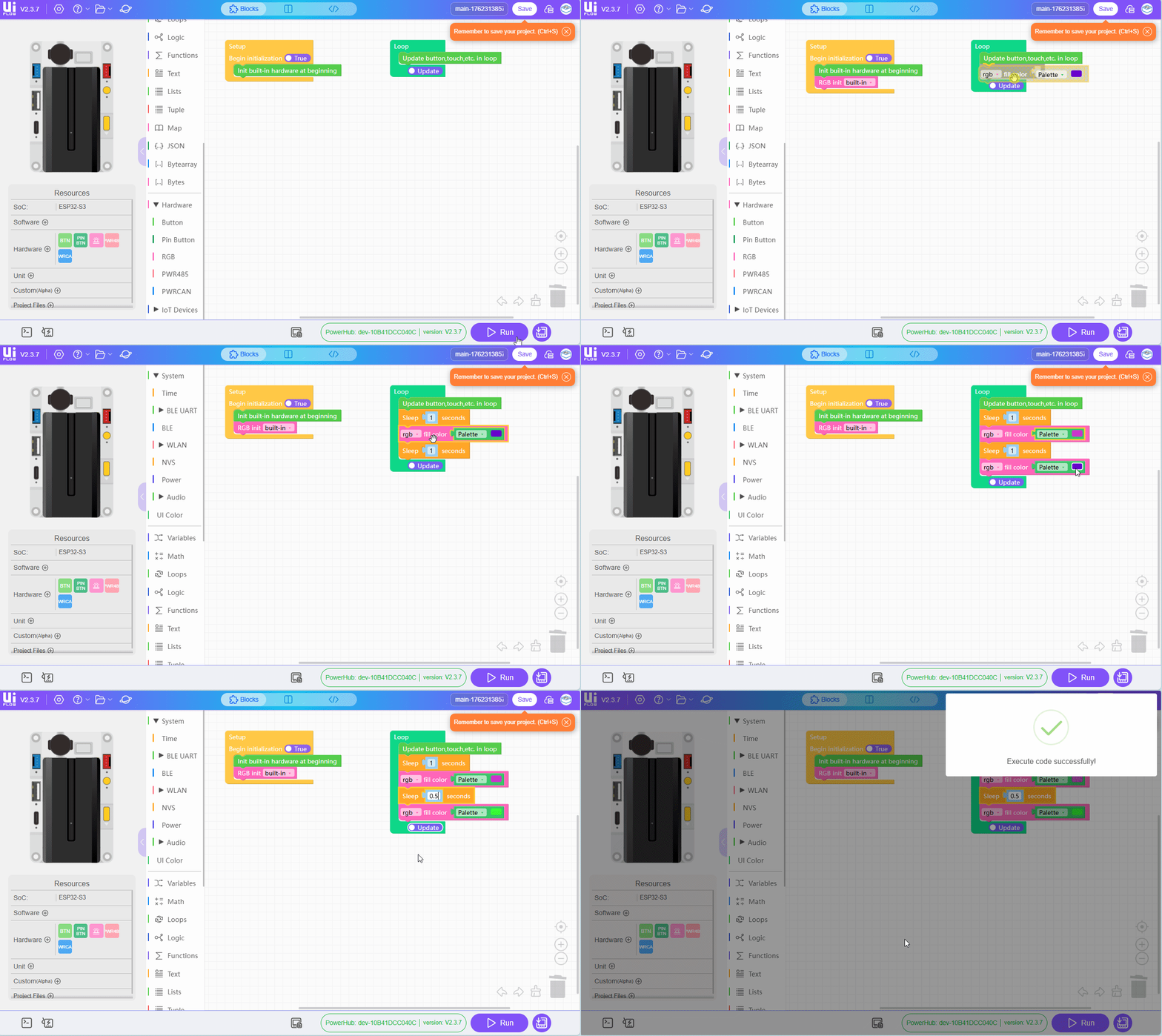
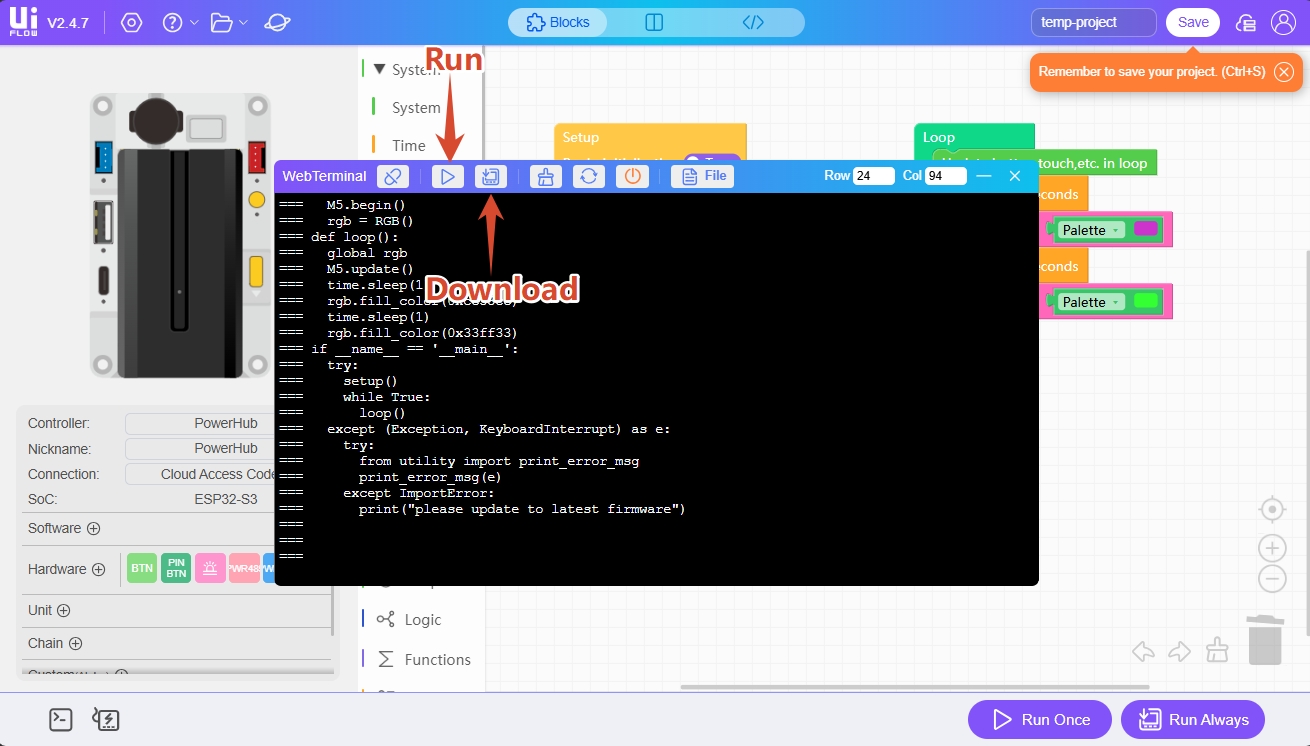
After program editing is complete, click the Run Once button in the lower-right corner of the interface to run and test the program once. Click the Run Always button to download the program to the device.
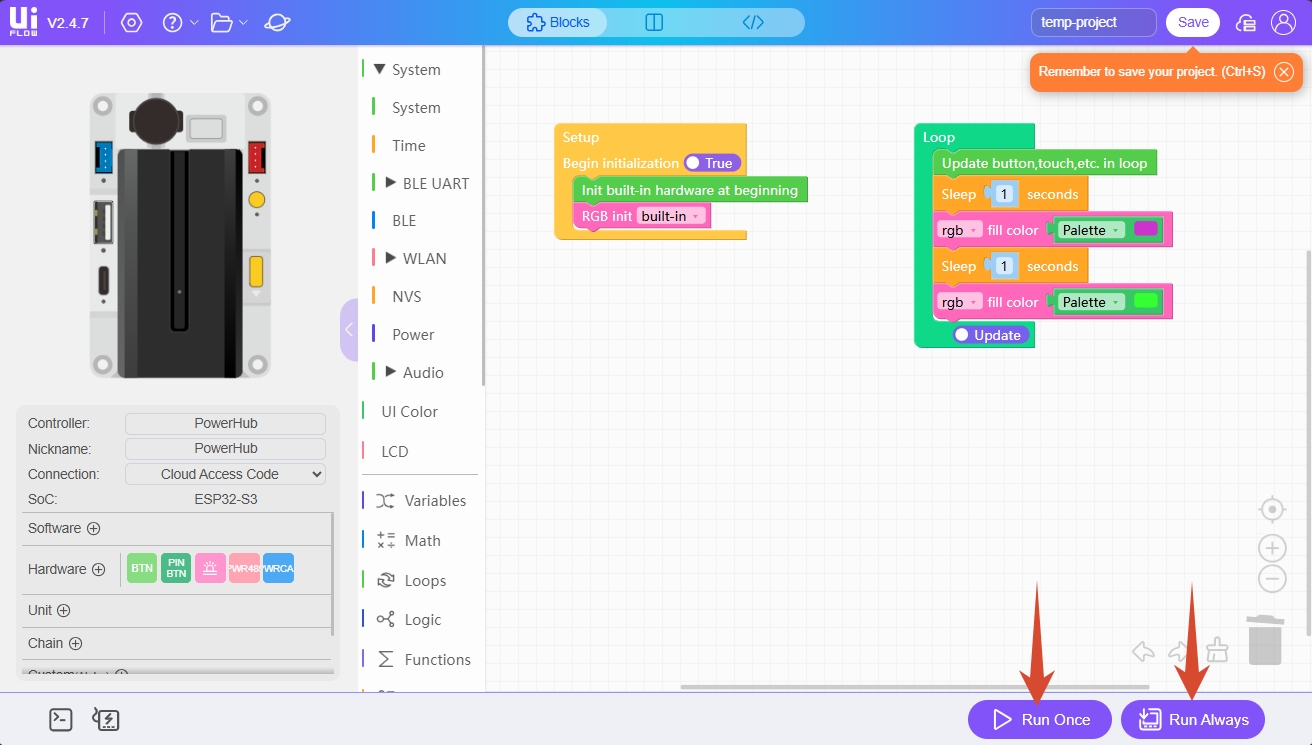
You can also run once or download the program from the WebTerminal window.