

Home Assistant
Media Player
Expansion
Sensor
PM2.5 Air Quality Kit (SHT30) Home Assistant Integration
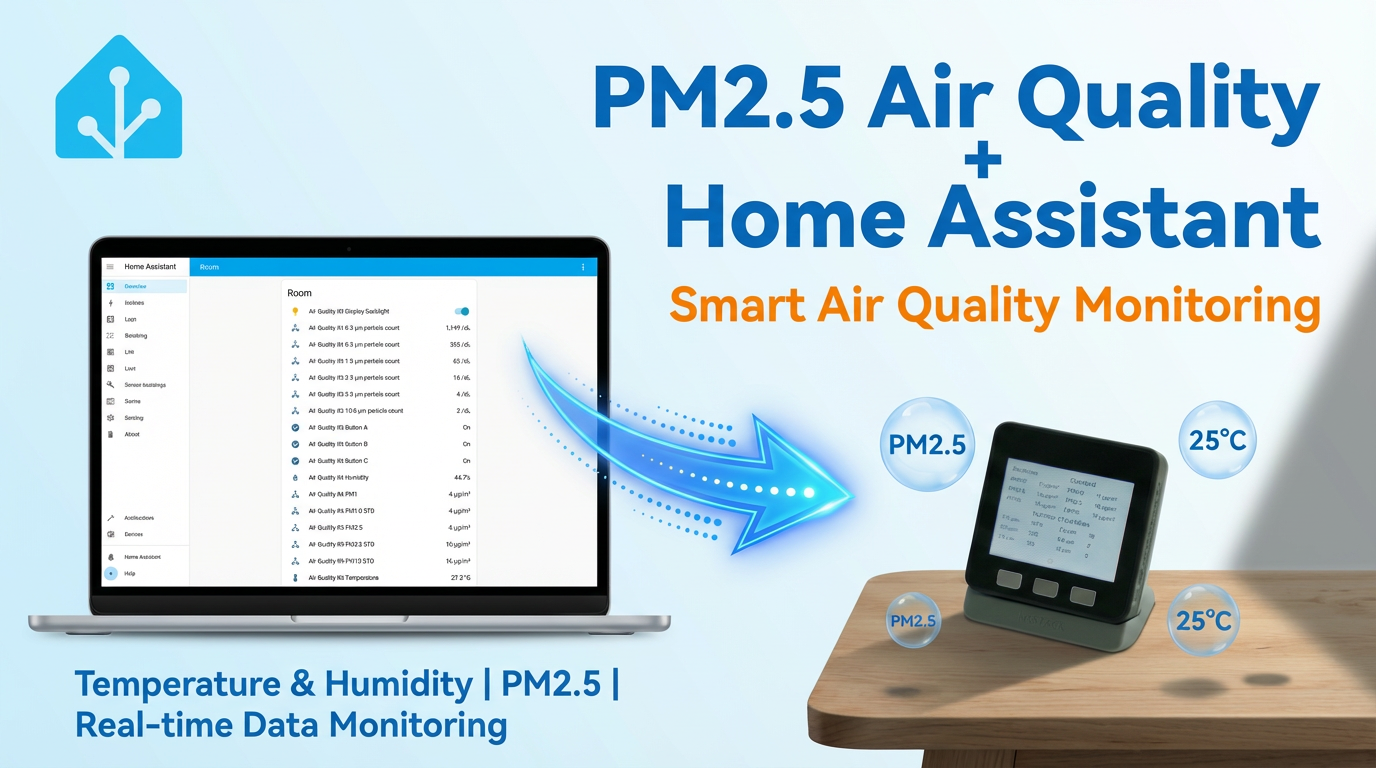
This section describes how to integrate the PM2.5 Air Quality Kit-SHT30 air quality monitoring kit with Home Assistant and display data on the LCD screen.
1. Preparation
Environment Setup
- Install Home Assistant by following the official Home Assistant documentation.
- Install the ESPHome Device Builder add-on by following the official ESPHome documentation. (Note: This tutorial is based on
ESPHome 2025.9.0. If you encounter compilation or upload issues, switch to this version for verification.)
Hardware
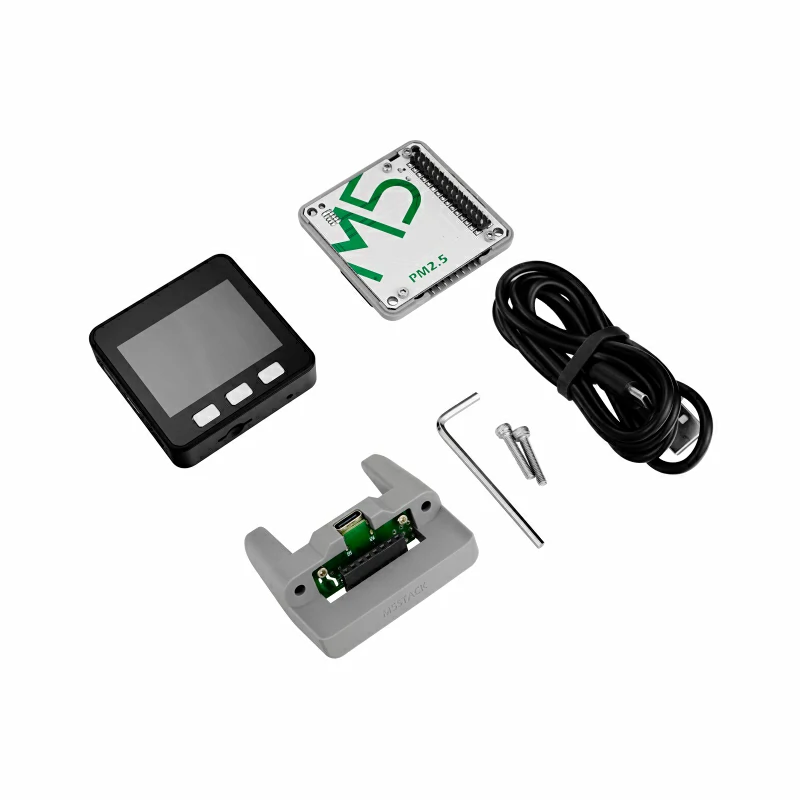
- PM2.5 Air Quality Kit-SHT30
- Home Assistant host.
References
- Sensor datasheets:
2. Online Flashing
Click the Online Flashing button below and follow the prompts to flash the firmware and configure Wi-Fi, allowing you to quickly try the PM2.5 Air Quality Kit-SHT30 with Home Assistant.
For detailed flashing and configuration instructions, see Online ESPHome Firmware Flashing and Configuration.
After completing online flashing, skip the "Firmware Compilation & Flashing" section and continue directly with 4. Getting Started.
3. Firmware Compilation & Flashing
This section explains how to recompile the project from the yaml configuration file for secondary development, feature modifications, or adding new features.
Create Device
Open ESPHome Builder, click
NEW DEVICEin the bottom right corner to create a new device.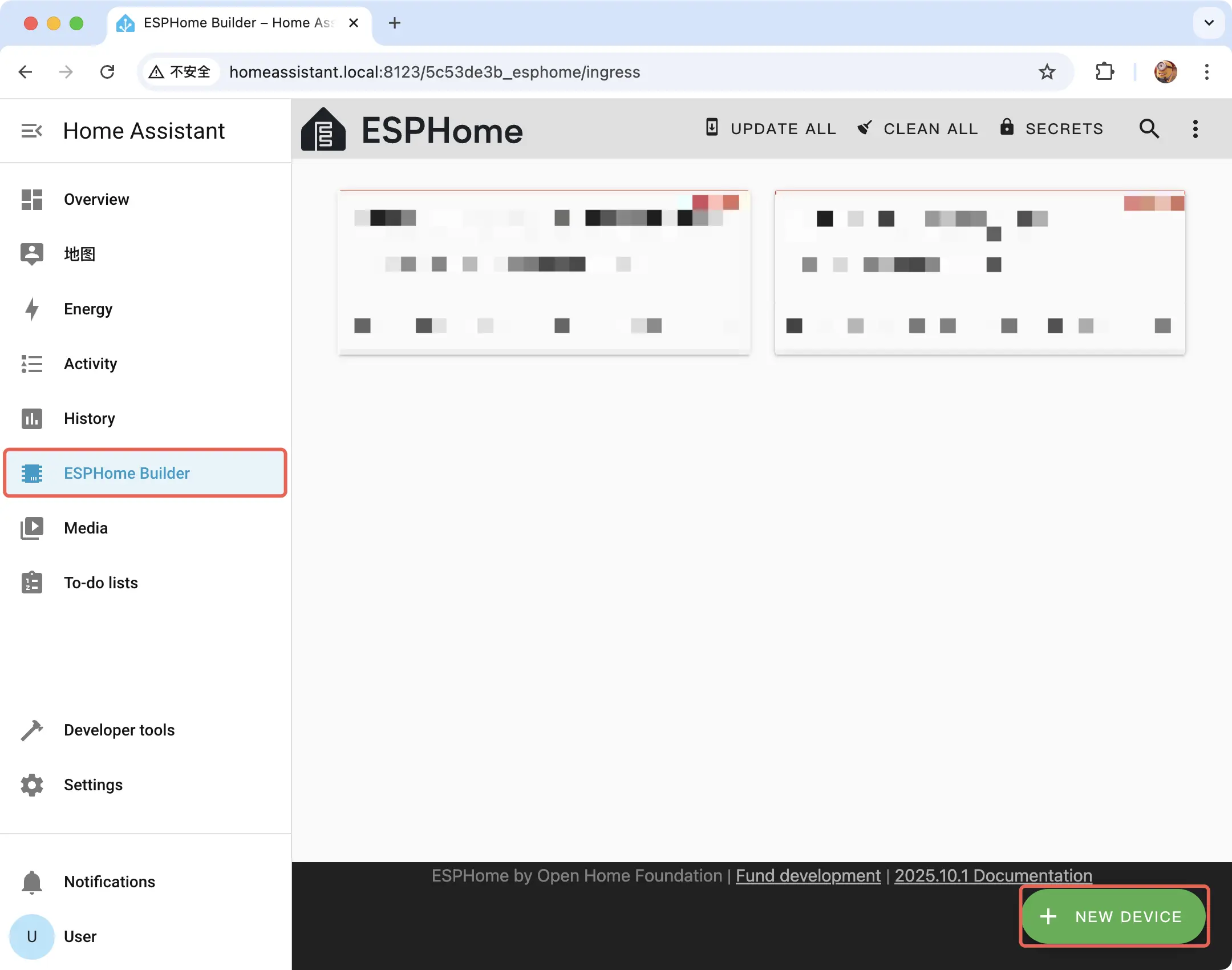
Click
CONTINUEin the pop-up window.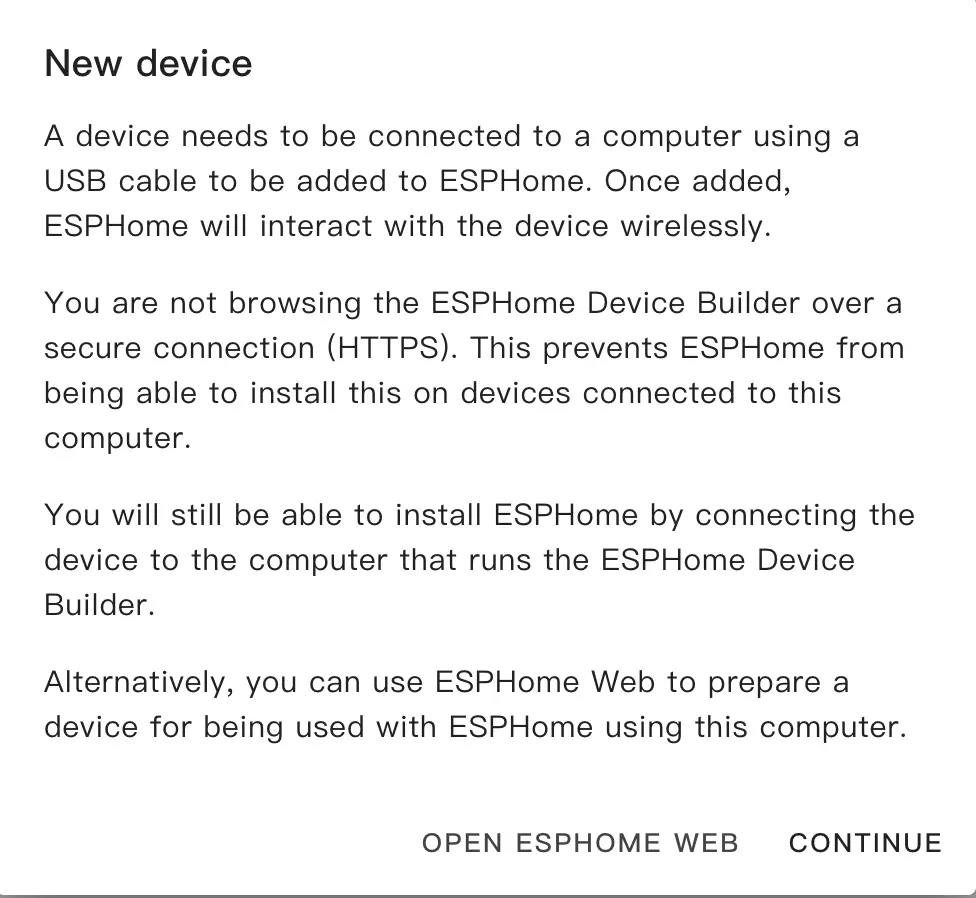
Select
New Device Setupto create a new configuration file.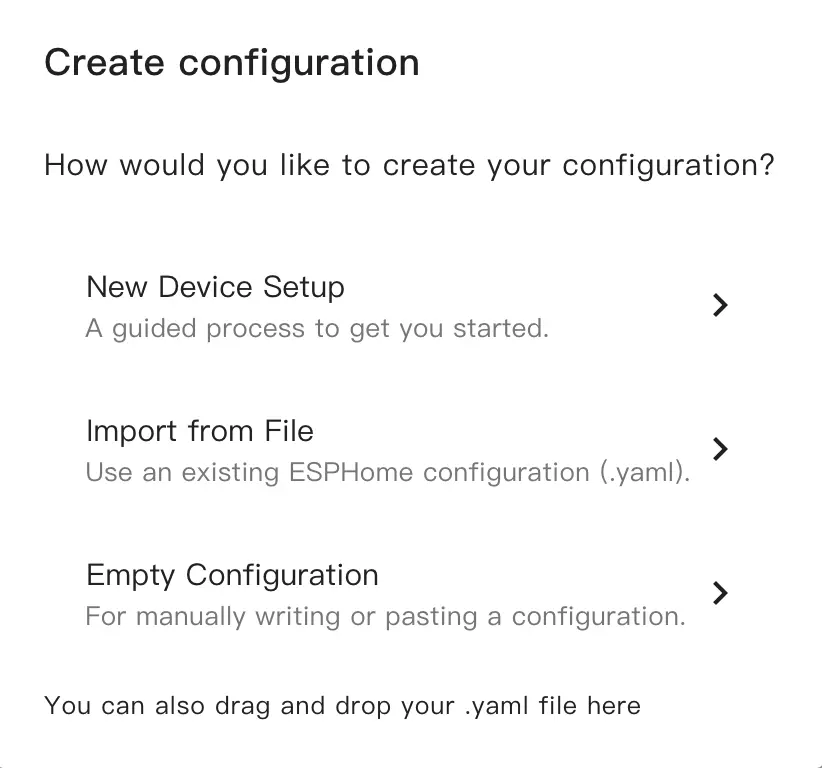
Fill in the configuration file name.
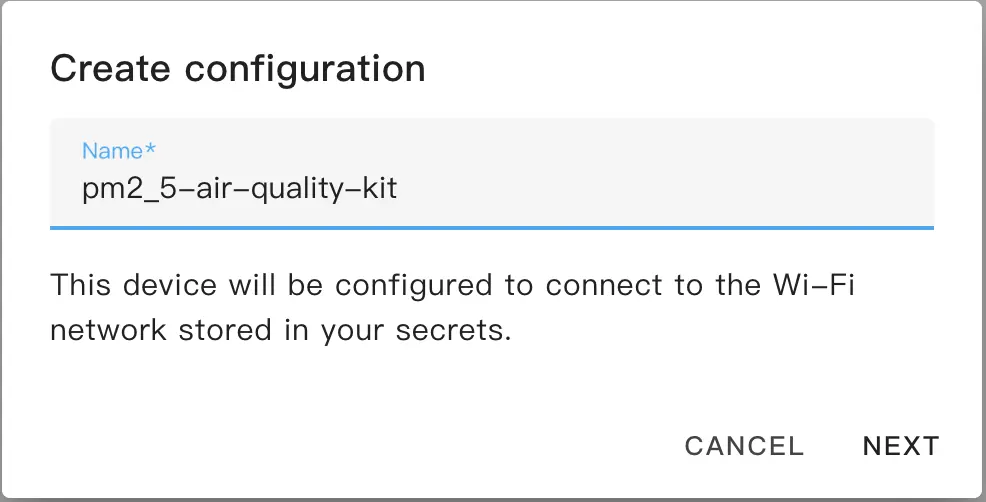
Select the device type: first uncheck
Use recommended settings, then clickESP32, and selectM5Stack Core ESP32.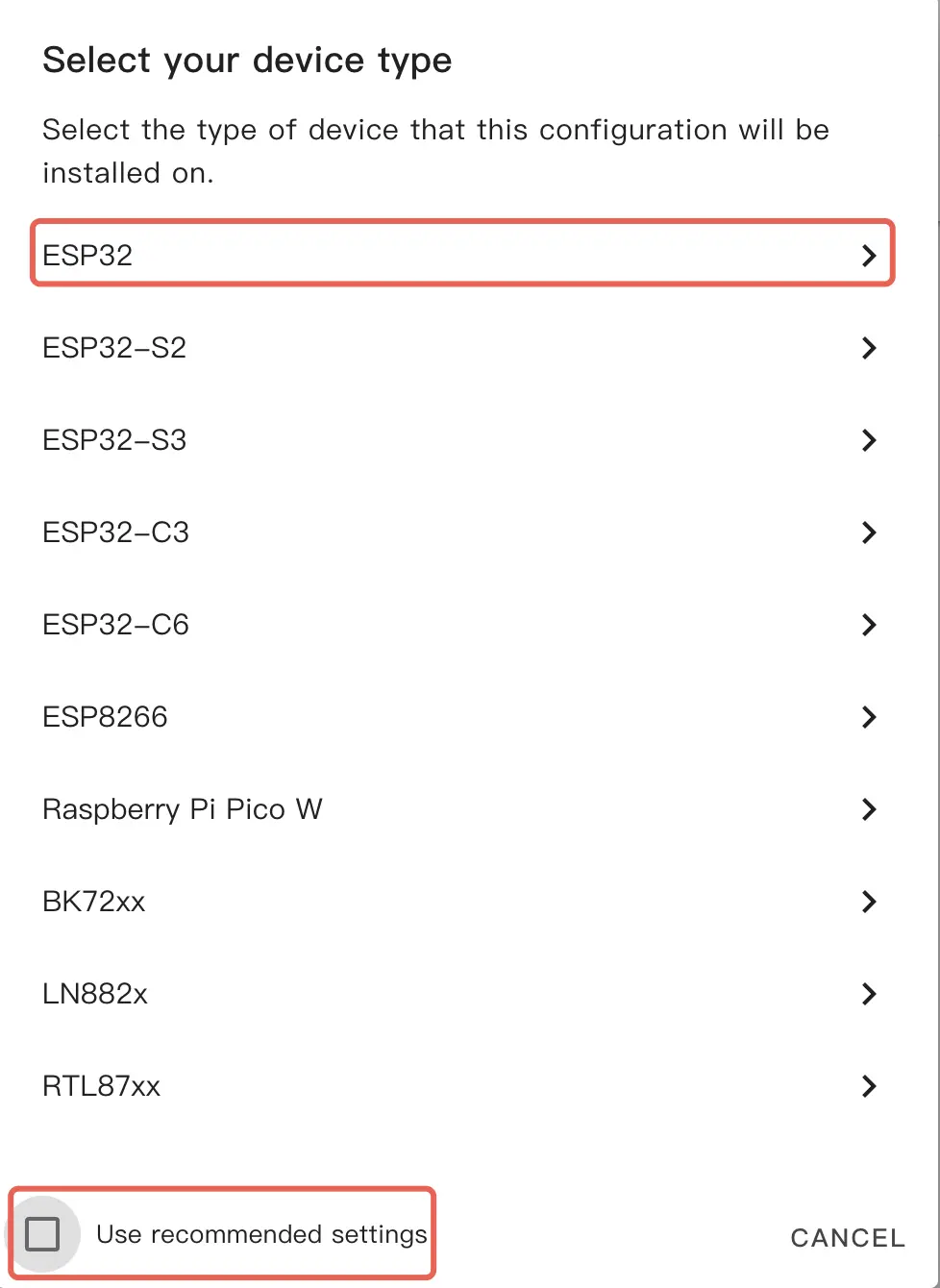
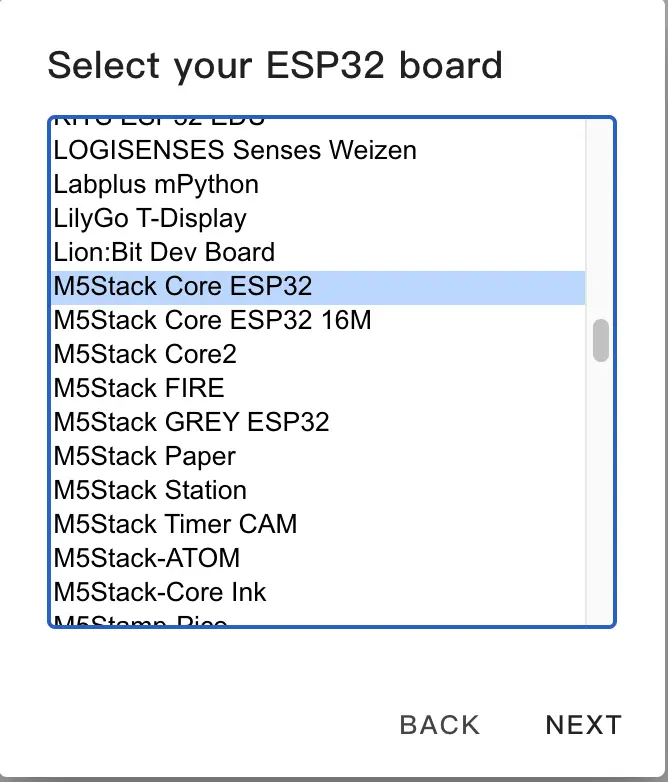
Copy the API Encryption Key for backup, then click
SKIP.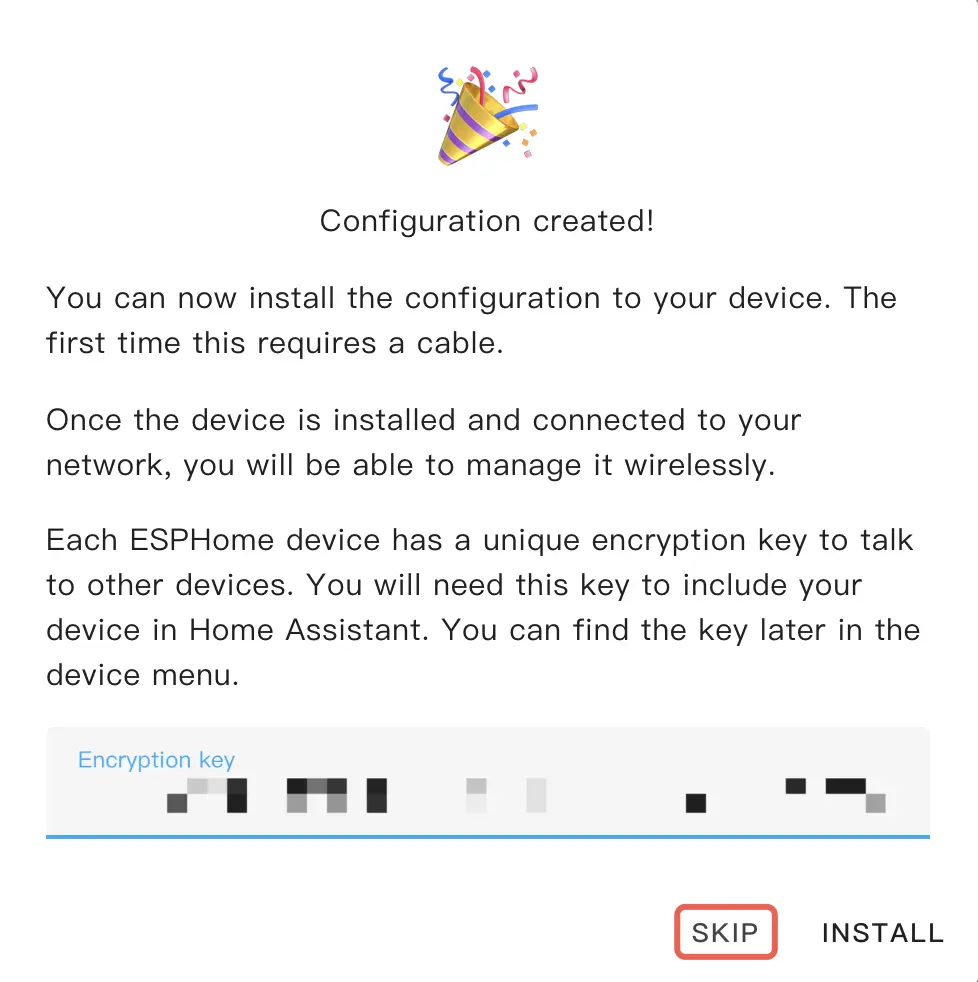
Modify Configuration
Click
EDITon the generated configuration file card to edit it.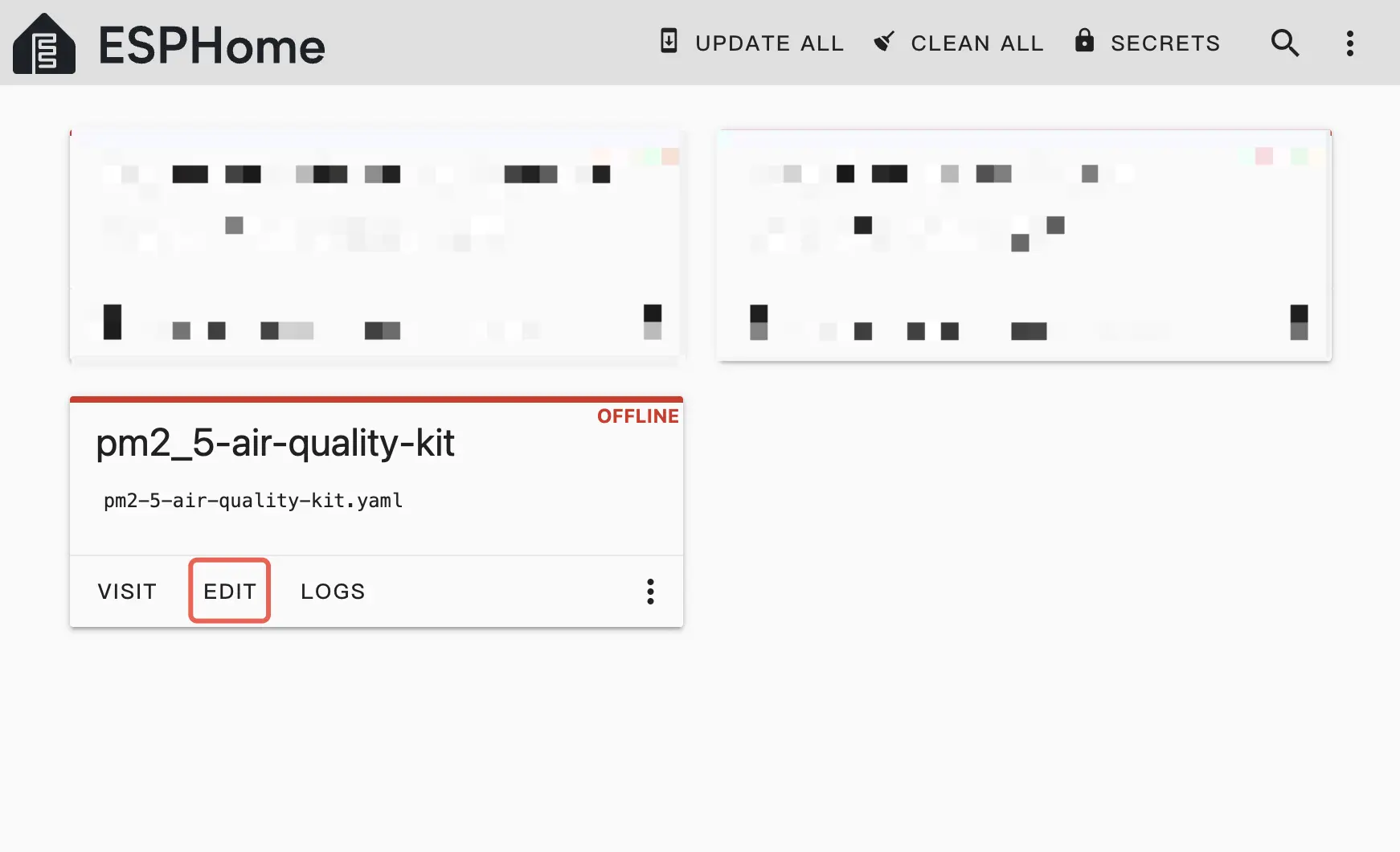
Add the following to the end of the file:
yaml1 2packages: m5stack.pm2_5-air-quality-kit: github://m5stack/esphome-yaml/common/pm2_5-air-quality-kit-base.yaml@main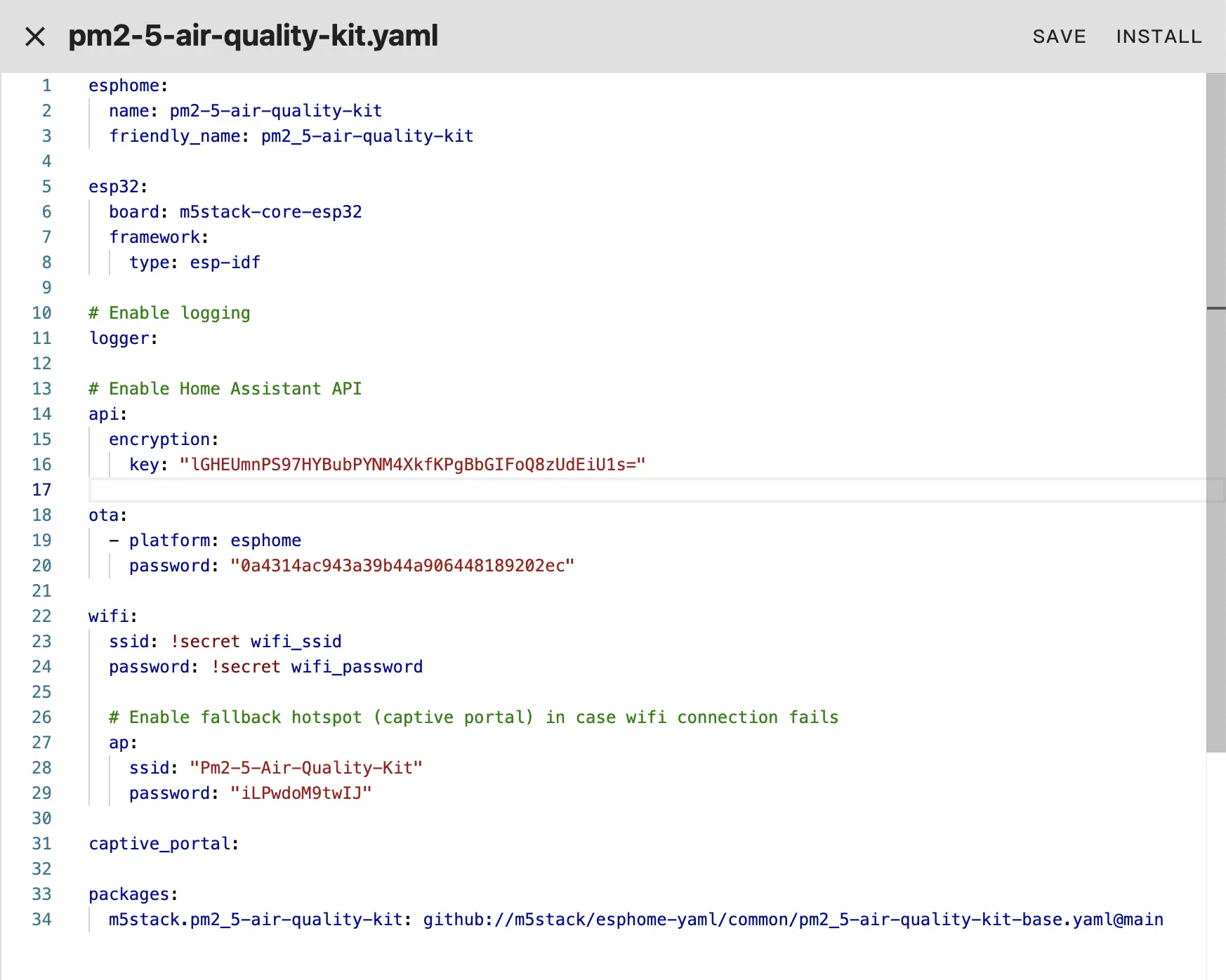
Click
SAVEandINSTALLin the upper-right corner, then selectManual downloadfrom the installation options.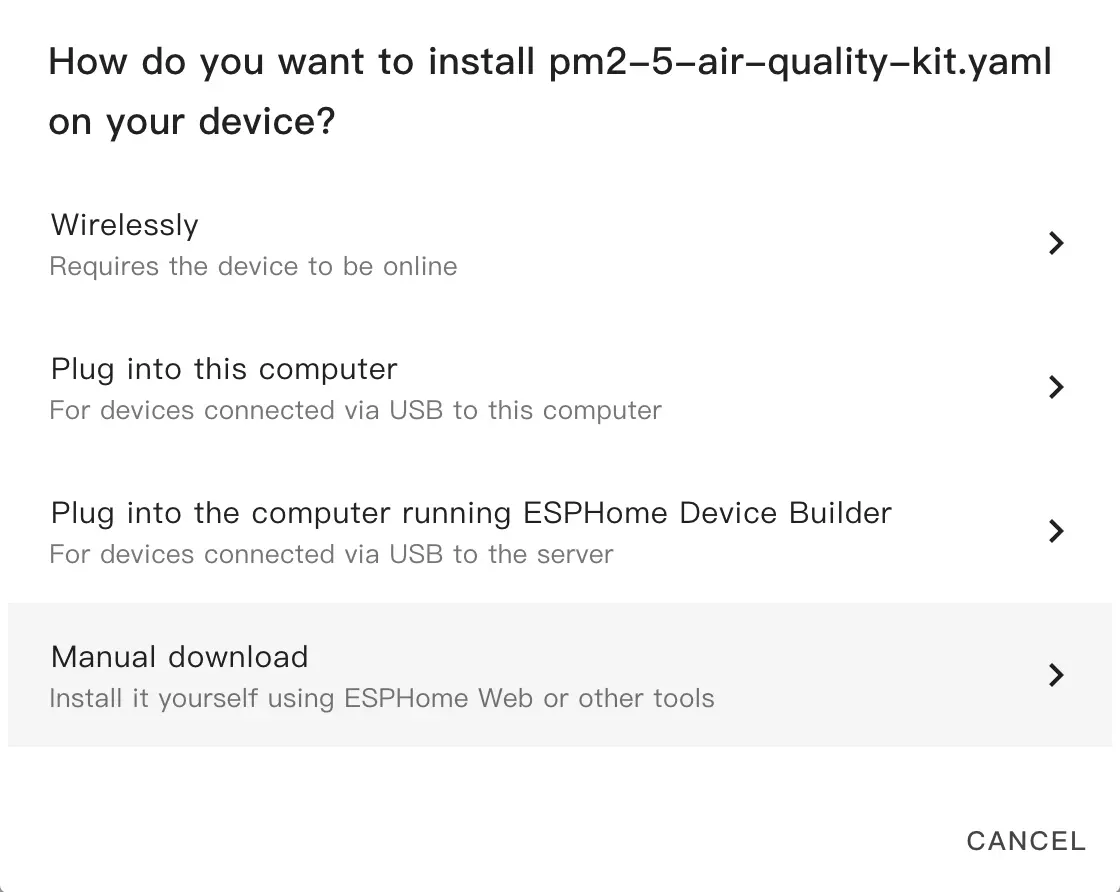
After compilation is complete, click the
Downloadbutton and selectFactory Formatto download the firmware.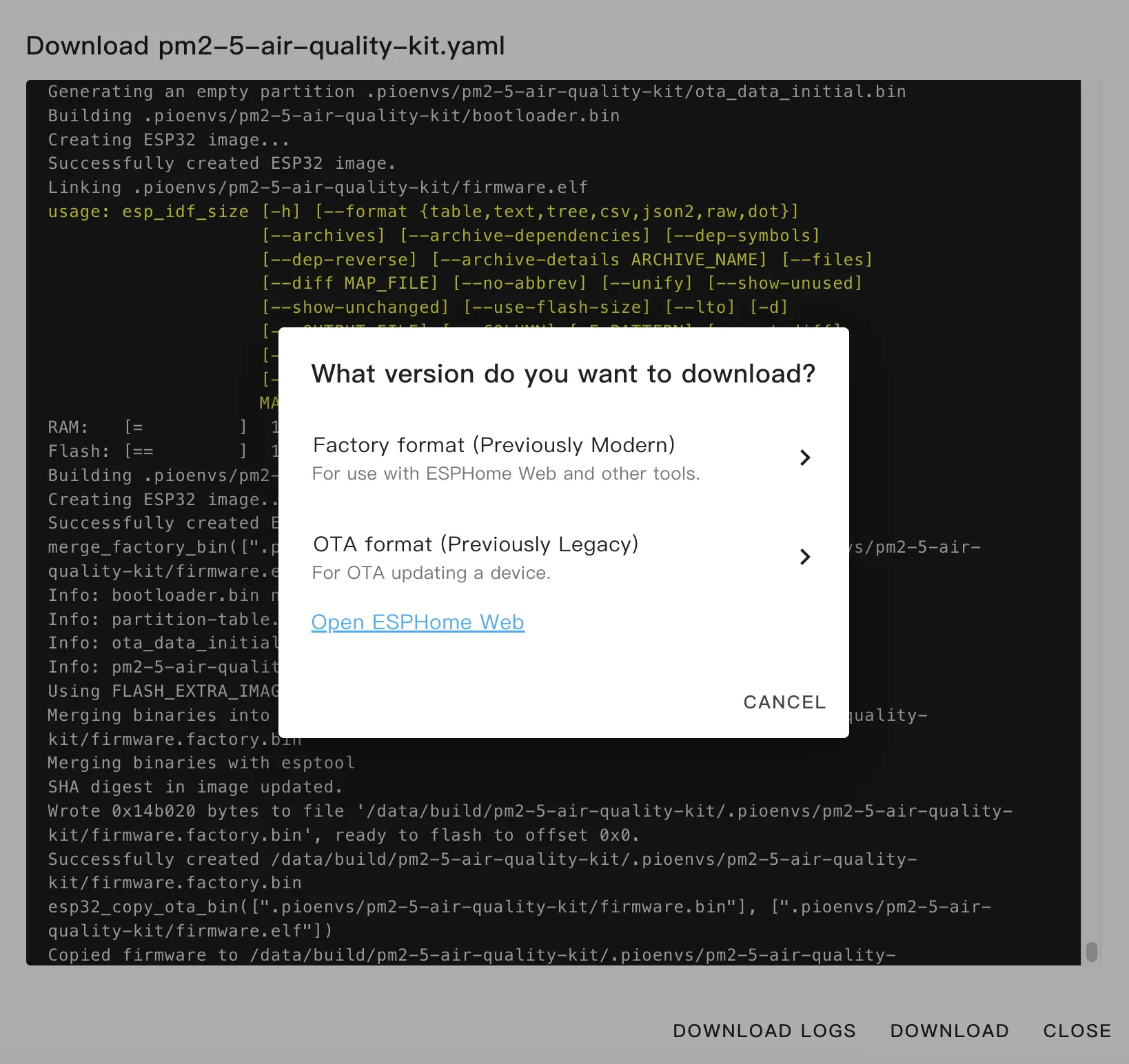
Flash Firmware
Download Firmware: Download the Factory Format firmware via the
Manual downloadmethod in ESPHome Builder.Flash the firmware using ESPHome Web:
Connect the kit to the computer using a USB Type-C cable, open ESPHome Web, and click
CONNECTto connect the device.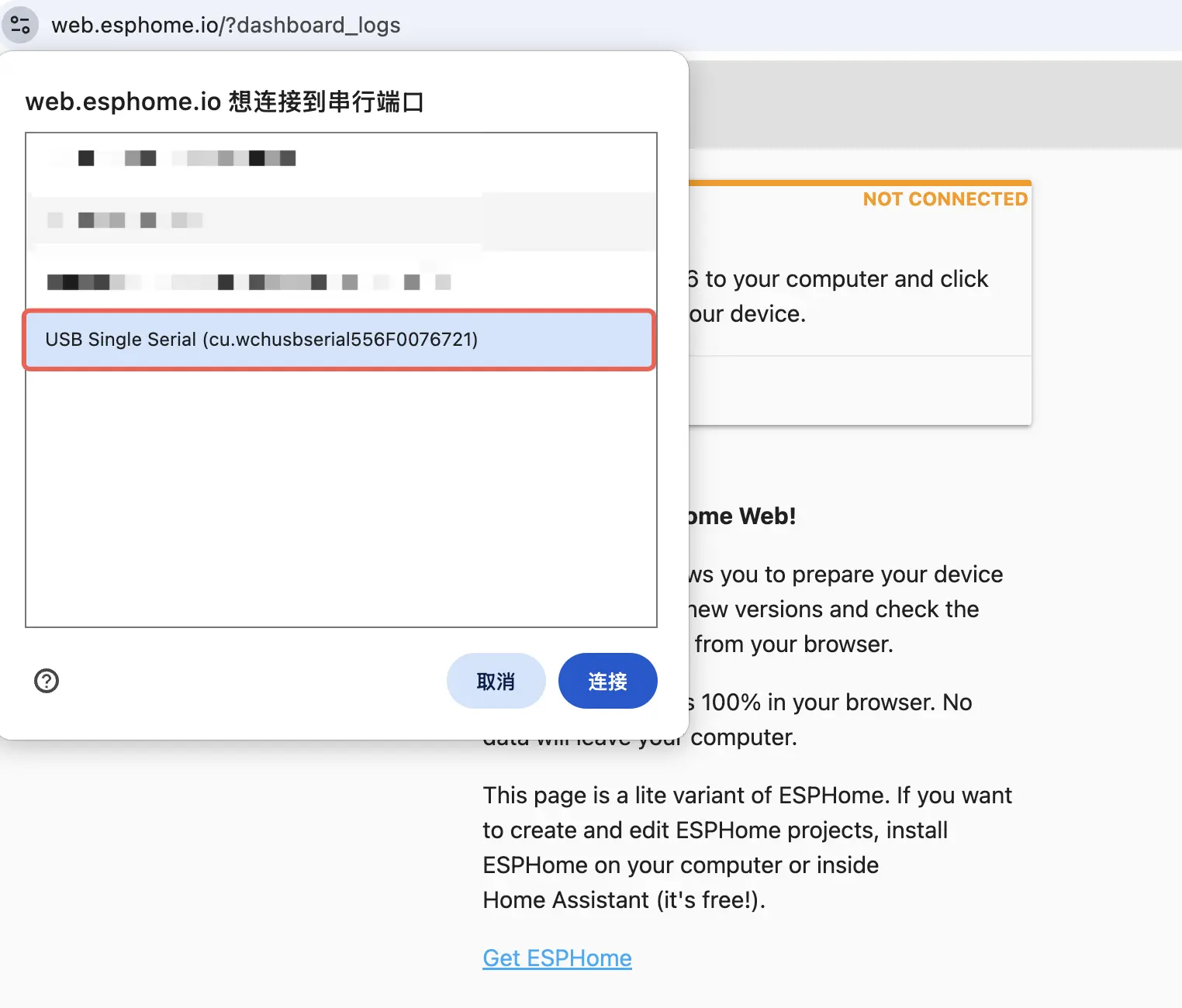
Click
INSTALLand select the previously compiled firmware to upload.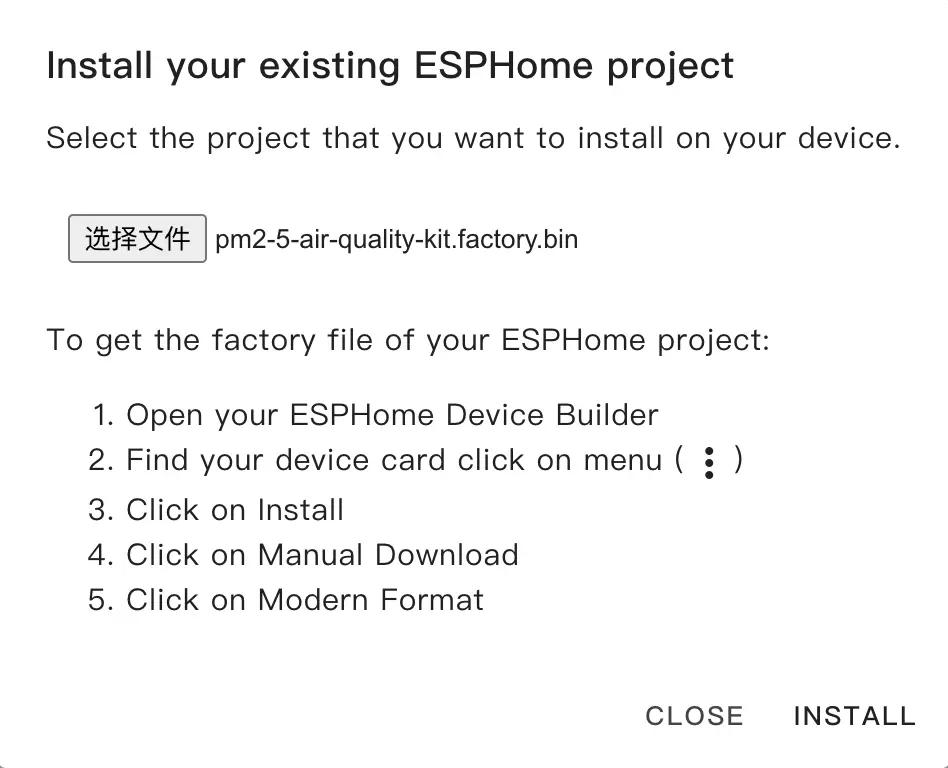
Click
INSTALLagain to flash, and wait for the process to complete.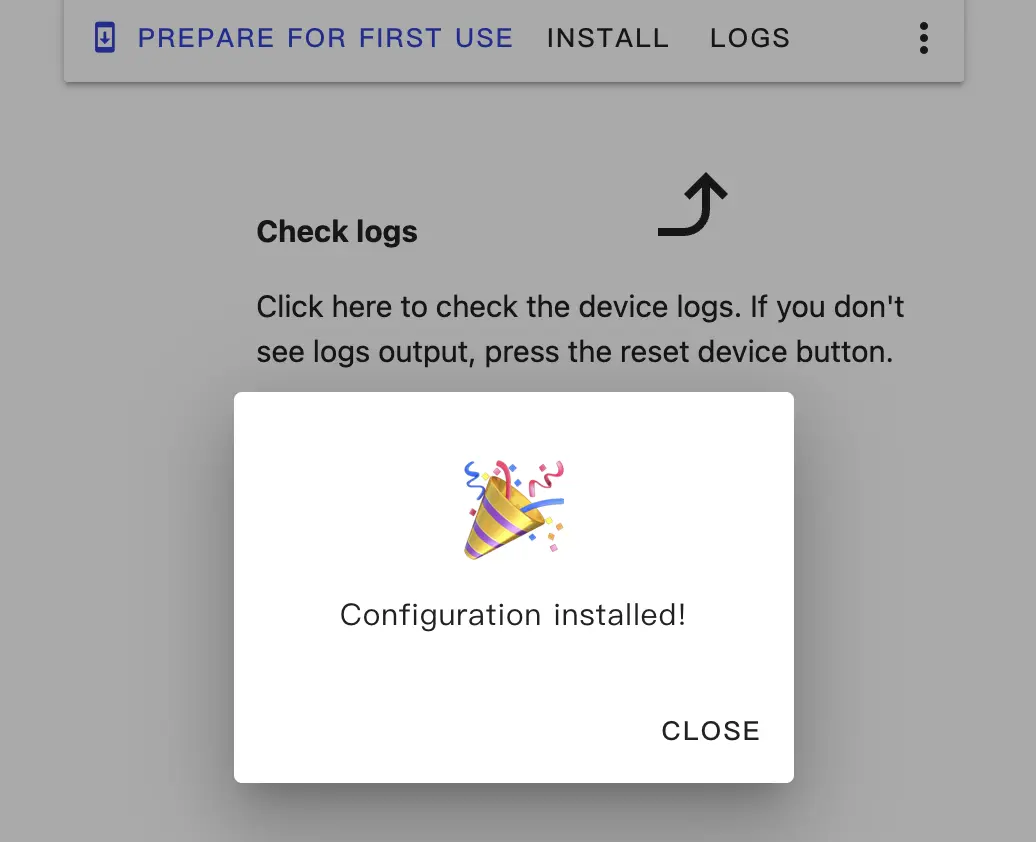
4. Getting Started
After flashing the firmware, the device will automatically connect to Wi-Fi upon startup. The Home Assistant service will automatically discover the new device. Select the new device in Notifications and click
Check it out->CONFIGURE. Follow the steps in the pop-up window to add the device to a specified area to complete the configuration.
If no notification for the new device appears, navigate to
Settings>Devices & Servicesto check the device status. ClickAddto add the device to Home Assistant.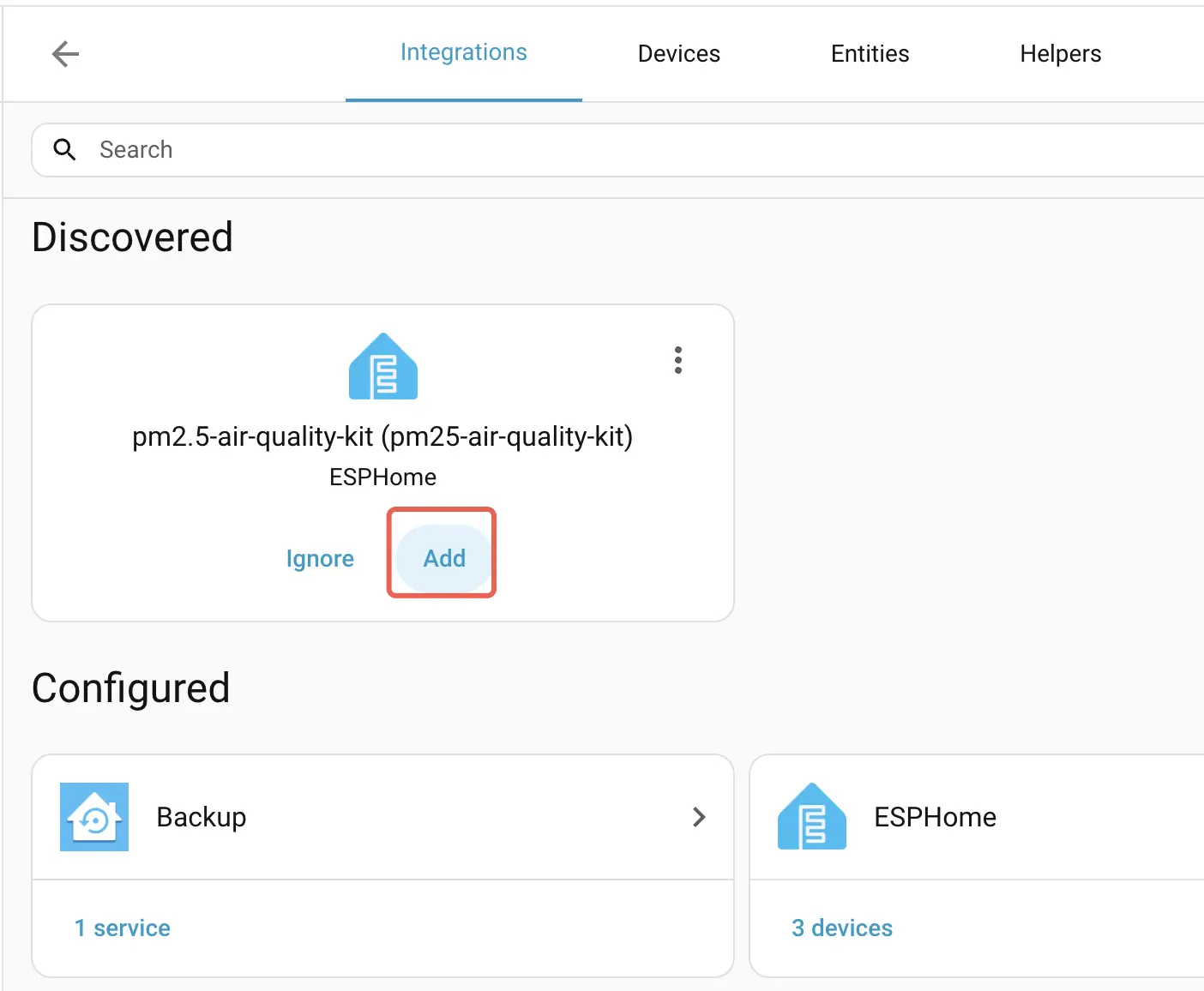
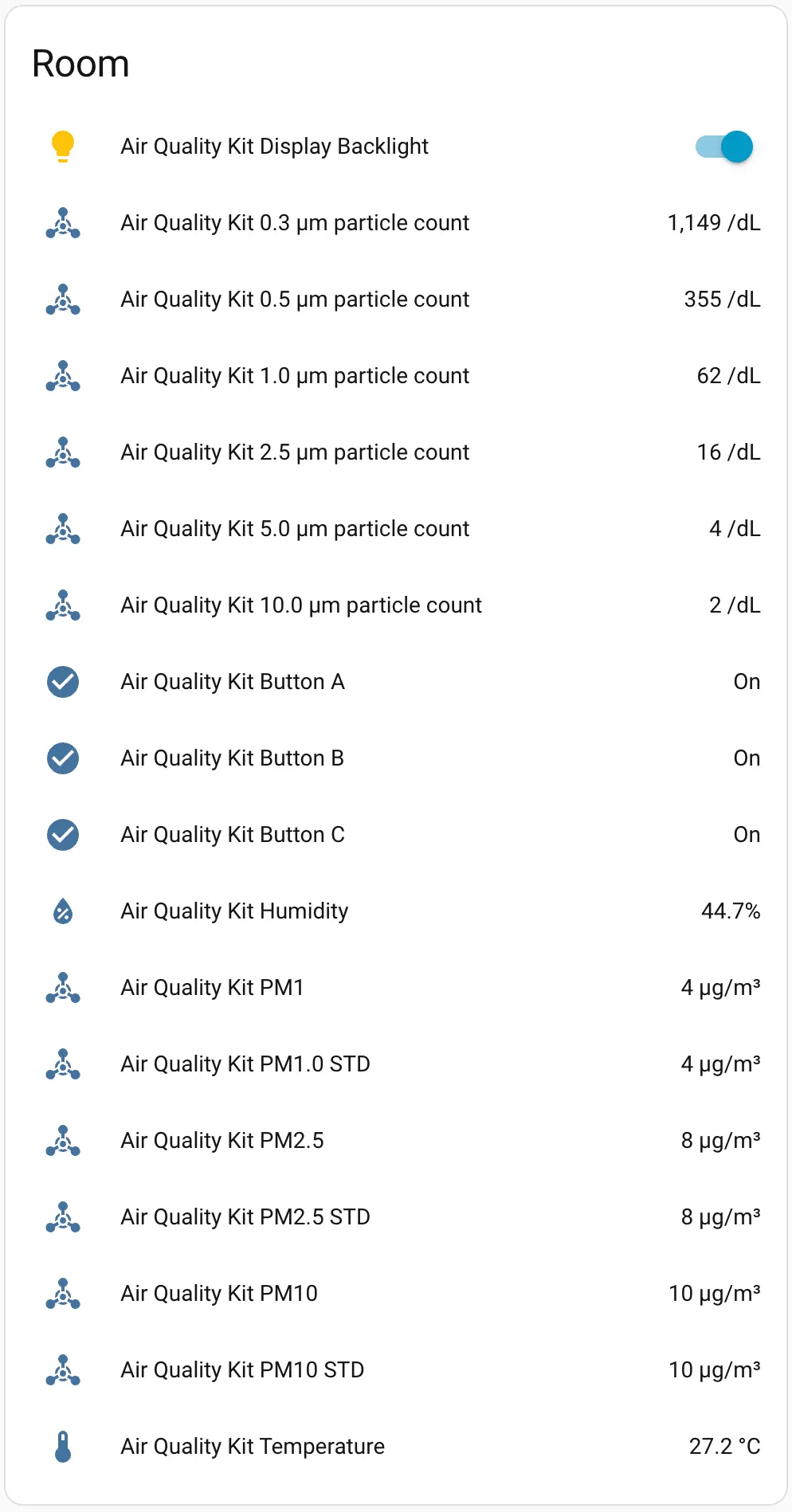
Dashboard Example:
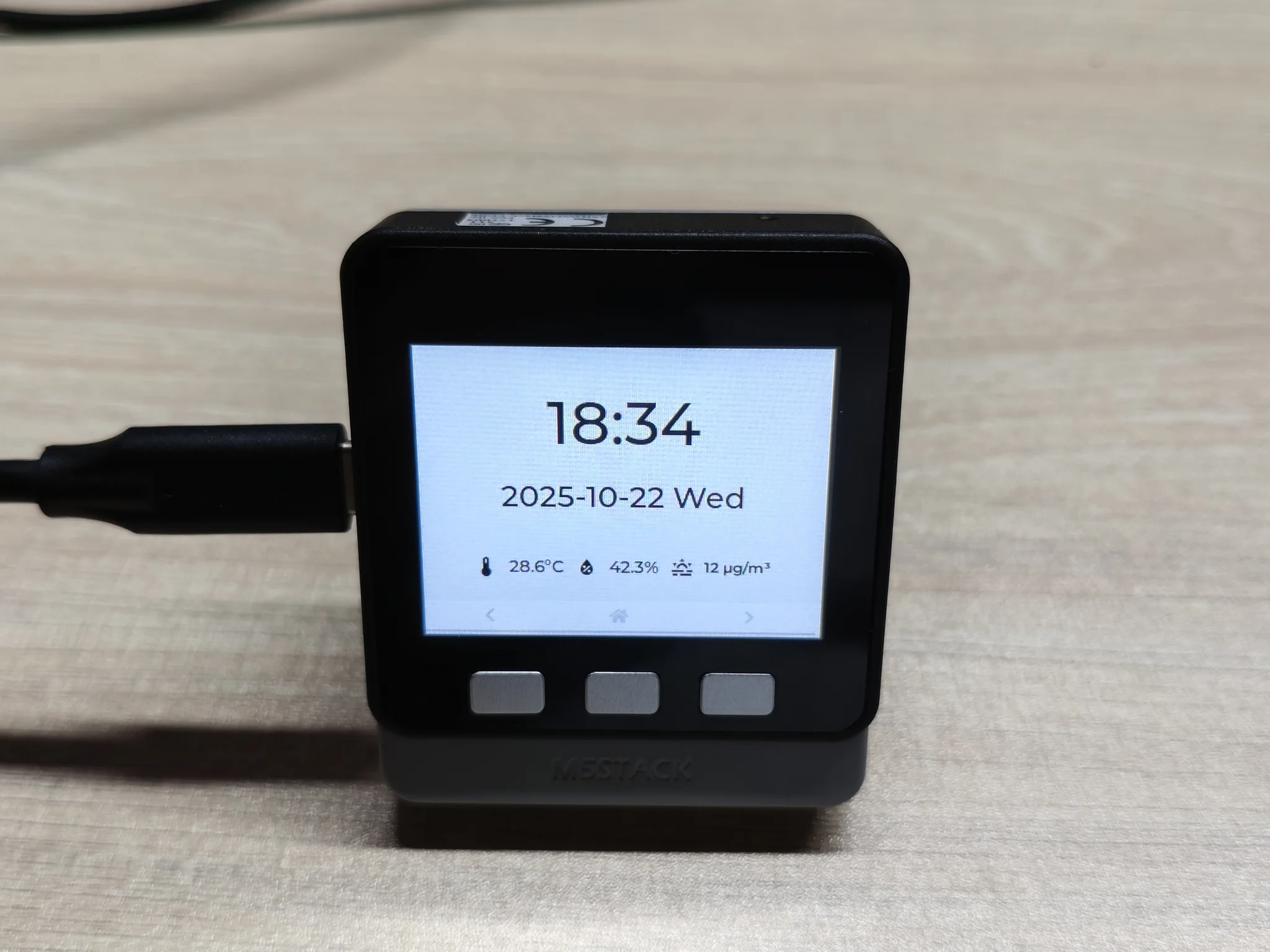
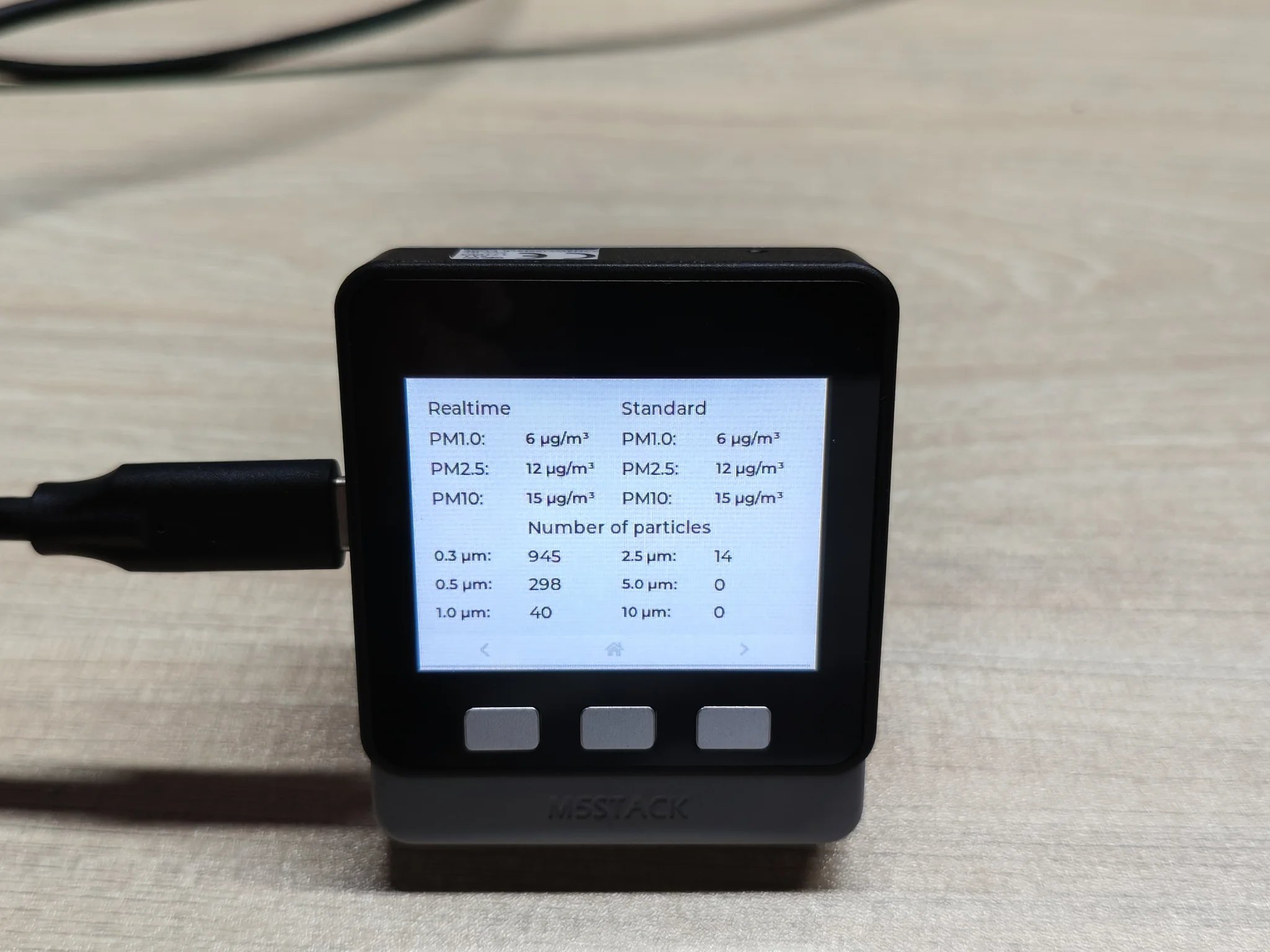
At the same time, the buttons on the Basic host can switch pages to display more information.
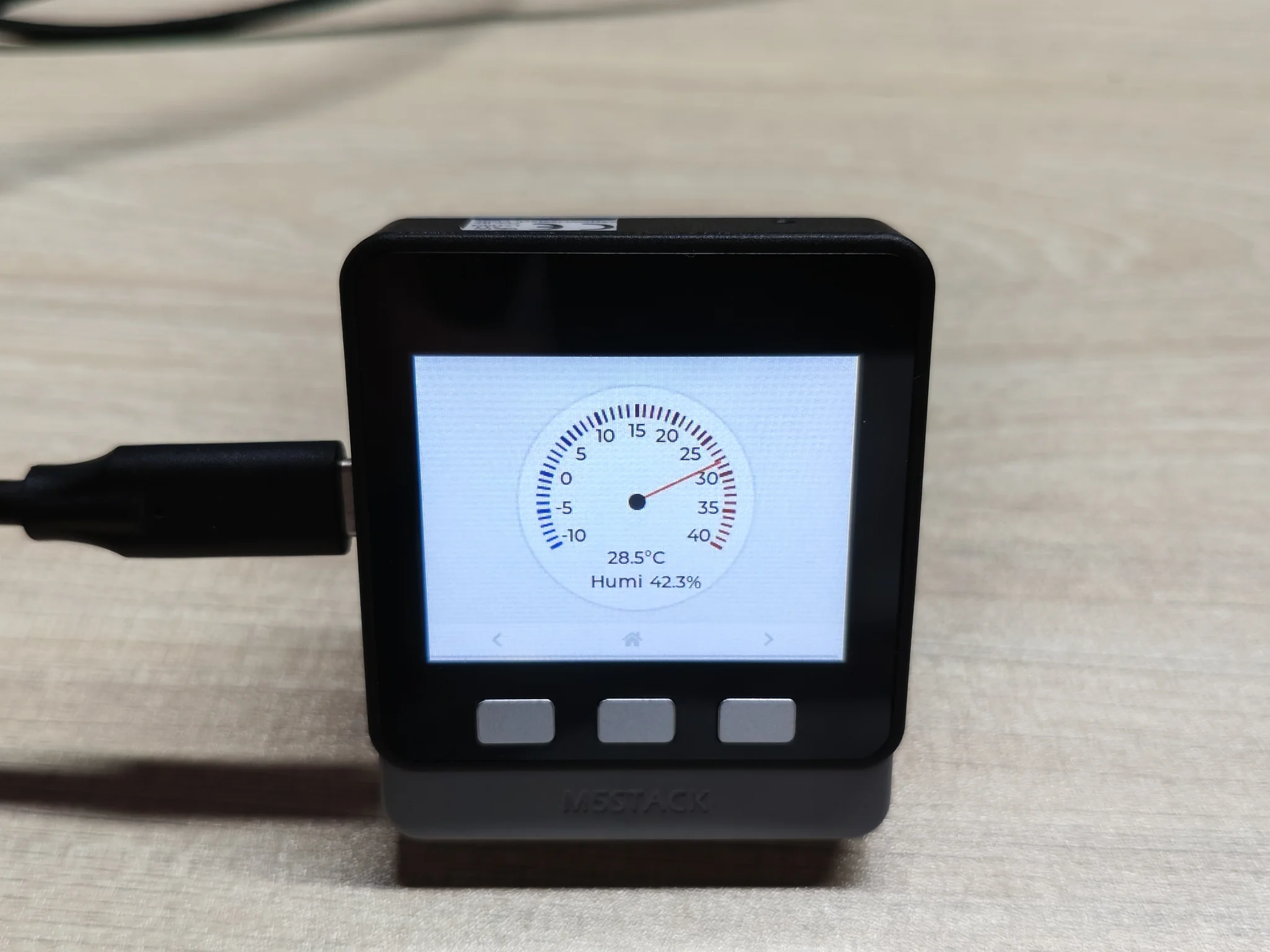
2. Sensor data requires a period of sampling before it can be displayed on the screen.