

Home Assistant
Media Player
Expansion
Sensor
Atom VoiceS3R Voice Assistant
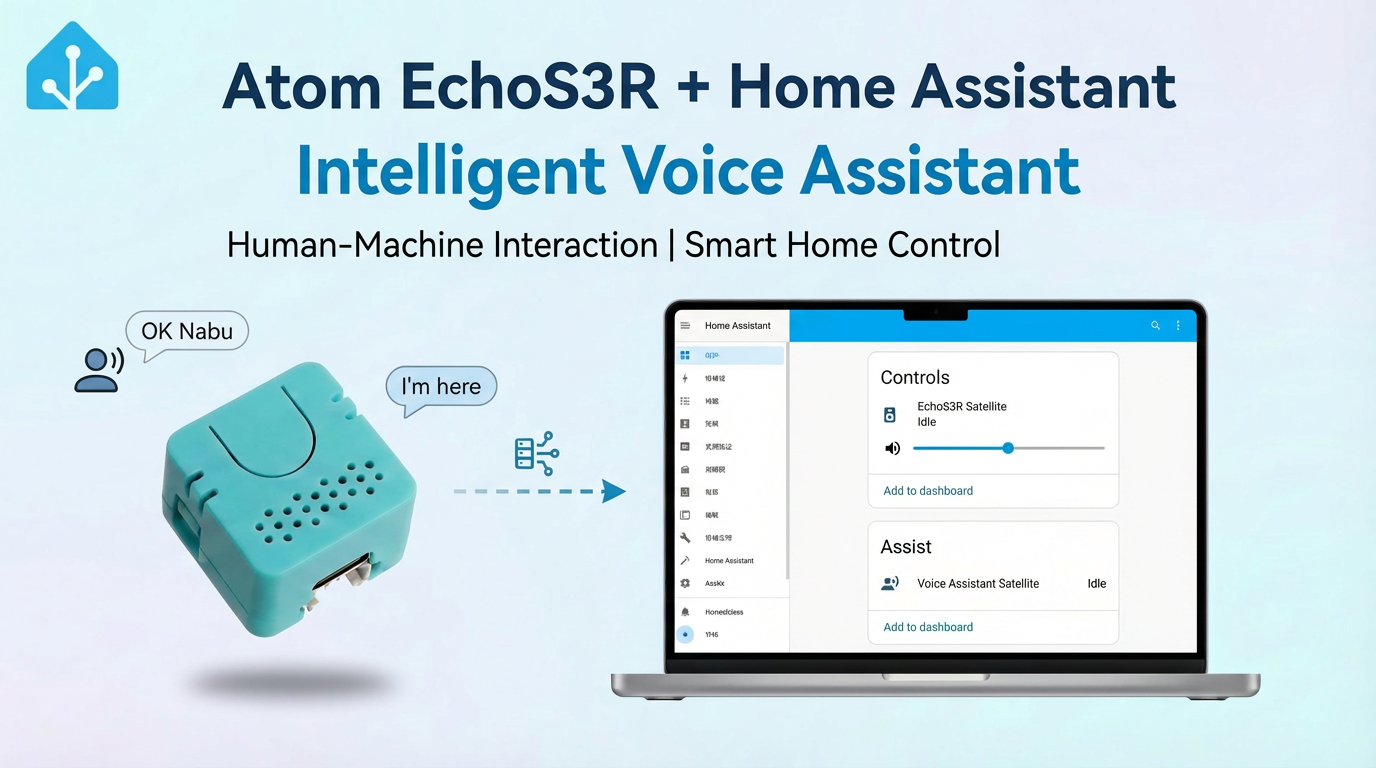
This chapter describes how to configure the Atom VoiceS3R as a Home Assistant voice assistant.
1. Preparation
Environment Setup
- Refer to the official Home Assistant documentation to install Home Assistant.
- Refer to the official ESPHome documentation to install the ESPHome Device Builder add-on. (Note: This tutorial is based on
ESPHome 2025.1.2. If compilation errors occur, switch to this version for verification.) - Install and configure the voice recognition add-ons:
Hardware Products
2. Online Flashing
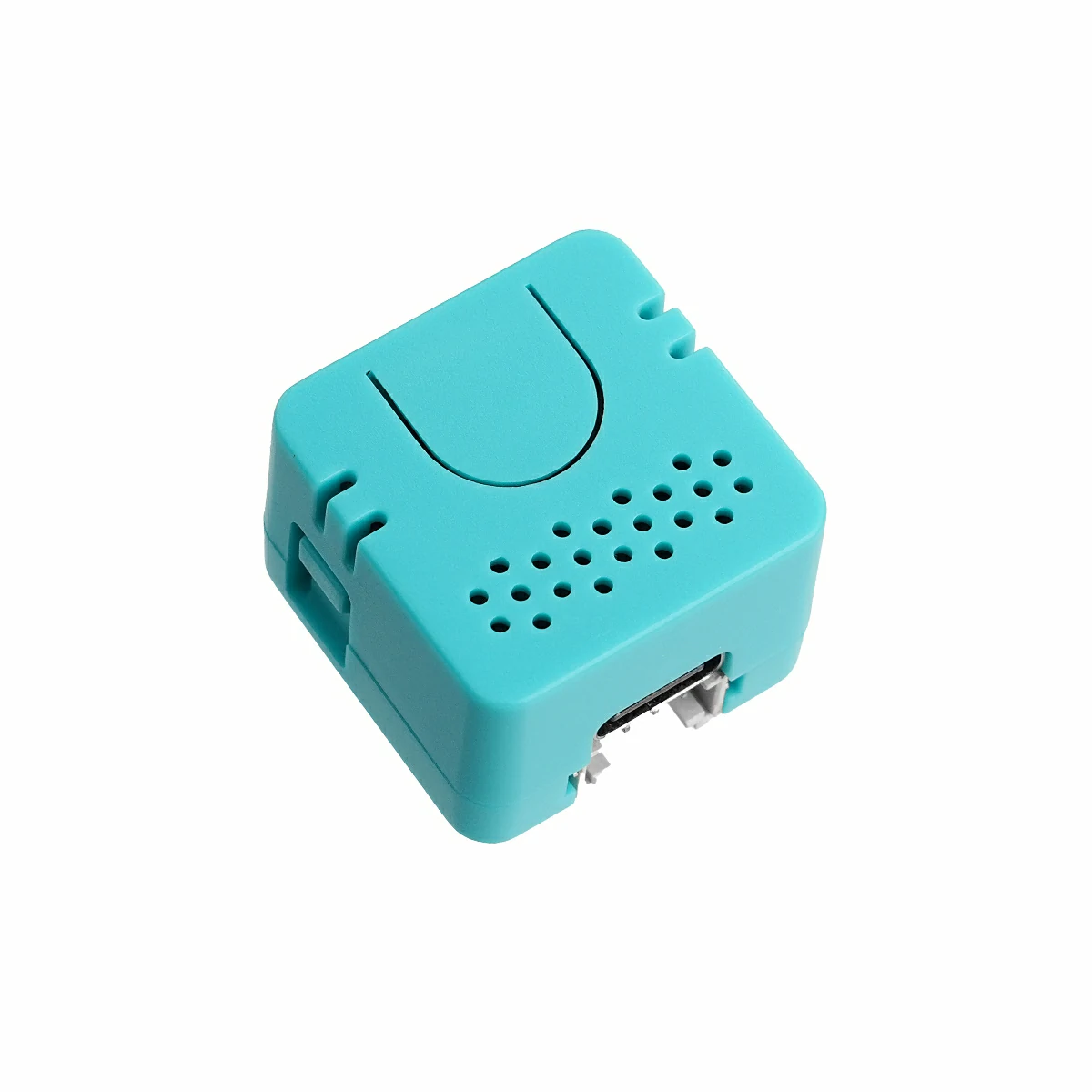
Click the Online Flashing button below and follow the prompts to flash the firmware and configure Wi-Fi, allowing you to quickly connect Atom VoiceS3R to Home Assistant.
For detailed flashing and configuration instructions, refer to Online ESPHome Firmware Flashing and Configuration.
After using online flashing, you do not need to perform the "Firmware Compilation & Flashing" steps. Proceed directly to 4. Getting Started.
3. Firmware Compilation & Flashing
This section explains how to recompile the project from the yaml configuration file for secondary development, feature modifications, or new functionality.
Compilation Time
Compiling firmware through HA is resource-intensive. The first compilation may take a long time to download resources, depending on the device running the HA service and network quality.
Create Device
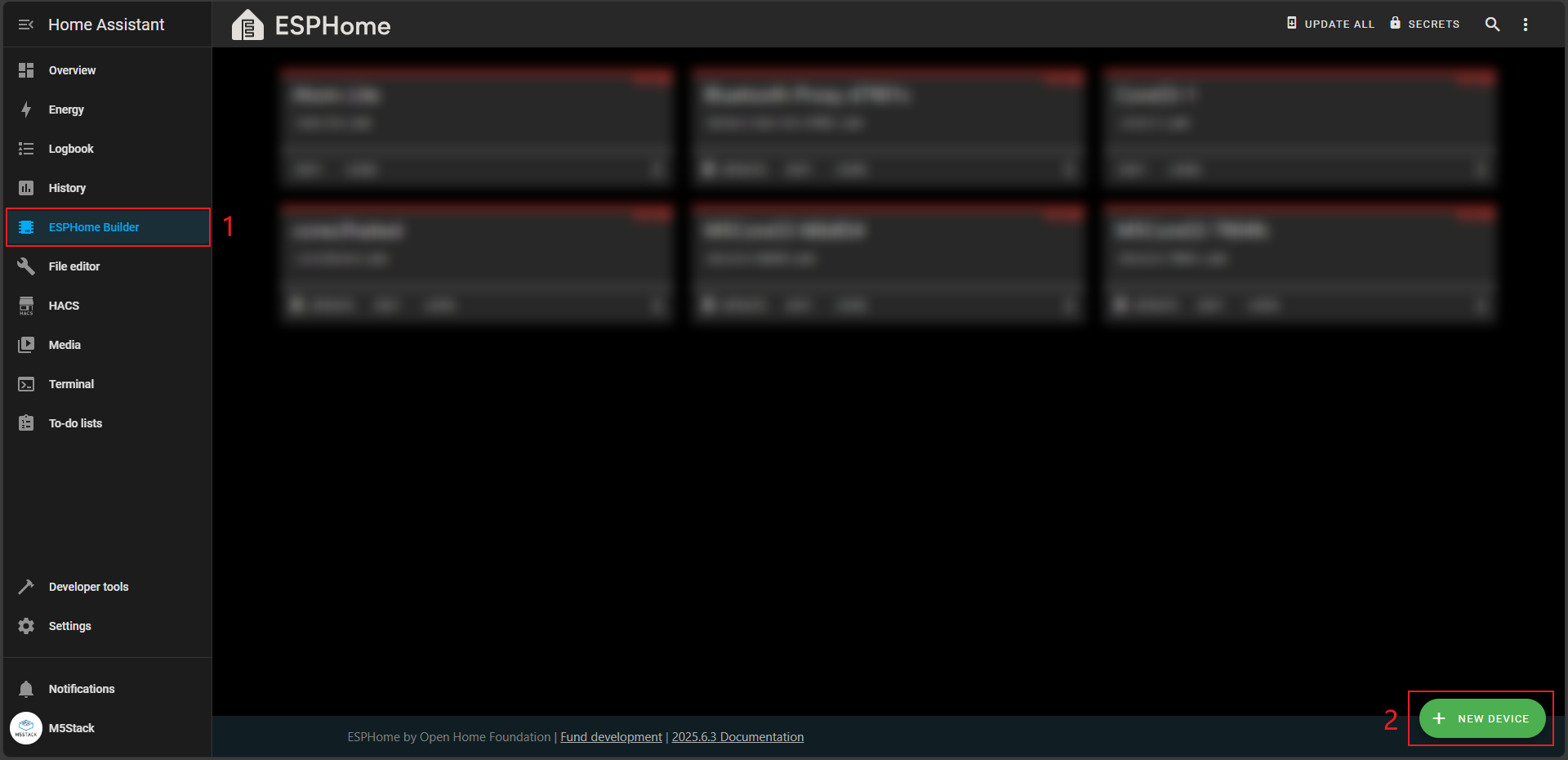
- Open the ESPHome add-on page and click
NEW DEVICEin the bottom right corner to create a new device.
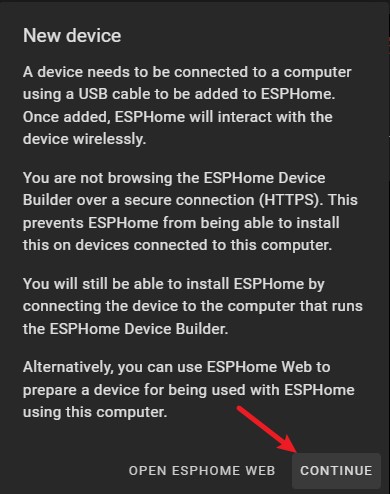
- When the New device prompt appears, click the
CONTINUEbutton.
- Click
New Device Setup.
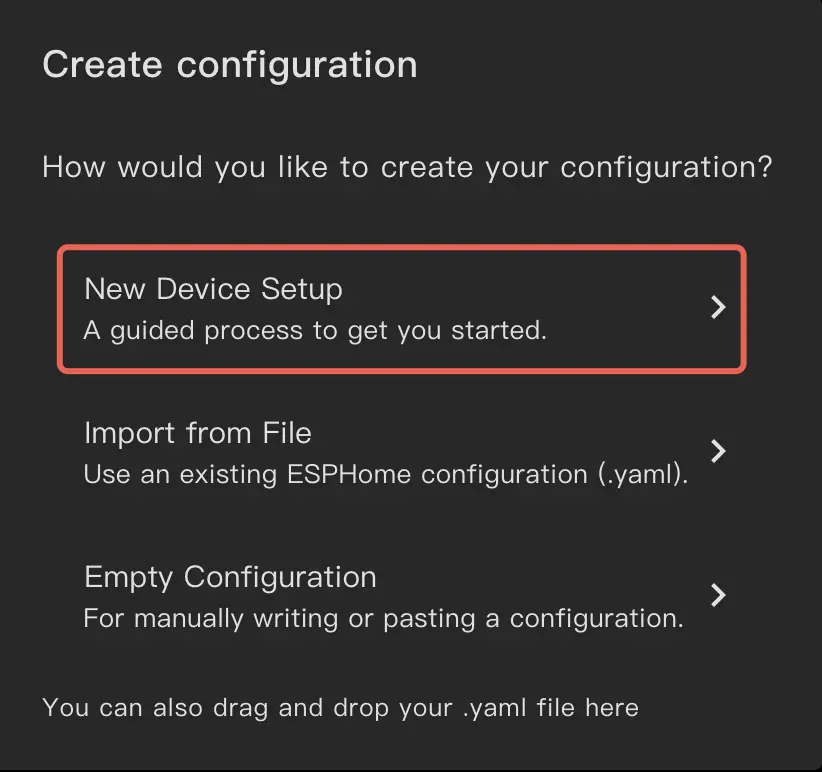
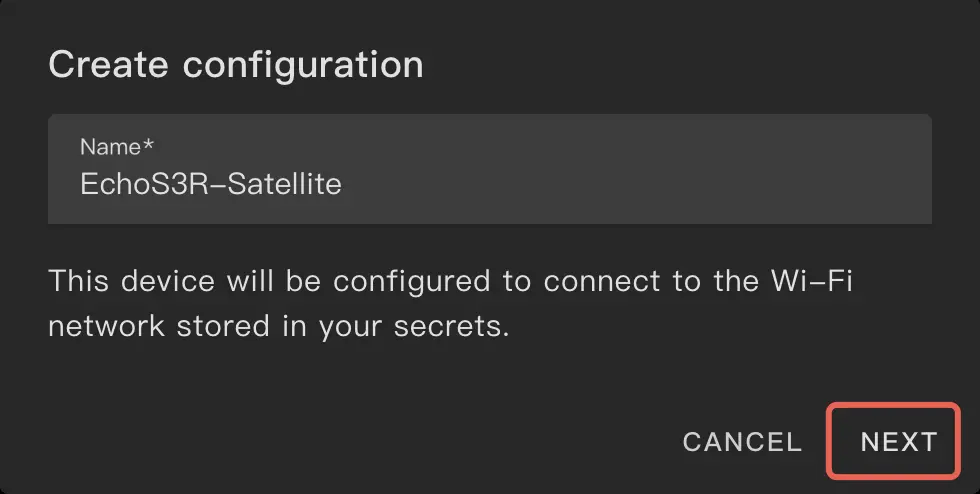
- Give the configuration a suitable name.
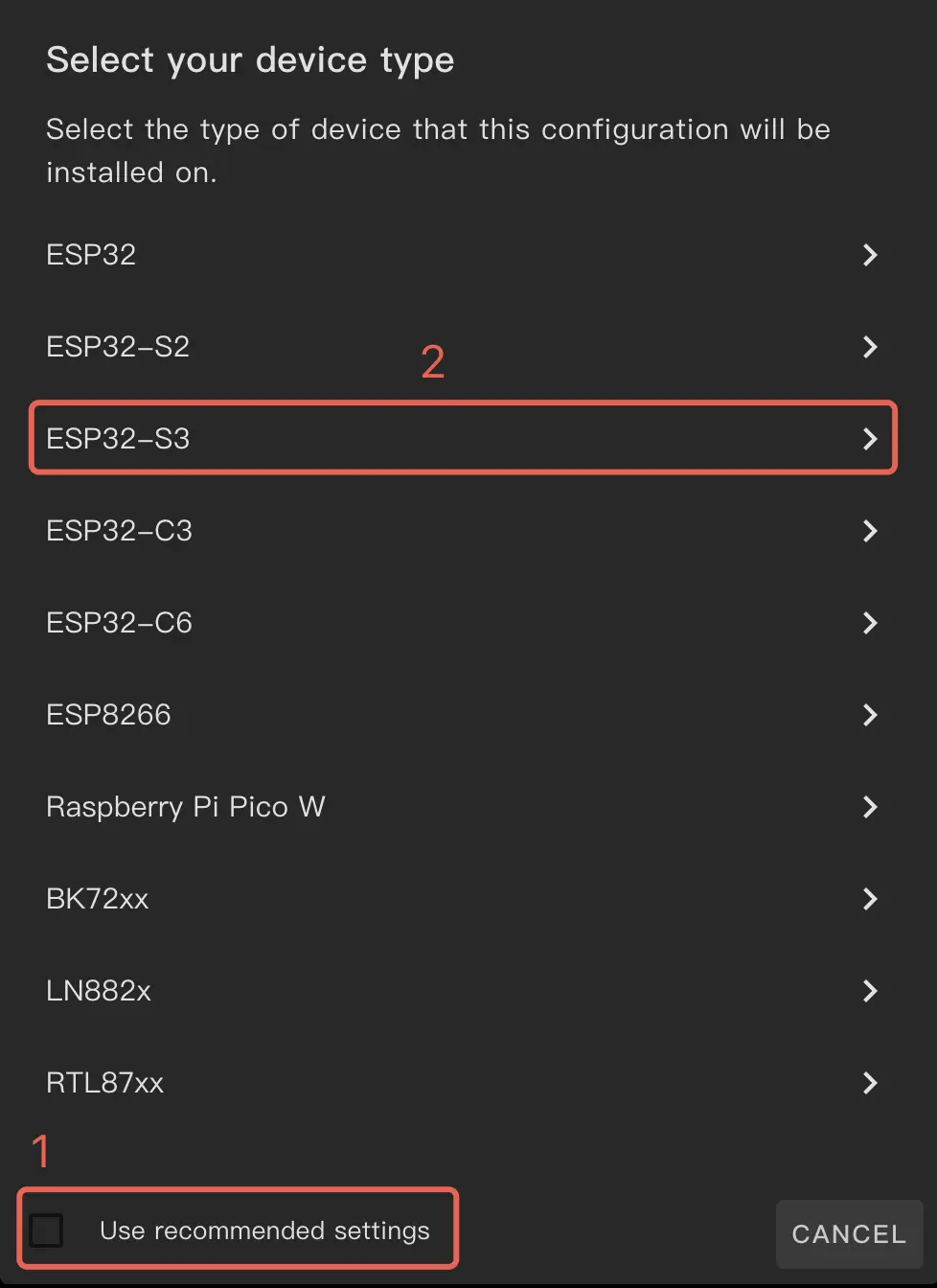
- First, uncheck
Use recommended settings, then selectESP32S3as the device.
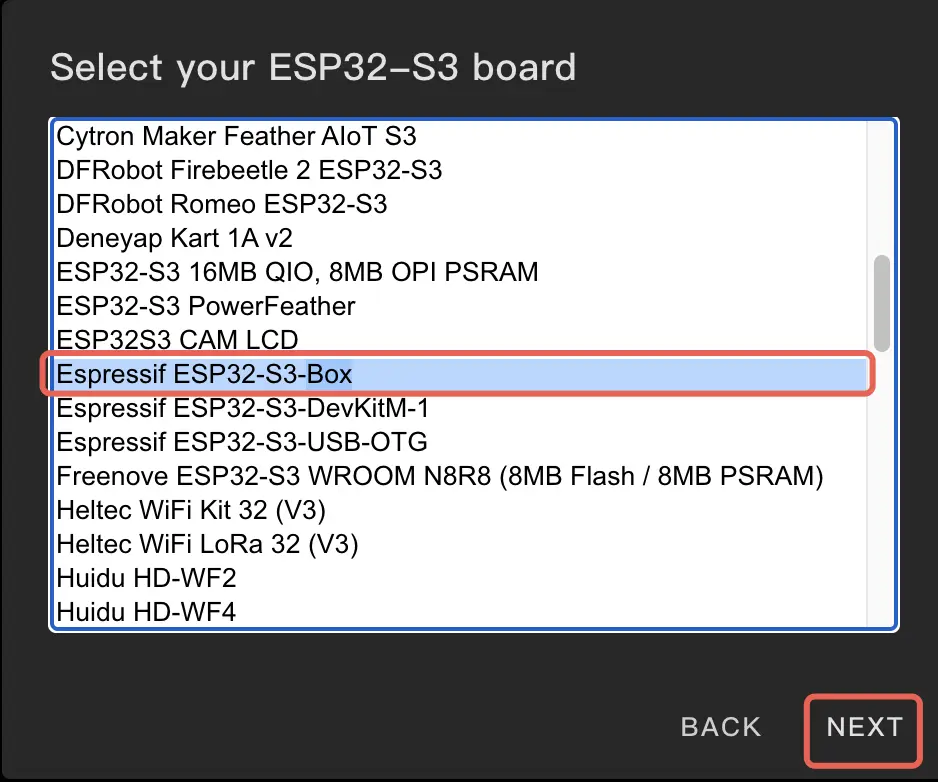
- A pop-up will prompt you to select the appropriate device. Here we choose
Espressif ESP32-S3-Box, then continue to the next step to set the Home Assistant API Key and YAML configuration file.
- Copy the API Key for later use, then click
Skip.
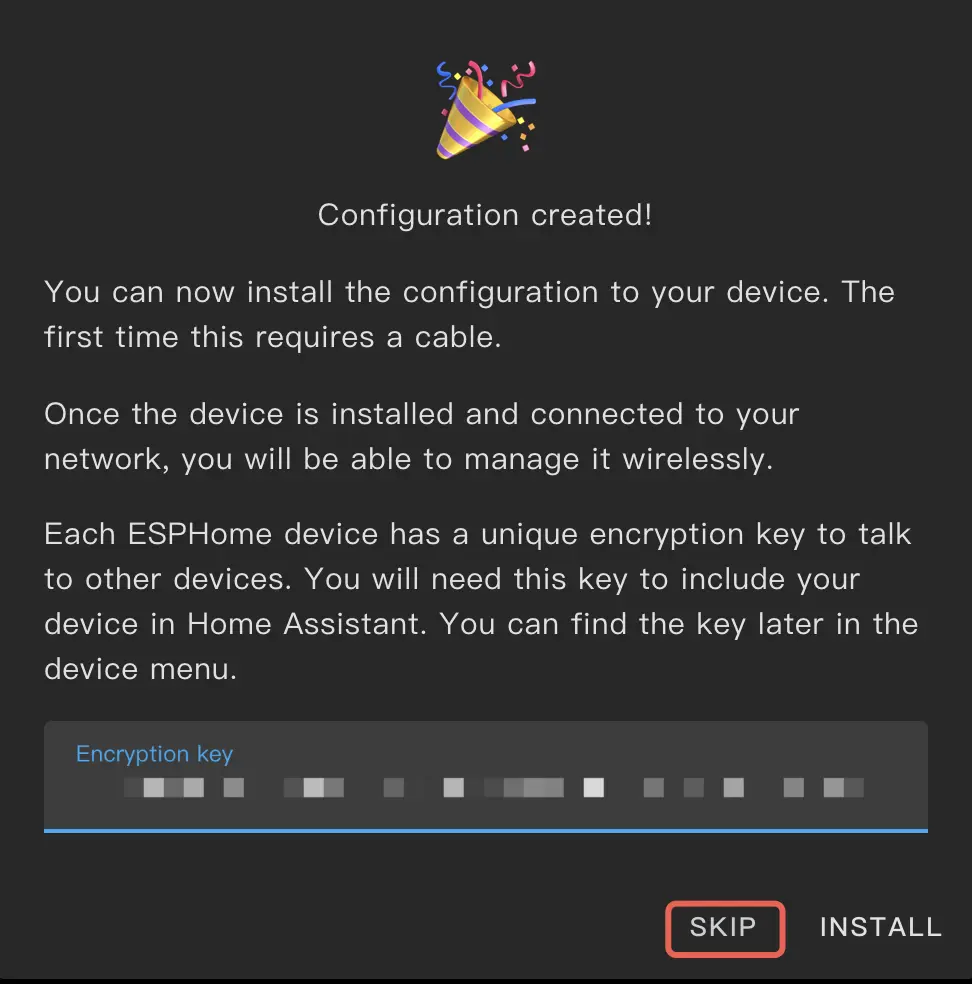
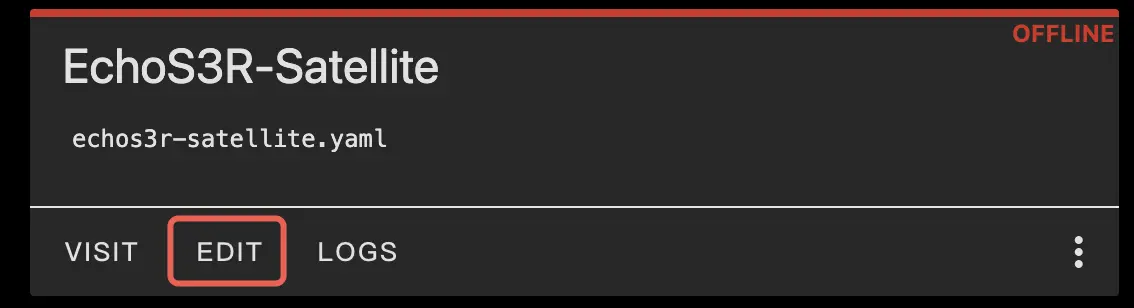
- Under the generated configuration file, click
Editto continue modifying the generated YAML file.
Modify Configuration
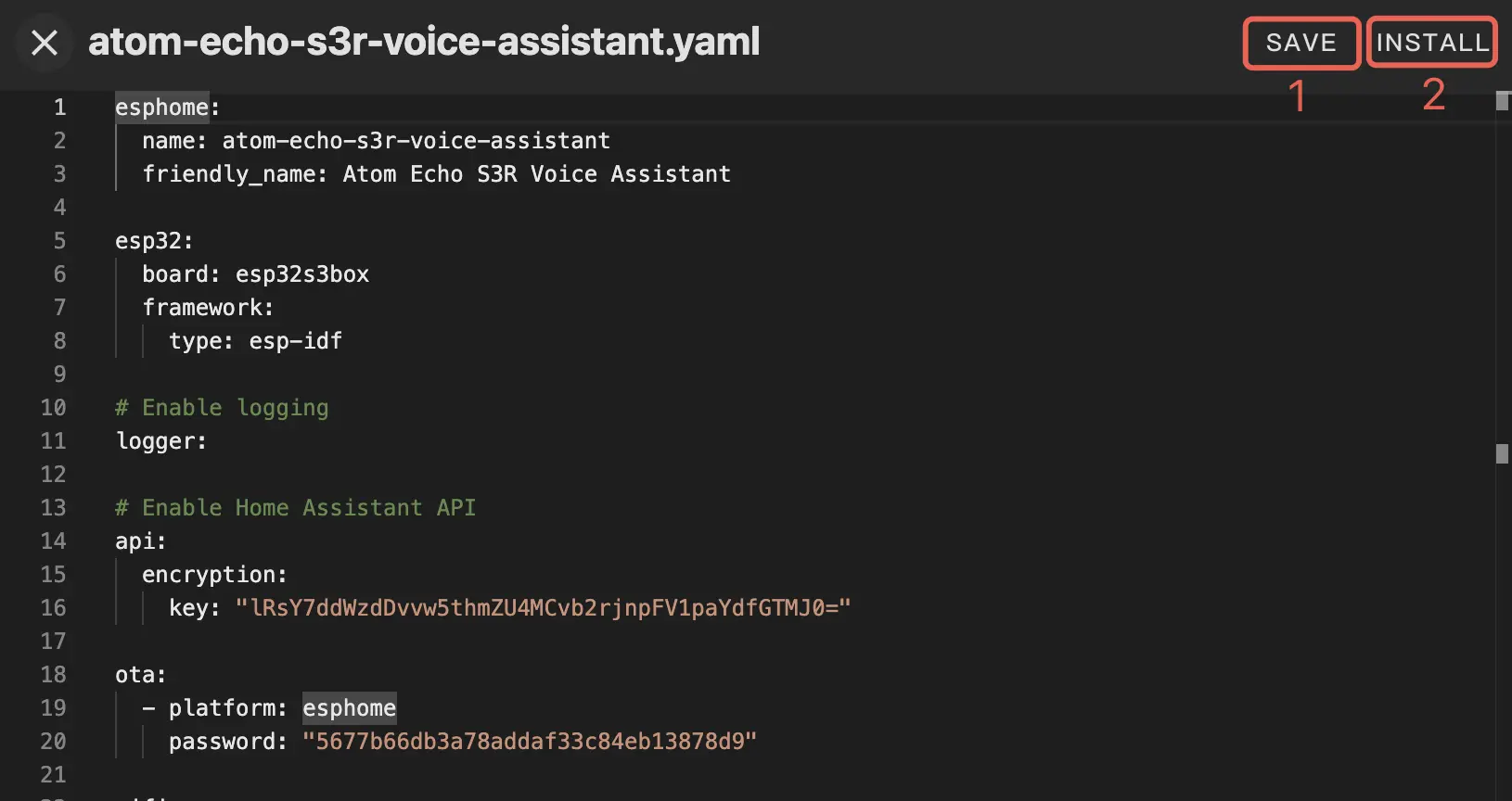
- The YAML configuration file example is as follows. Add the
packagesoption to the end.
esphome:
  name: atom-echos3r-voice-assistant
  friendly_name: Atom Echo S3R Voice Assistant

esp32:
  board: esp32s3box
  framework:
    type: esp-idf

# Enable logging
logger:

# Enable Home Assistant API
api:
  encryption:
    key: "***********************"

ota:
  - platform: esphome
    password: "************************"

wifi:
  ssid: !secret wifi_ssid
  password: !secret wifi_password

  # Enable fallback hotspot (captive portal) in case wifi connection fails
  ap:
    ssid: "Atom-EchoS3R-Voice-Assistant"
    password: ""

captive_portal:

# Add the external package here
packages:
  remote_package_files:
    url: https://github.com/m5stack/esphome-yaml
    files: [common/atom-echos3r-satellite-base.yaml]
    ref: main
refresh: 0s- Click
Save, thenInstallto perform the installation.
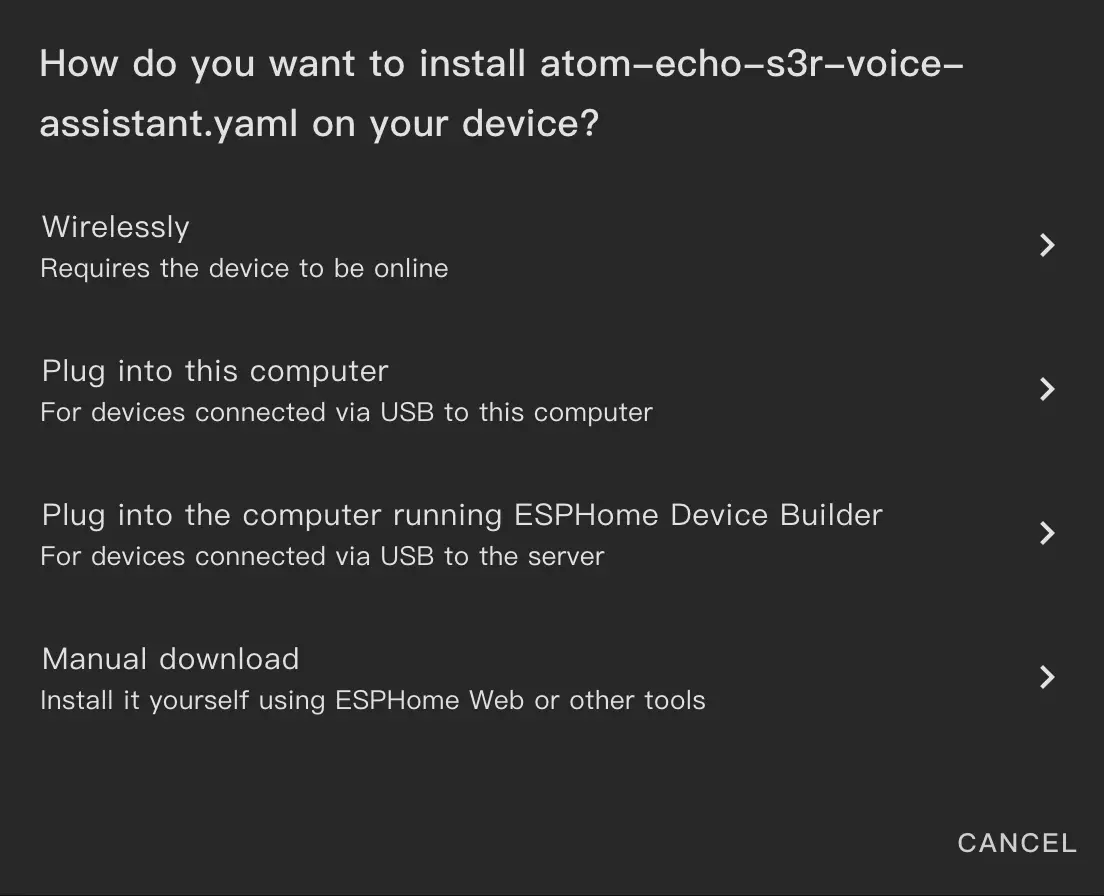
- Choose your installation method according to the actual situation. Generally, if the device is already connected to the Home Assistant host and has entered download mode, you can select
Plug into the computer running ESPHome Device Builder, then select the serial device to compile and upload.
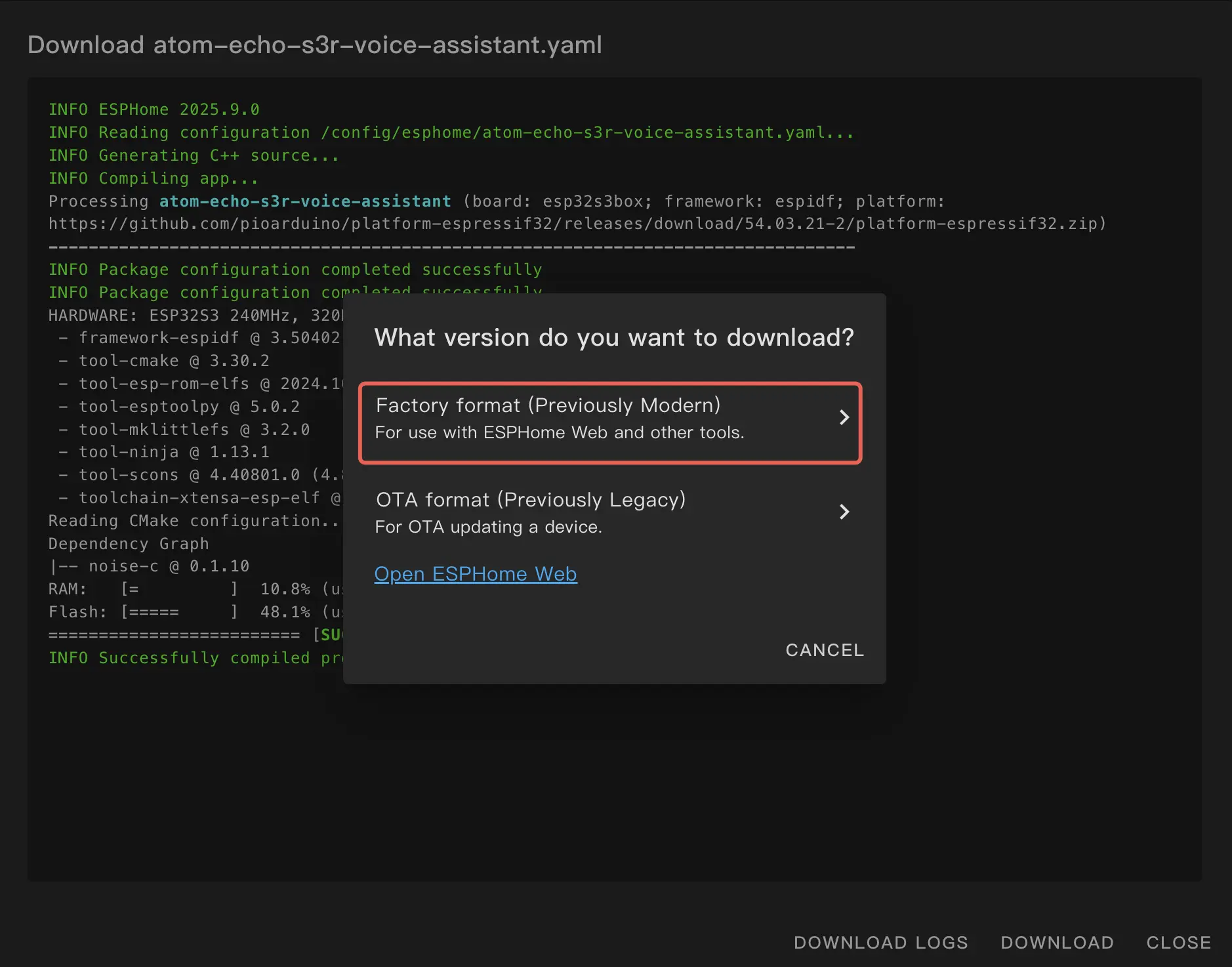
Here we use Manual download as a demonstration:
Download and Flash Firmware
- Once the compilation is complete, click
Open ESPHome Web. Meanwhile, selectFactory formatto download the firmware.
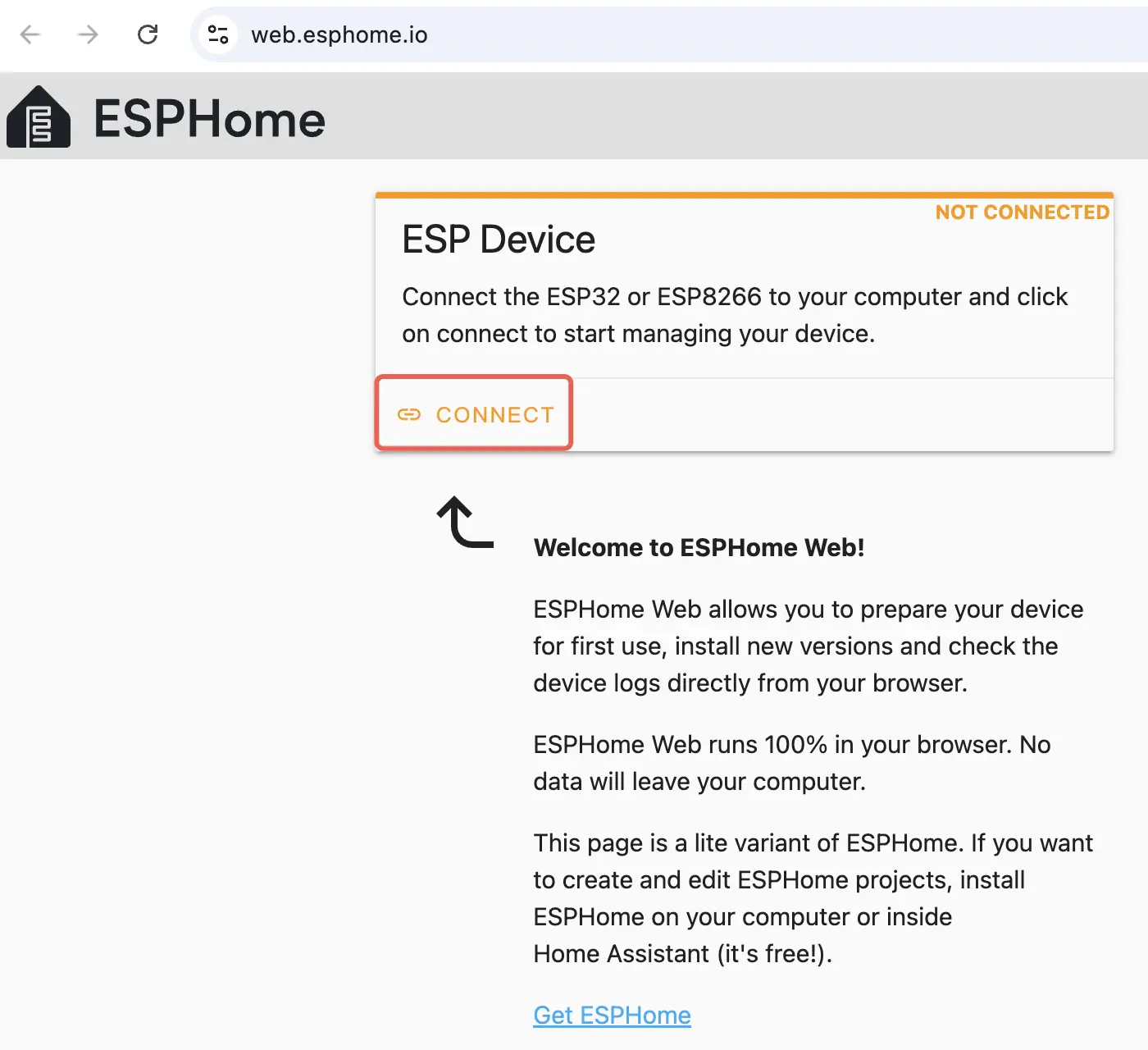
- On the ESPHome Web page, click
CONNECTto connect your device.
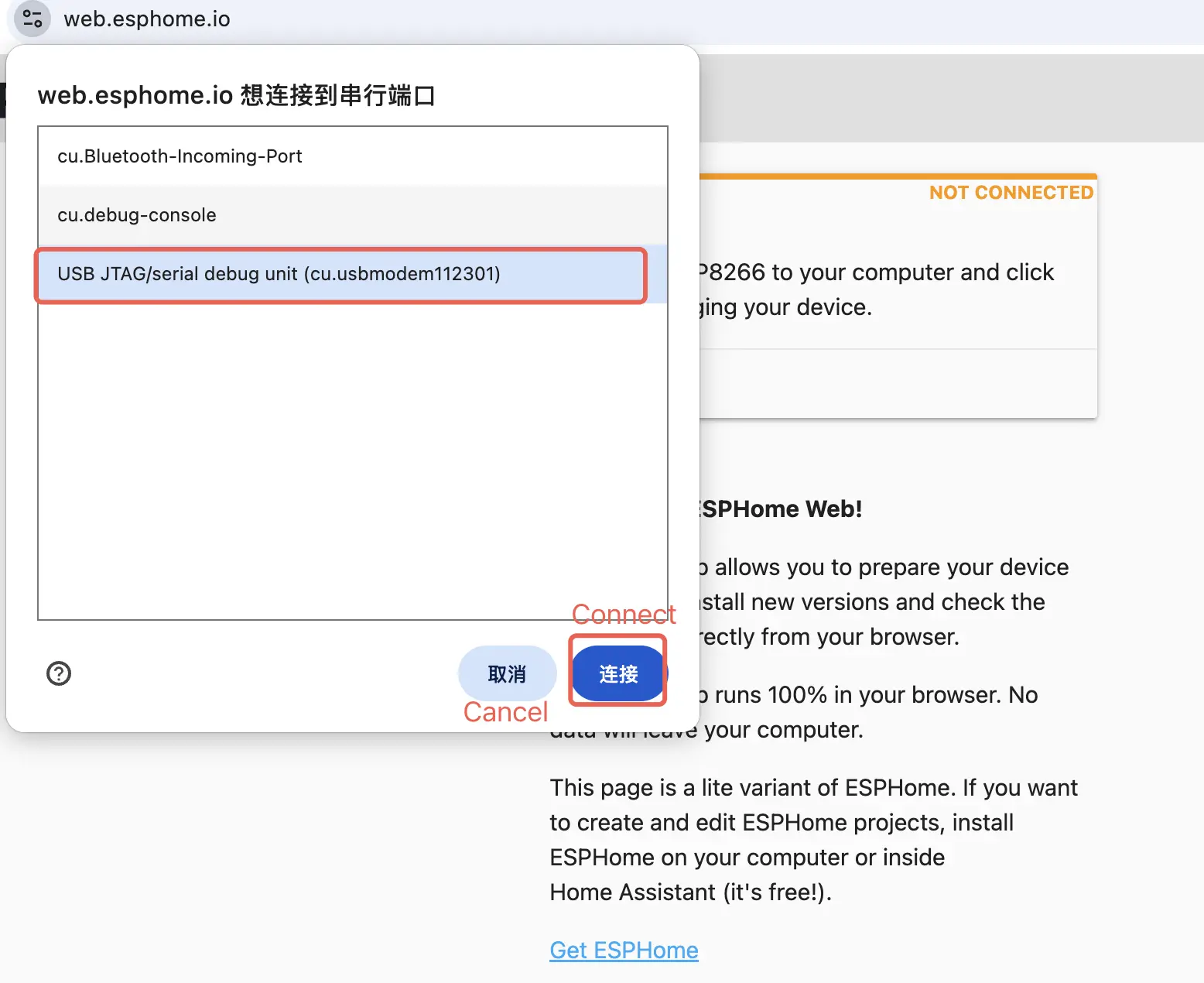
- Select the correct serial port.
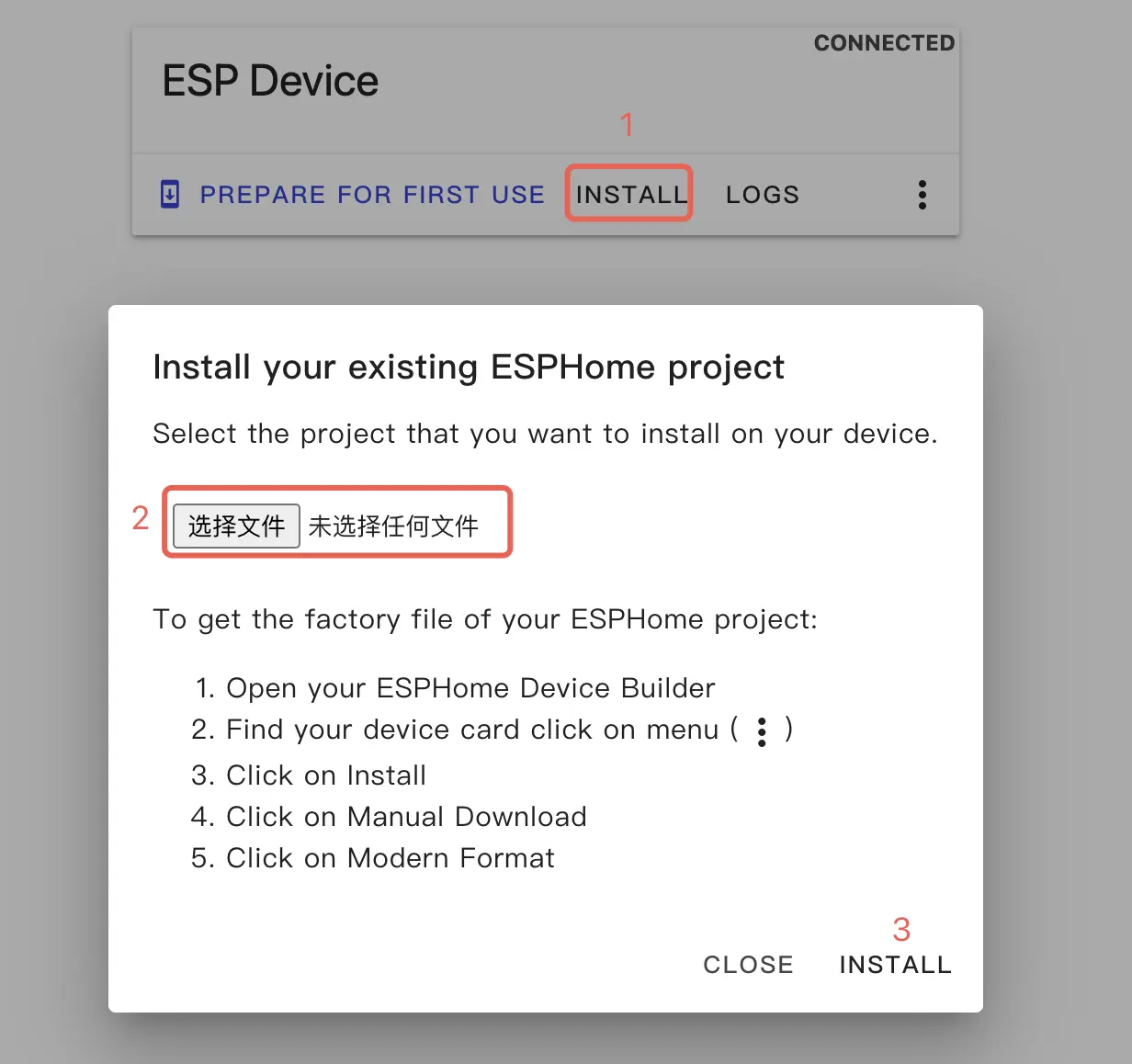
- Click
INSTALLto upload the firmware.
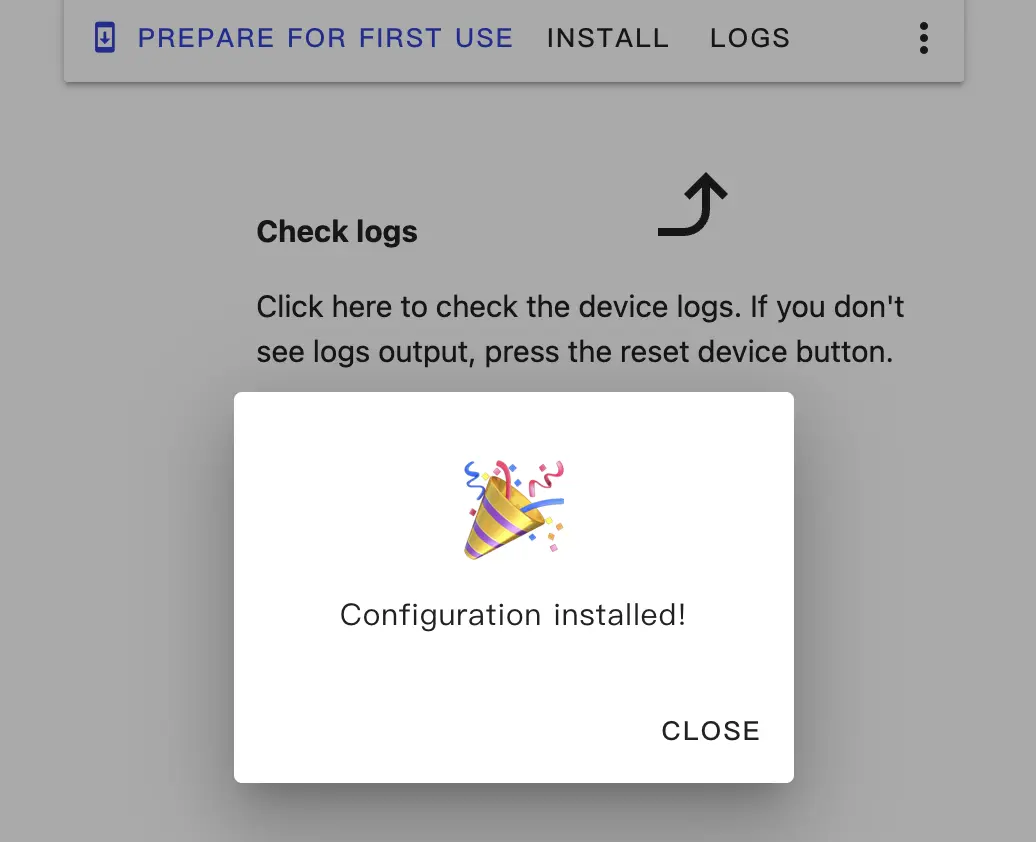
- Wait for the burning to complete, then RESET the device.
4. Getting Started
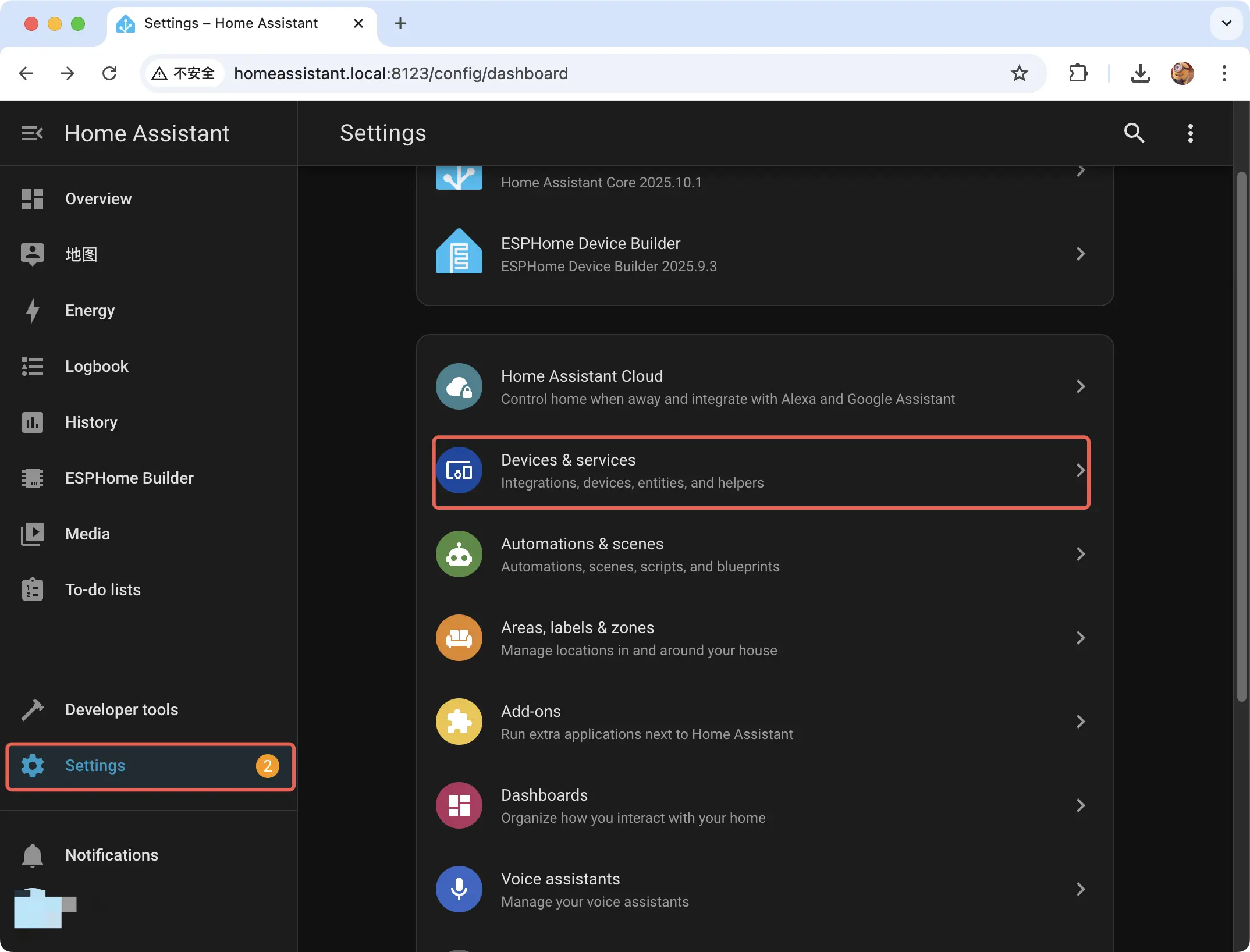
- After the device powers on, it will automatically connect to WiFi. Home Assistant devices on the same local network will prompt that a new device has been discovered. You can find the device in Notifications and click
Check it outto configure it. - If there is no notification reminder, you can go to
Settings -> Devices & Servicesto find the device and configure it.
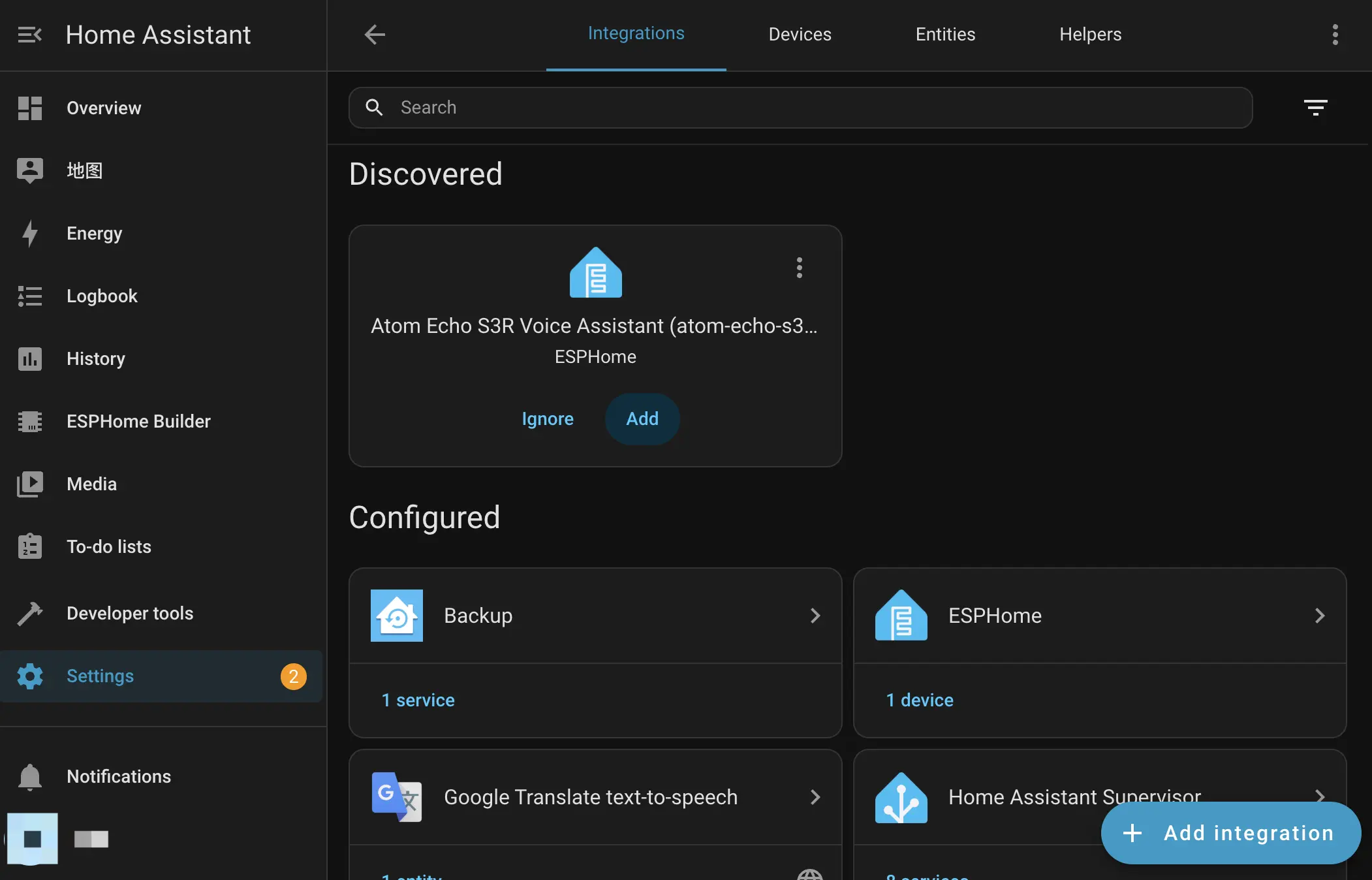
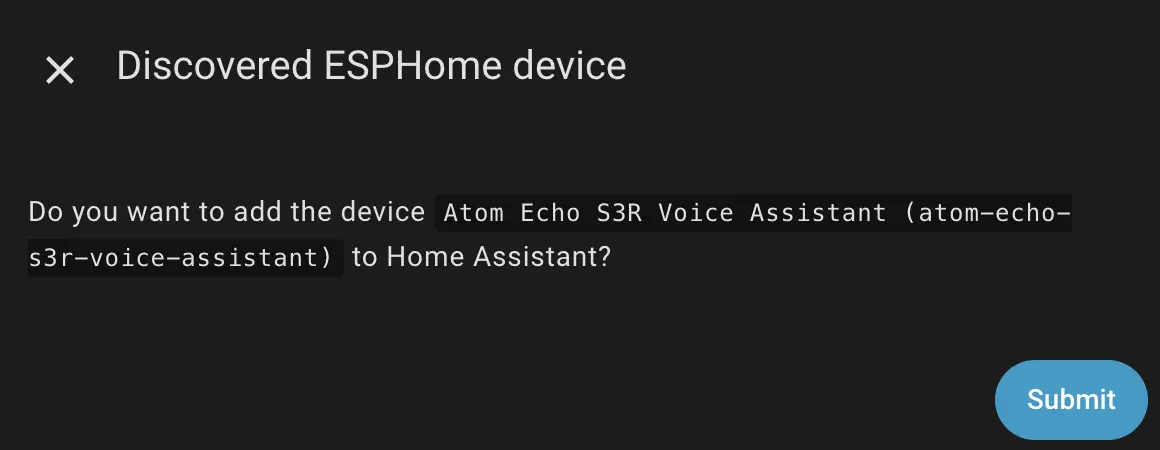
- Click
Addto add the integration.
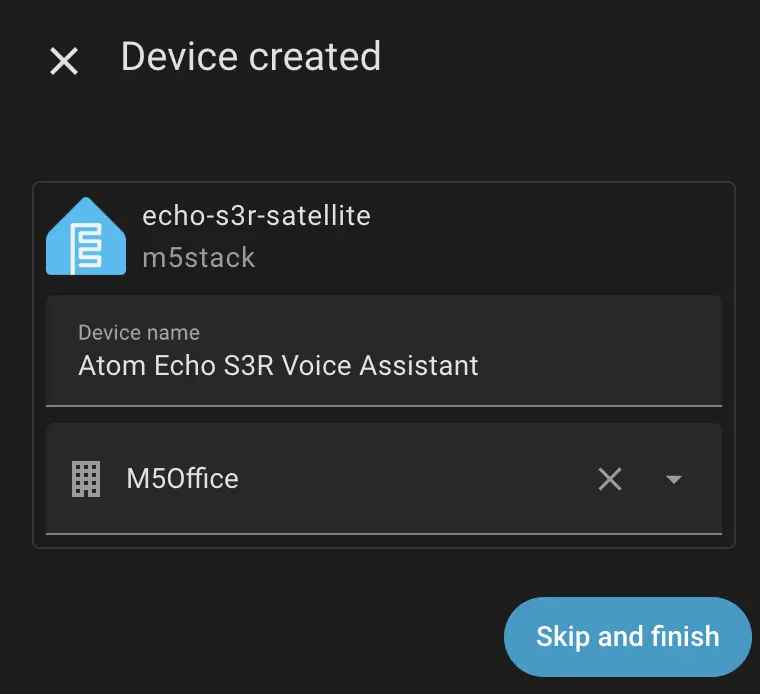
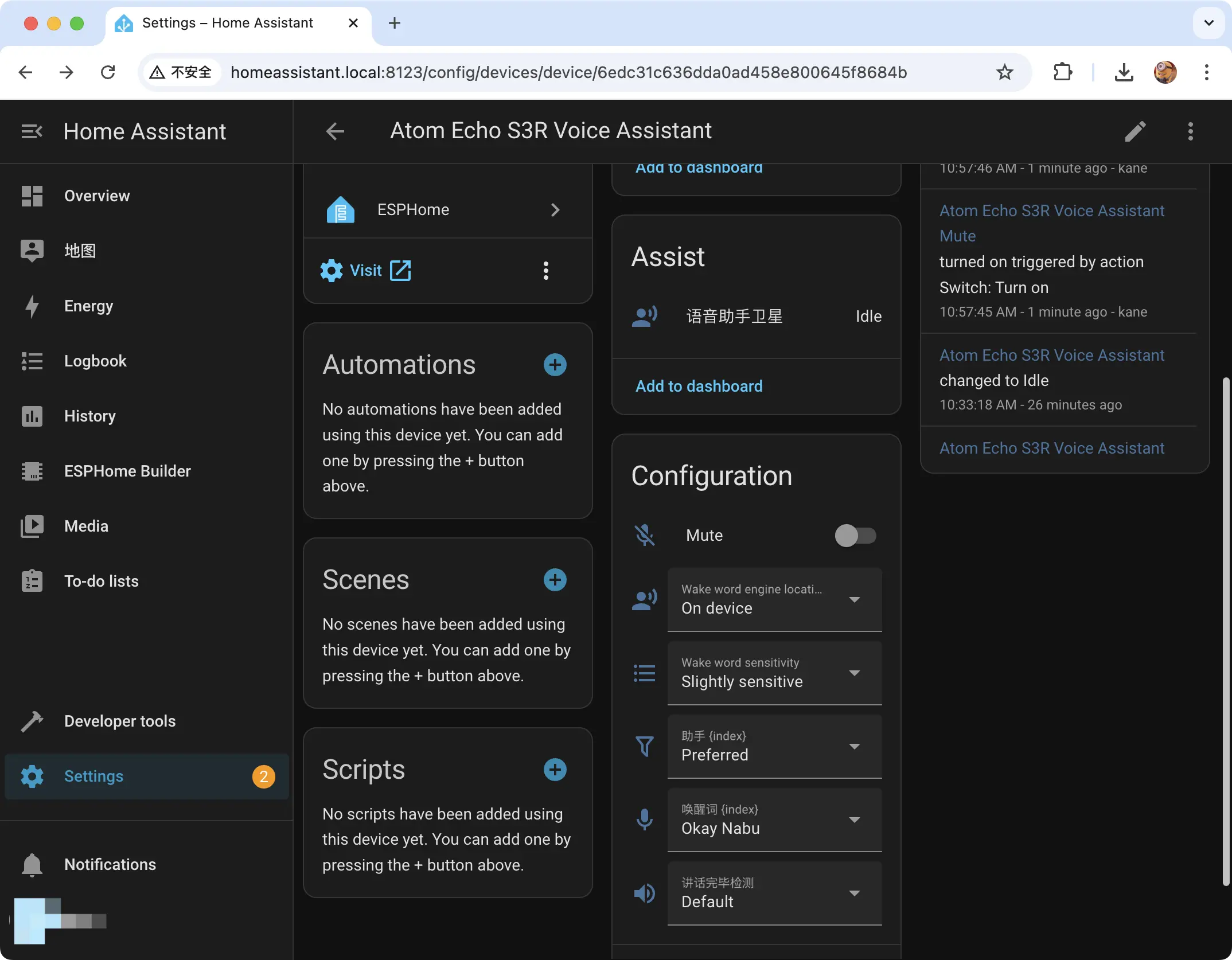
- After setting the correct Pipeline, try using the wake word
Okay Nabuto wake up the device.
5. Video
Page Tools