

Arduino 上手教程
2. 设备开发 & 案例程序
3. M5Unified
4. M5GFX
5. 扩展模块
Unit
Module
Atomic
Tab5
IoT
Module COMX LTE Arduino 使用教程
1. 准备工作
环境配置: 参考 Arduino IDE 上手教程完成 IDE 安装,并根据实际使用的开发板安装对应的板管理,与需要的驱动库。
使用到的驱动库:
使用到的硬件产品:
2. 注意事项
引脚兼容性
由于每款主机的引脚配置不同,使用前请参考产品文档中的引脚兼容表,并根据实际引脚连接情况修改案例程序。
3. 案例程序
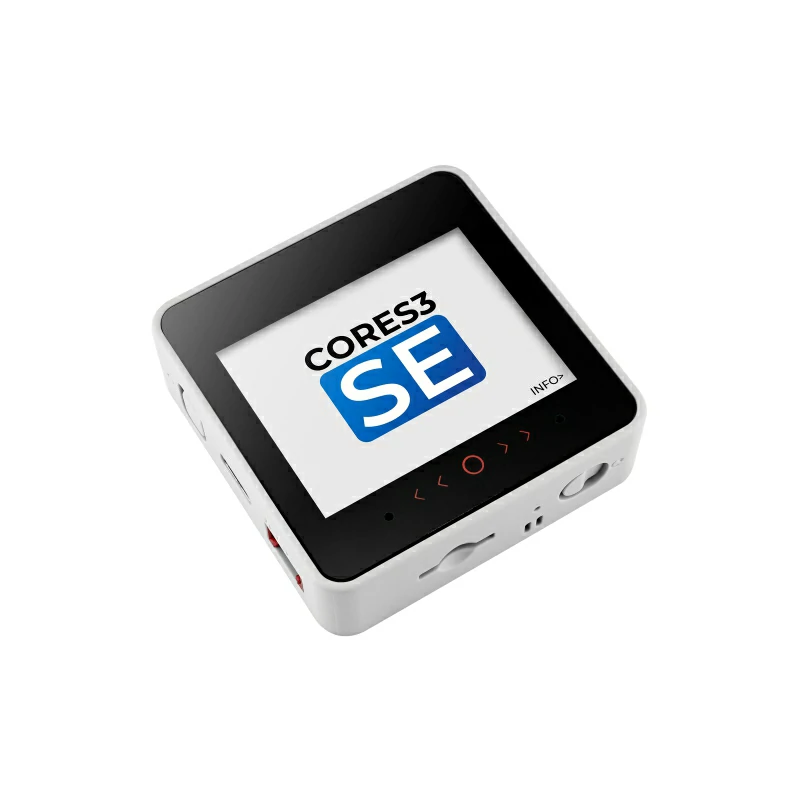
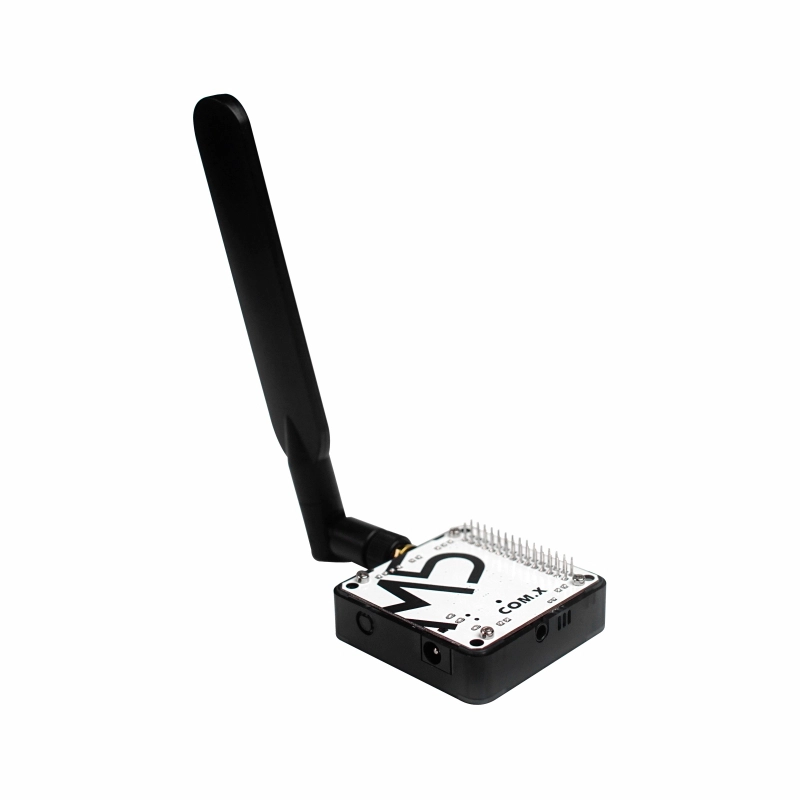
- 本教程中使用的主控设备为 CoreS3-SE,搭配 Module COMX LTE 外接带麦耳机实现拨号通话。使用前请参考下图,将引脚拨码开关,切换到指定位置。
3.1 引脚拨码开关
Module COMX LTE 采用串口的方式通讯,请根据实际的电路连接修改程序中的引脚定义,设备连接后对应的串口IO 为 G1 (RX)、G7 (TX),实物如下图所示:
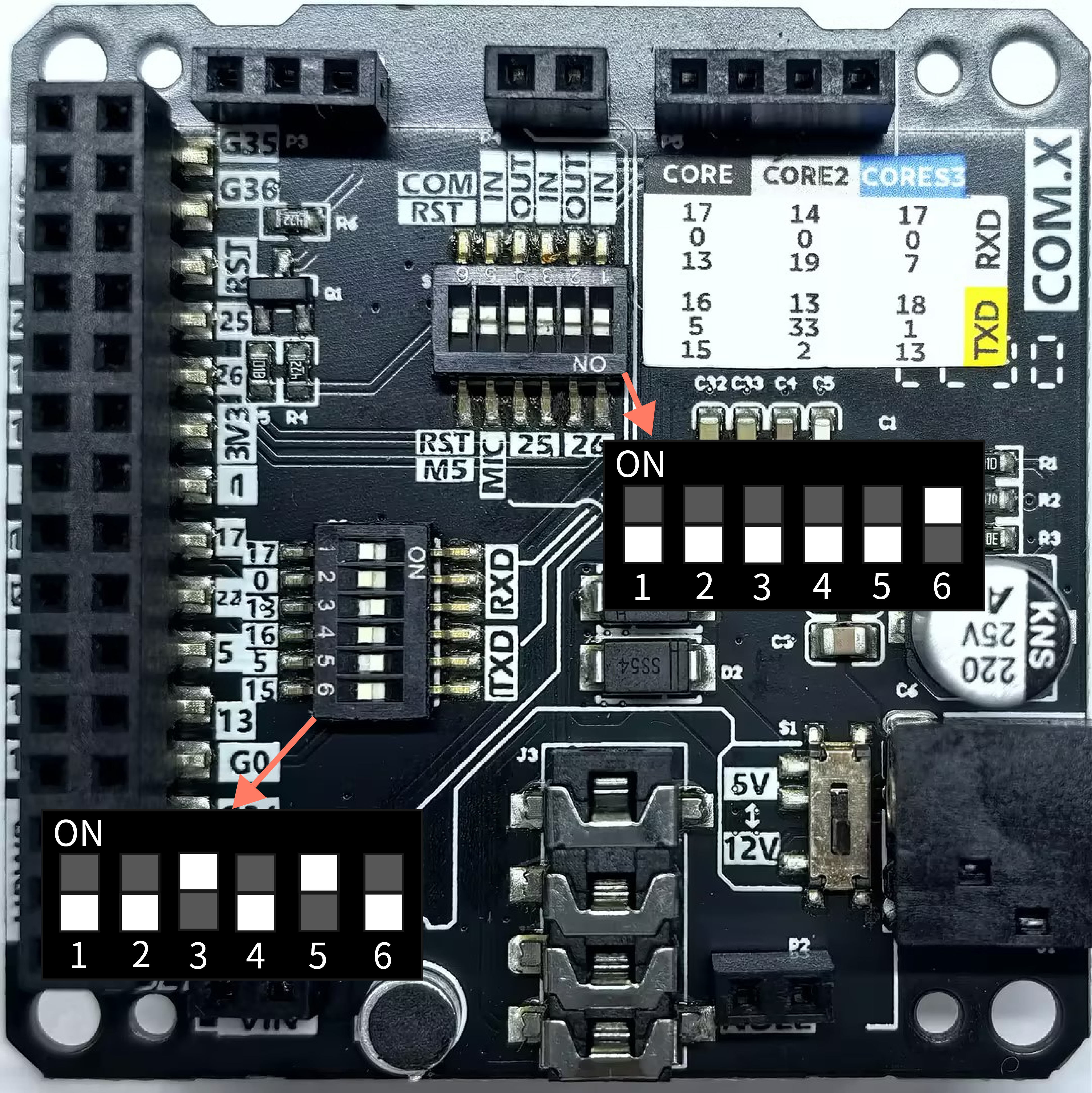
说明
1. 若拨码开关
2. 若使用 Core 系列主控设备,可将拨码开关
COM RST 位置设置为 ON,则模块会连接到主控的复位引脚,当主控复位时,模块也会被复位,此时模块初始化时间将会较长,请根据实际需求进行设置。2. 若使用 Core 系列主控设备,可将拨码开关
25 OUT 位置设置为 ON,使用主控设备内部集成的扬声器作为通话音频输出(仅适用于 Core 系列)。3.2 耳机选用
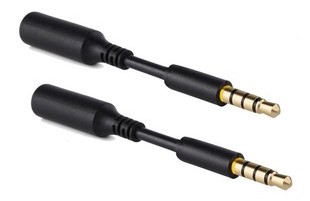
Module COMX LTE 集成了 3.5mm TRRS 耳机插孔,可外接带麦耳机作为通话音频的输入输出,此插孔适配 17mm 长度的插头。若使用 14mm 长度的插头,将不能正常使用耳机,请使用类似于下图所示的公对母转接头进行连接:
3.3 程序代码
cpp
1 2 3 4 5 6 7 8 9 10 11 12 13 14 15 16 17 18 19 20 21 22 23 24 25 26 27 28 29 30 31 32 33 34 35 36 37 38 39 40 41 42 43 44 45 46 47 48 49 50 51 52 53 54 55 56 57 58 59 60 61 62 63 64 65 66 67 68 69 70 71 72 73 74 75 76 77 78 79 80 81 82 83 84 85 86 87 88 89 90 91 92 93 94 95 96 97 98 99 100 101 102 103 104 105 106 107 108 109 110 111 112 113 114 115 116 117 118 119 120 121 122 123 124 125 126 127 128 129 130 131 132 133 134 135 136 137 138 139 140 141 142 143 144 145 146 147 148 149 150 151 152 153 154 155 156 157 158 159 160 161 162 163 164 165 166 167 168 169 170 171 172 173 174 175 176 177 178 179 180 181 182 183 184 185 186 187 188 189 190 191 192 193 194 195 196 197 198 199 200 201 202 203 204 205 206 207 208 209 210 211 212 213 214 215 216 217 218 219 220 221 222 223 224 225 226 227 228 229 230 231 232 233 234 235 236 237 238 239 240 241 242 243 244 245 246 247 248 249 250 251 252 253 254 255 256 257 258 259 260
#include <M5Unified.h>

// Call-related status variables (volatile for interrupt-safe access)
volatile bool call_connected = false;
volatile bool call_ended     = false;
volatile int  call_result    = 0;   // Call result code: 0=Unknown, 1=Connected, 2=Unanswered, 3=Busy

bool  network_ready = false;
bool  calling       = false;

// Read all available data from LTE module serial port and update call status
// Parses Unsolicited Result Codes (URC) from LTE module to detect call state changes
void readLTEURC()
{
    static String buf;

    while (Serial2.available() > 0) {
        char c = (char)Serial2.read();
        buf += c;
    }

    if (buf.length() == 0) return;

    // Determine call status by matching URC keywords
    if (buf.indexOf("VOICE CALL: BEGIN") != -1) {
        call_connected = true;
        call_result    = 1;
        Serial.println("[COMX LTE URC] CALL CONNECTED (VOICE CALL: BEGIN)");
    }
    if (buf.indexOf("VOICE CALL: END") != -1) {
        call_ended = true;
        Serial.println("[COMX LTE URC] CALL ENDED (VOICE CALL: END)");
    }
    if (buf.indexOf("NO CARRIER") != -1) {
        call_ended = true;
        if (!call_connected) {
            call_result = 2;
        }
        Serial.println("[COMX LTE URC] CALL ENDED (NO CARRIER)");
    }
    if (buf.indexOf("BUSY") != -1) {
        call_ended  = true;
        call_result = 3;
        Serial.println("[COMX LTE URC] CALL BUSY");
    }

    // Print raw OK/ERROR responses (dialing uses sendATandWait's timeout handling)
    if (buf.indexOf("OK") != -1 || buf.indexOf("ERROR") != -1) {
        Serial.print("[COMX LTE RSP RAW] ");
        Serial.println(buf);
    }

    // Clear after processing to prevent overflow
    buf = "";
}

// Send AT command to LTE module and wait for OK/ERROR response with timeout
// @param cmd: AT command string (must include \r\n for line ending)
// @param resp: Reference to store full response from module
// @param timeout_ms: Maximum wait time in milliseconds
// @return: true = "OK" received, false = "ERROR" received or timeout
bool sendATandWait(const String& cmd, String& resp, uint32_t timeout_ms)
{
    resp = "";
    Serial.print("[COMX LTE TX] ");
    Serial.print(cmd);

    Serial2.print(cmd);// Transmit AT command to LTE module

    uint32_t start = millis();
    // Wait for response until timeout expires
    while (millis() - start < timeout_ms) {
        while (Serial2.available() > 0) {
            char c = (char)Serial2.read();
            resp += c;

            // Check for termination conditions (OK/ERROR)
            if (resp.indexOf("OK") != -1) {
                Serial.print("[COMX LTE RSP] ");
                Serial.println(resp);
                return true;
            }
            if (resp.indexOf("ERROR") != -1) {
                Serial.print("[COMX LTE RSP] ");
                Serial.println(resp);
                return false;
            }
        }
        delay(10);
    }

    Serial.print("[COMX LTE RSP TIMEOUT] ");
    Serial.println(resp);
    return false;
}

// Wait for LTE module initialization completion
// Verifies basic AT command responsiveness (OK response to "AT" command)
// @param timeout_ms: Maximum wait time for module to respond
// @return: true = module ready (AT port responsive), false = timeout
bool waitForModuleReady(uint32_t timeout_ms)
{
    uint32_t start = millis();
    Serial.println("[COMX LTE] Waiting for module ready...");
    while (millis() - start < timeout_ms) {
        readLTEURC();                 // 吃掉启动URC/残留输出
        String resp;
        if (sendATandWait("AT\r\n", resp, 1000)) {
            Serial.println("[COMX LTE] Module ready.");
            return true;              // 回复OK,说明AT口已就绪
        }
        delay(200);
    }
    Serial.println("[COMX LTE] Module not ready (timeout).");
    return false;
}

// Wait for SIM7600G network readiness (GPRS attach + LTE network registration)
// Verifies both CGATT (attach) and CEREG (registration) statuses
// @param timeout_ms: Maximum wait time for network registration
// @return: true = network registered, false = timeout
bool waitForNetworkReady(uint32_t timeout_ms)
{
    uint32_t start = millis();
    Serial.println("[COMX LTE] Waiting for network...");

    while (millis() - start < timeout_ms) {
        String resp;

        // 1) Query GPRS attach status: AT+CGATT?
        // Expected response: +CGATT: 1 (attached) / +CGATT: 0 (detached)
        if (sendATandWait("AT+CGATT?\r\n", resp, 2000)) {
            if (resp.indexOf("+CGATT: 1") == -1) {
                Serial.println("[COMX LTE] Not attached, retry...");
                delay(1000);
                continue;
            }
        } else {
            Serial.println("[COMX LTE] CGATT? error, retry...");
            delay(1000);
            continue;
        }

        // 2) Query LTE network registration status: AT+CEREG?
        // Expected responses:
        // +CEREG: 0,1 = Registered (home network)
        // +CEREG: 0,5 = Registered (roaming network)
        resp = "";
        if (sendATandWait("AT+CEREG?\r\n", resp, 2000)) {
            if (resp.indexOf("+CEREG:") != -1 &&
                (resp.indexOf(",1") != -1 || resp.indexOf(",5") != -1)) {
                Serial.println("[COMX LTE] Network registered.");
                return true;
            } else {
                Serial.println("[COMX LTE] Not registered, retry...");
            }
        } else {
            Serial.println("[COMX LTE] CEREG? error, retry...");
        }

        delay(100);
    }

    Serial.println("[COMX LTE] Network not ready (timeout).");
    return false;
}

void setup()
{
    M5.begin();
    Serial.begin(115200);
    Serial.println("\r\n[COMX LTE] Start");
    Serial2.begin(115200, SERIAL_8N1, 1, 7); // Initialize LTE module serial port RX=1,TX=7

    M5.Display.setFont(&fonts::FreeMonoBold9pt7b);
    M5.Display.setTextDatum(middle_center);
    M5.Display.clear();
    M5.Display.drawString("Module Initializing...", 160, 120);

    delay(500);

    // Initialize LTE module first, then check network status
    if (!waitForModuleReady(25000)) {// Module initialization typically takes up to 20s
        network_ready = false;
    } else {
        network_ready = waitForNetworkReady(30000);
    }

    M5.Display.clear();
    if (network_ready) {
        Serial.println("[COMX LTE] Touch screen to dial/stop");
        M5.Display.drawString("Touch screen to dial", 160, 80);
    } else {
        Serial.println("[COMX LTE] Network NOT ready, please reset.");
        M5.Display.drawString("Network not ready", 160, 120);
    }
}

void loop()
{
    M5.update();
    auto touchDetail = M5.Touch.getDetail();

    // Continuously read URC messages from LTE module
    readLTEURC();

    // Block dialing if network is not fully registered
    if (!network_ready) {
        delay(50);
        return;
    }

    // Handle touch input for dial/hangup control
    if (!calling && touchDetail.wasPressed()) {
        calling          = true;
        call_connected = false;
        call_ended     = false;
        call_result    = 0;

        Serial.println("[COMX LTE] Dialing...");
        M5.Display.clear();
        M5.Display.drawString("Calling......", 160, 120);
        M5.Display.drawString("Touch screen to hang up", 160, 80);

        String resp;
        // ATD command format: ATD<phone_number>
        bool ok = sendATandWait("ATDXXXXXXXXXXX;\r\n", resp, 10000);

        Serial.print("[DIAL RESULT] ");
        Serial.println(ok ? "OK" : "ERROR/TIMEOUT");
    }
    else if (calling && touchDetail.wasPressed()) {
        Serial.println("[COMX LTE] Hangup");
        String resp;
        sendATandWait("AT+CHUP\r\n", resp, 5000);

        calling     = false;
        call_ended  = true;
        M5.Display.clear();
        M5.Display.drawString("Call ended", 160, 120);
        M5.Display.drawString("Touch screen to dial", 160, 80);
    }

    // Update display based on real-time call status
    if (calling) {
        if (call_connected) {
            M5.Display.clear();
            M5.Display.drawString("Speaking......", 160, 120);
            M5.Display.drawString("Touch screen to hang up", 160, 80);
        }
        if (call_ended) {
            calling = false;
            M5.Display.clear();
            M5.Display.drawString("Call ended", 160, 120);
            M5.Display.drawString("Touch screen to dial", 160, 80);
        }
    }

    delay(20);
}4. 编译上传
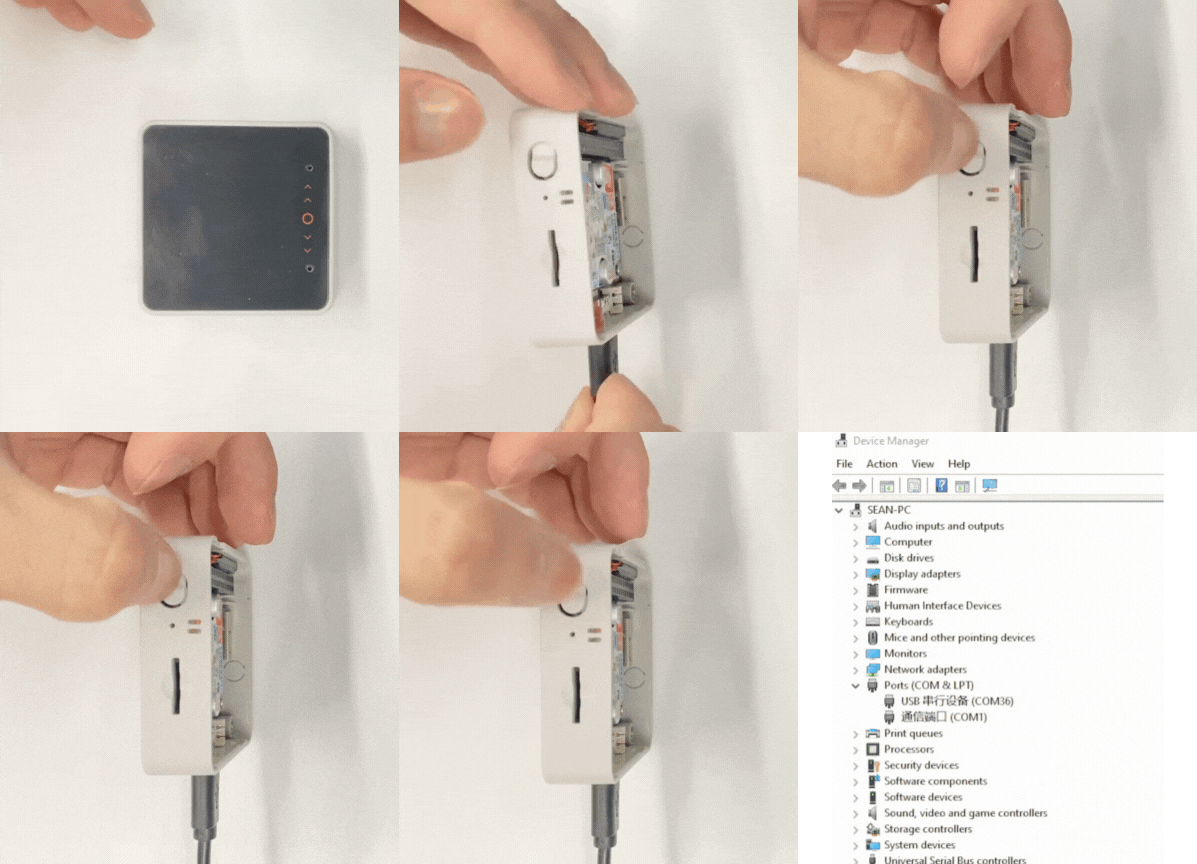
- 1. 进入下载模式:CoreS3-SE 长按复位按键 (大约 2 秒) 直到内部绿色 LED 灯亮起后松开按键。松开后绿色 LED 灯熄灭,表示设备已进入下载模式,等待烧录。
说明
不同设备进行程序烧录前需要进入下载模式,不同的主控设备该步骤可能有所不同。详情可参考Arduino IDE上手教程页面底部的设备程序下载教程列表,查看具体的操作方式。
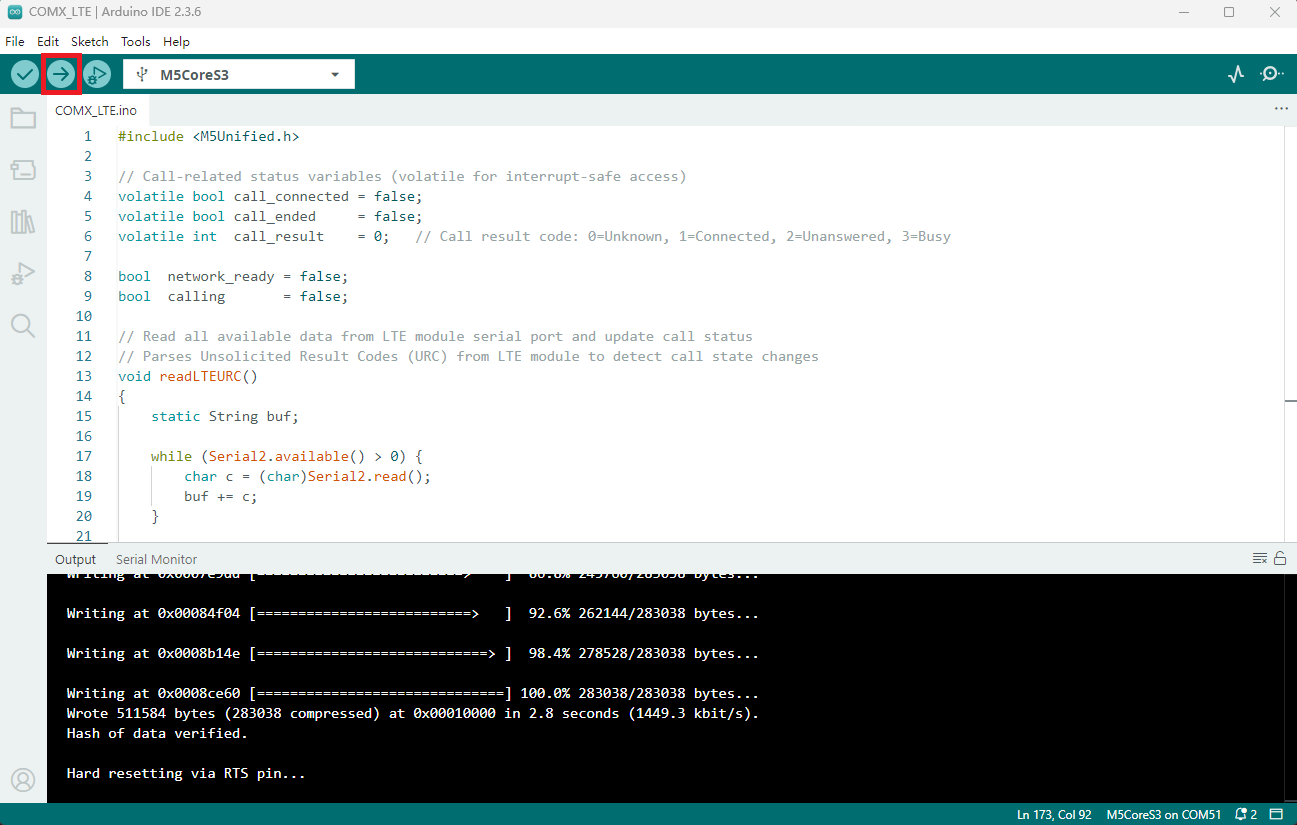
- 选中设备端口,点击 Arduino IDE 左上角编译上传按钮,等待程序完成编译并上传至设备。
5. 拨号通话
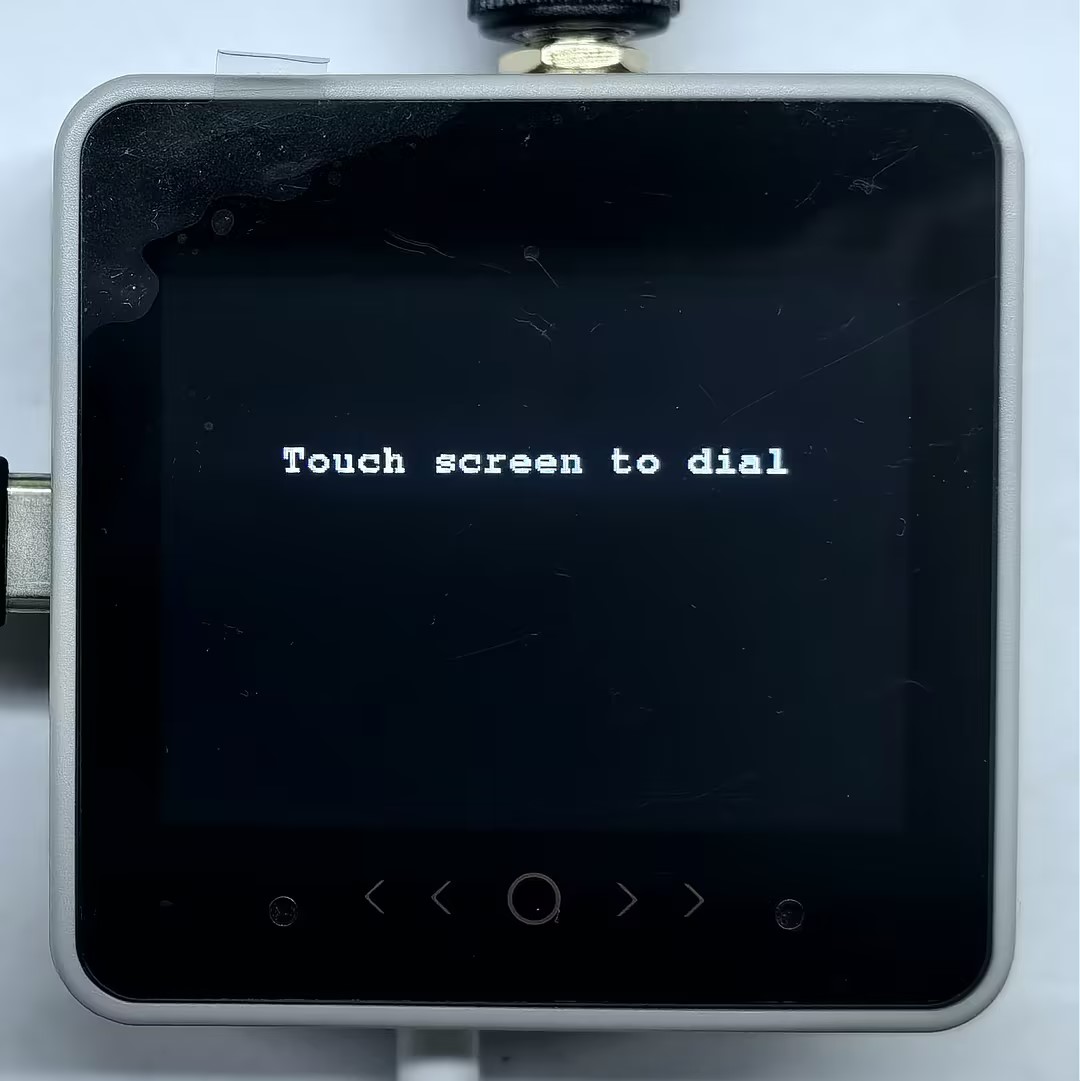
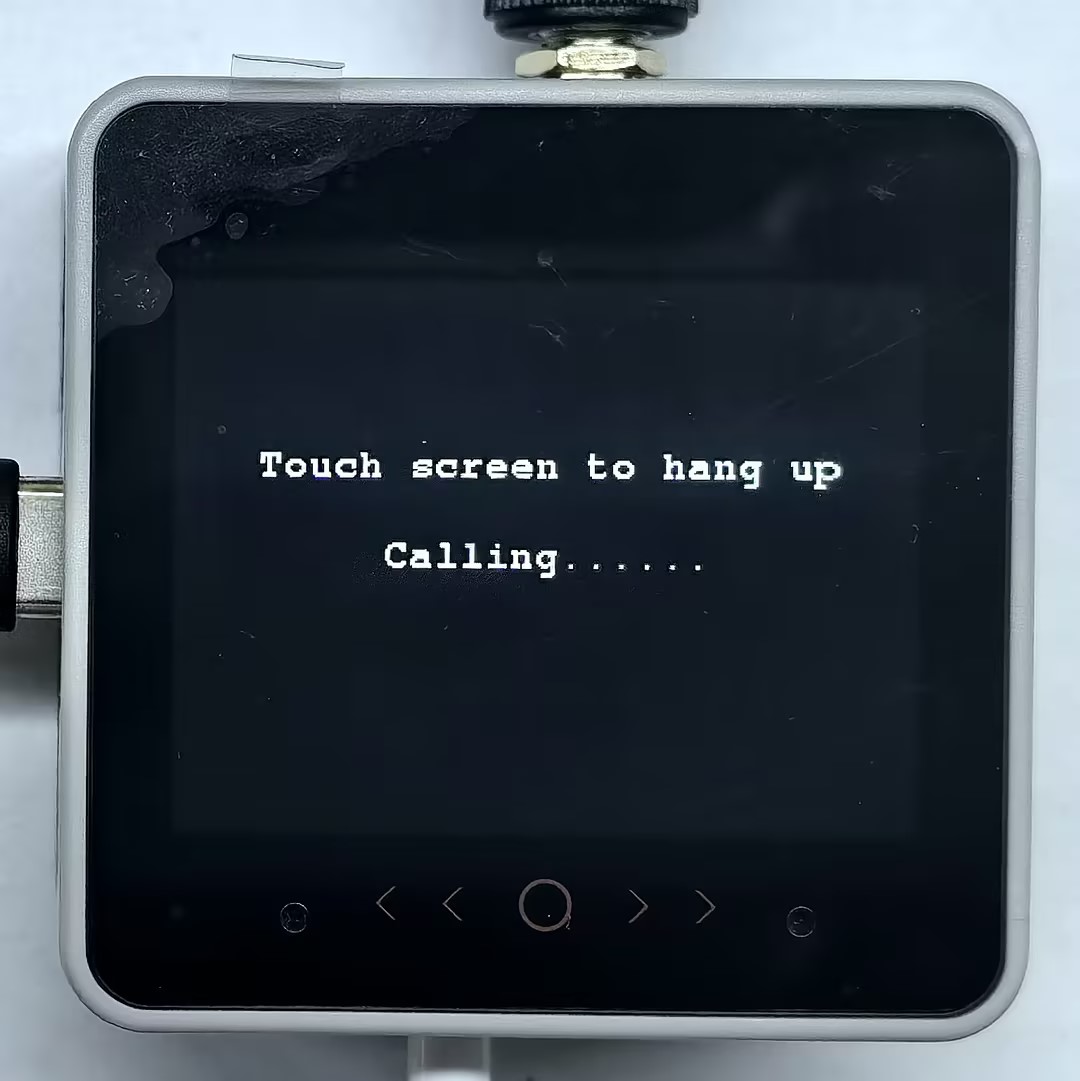
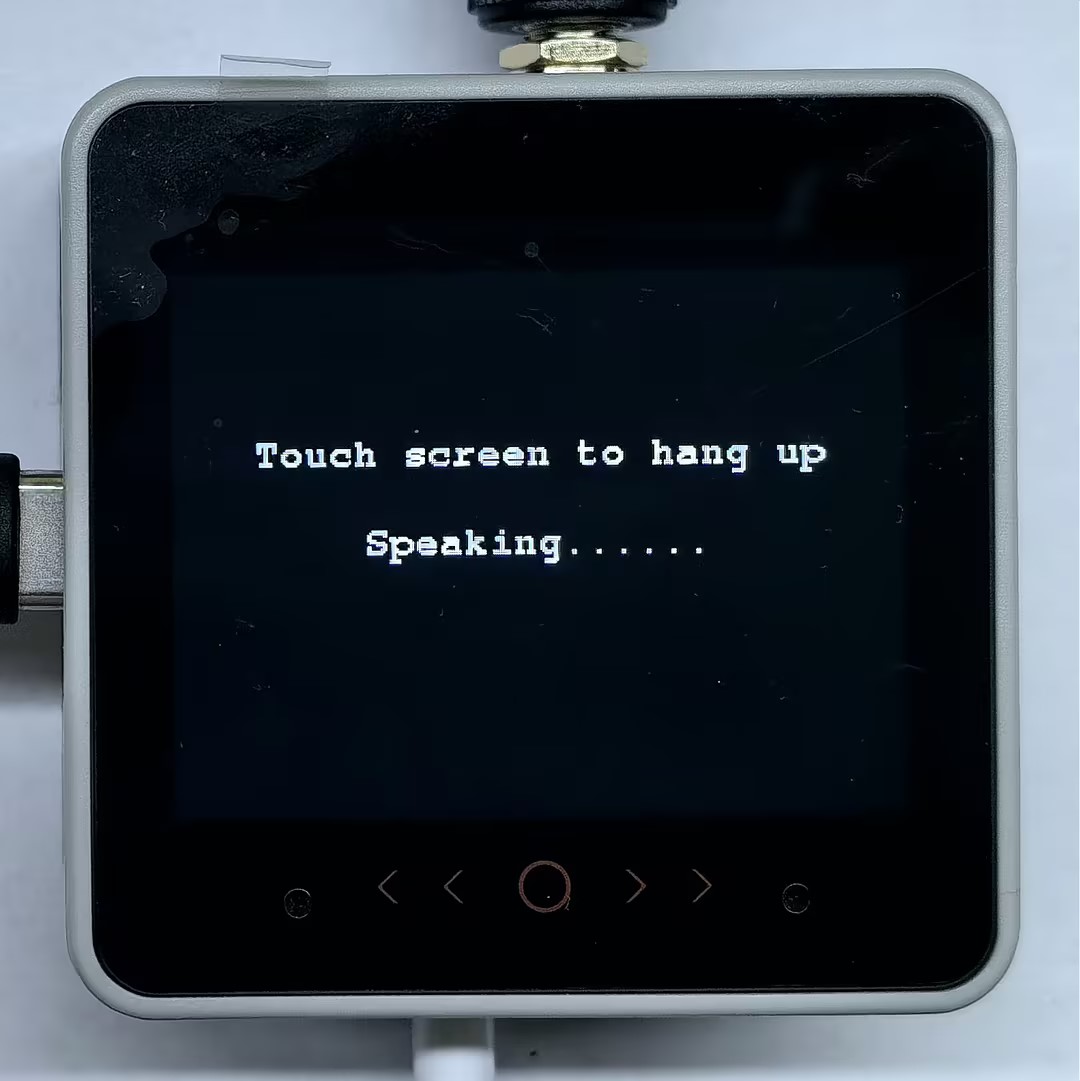
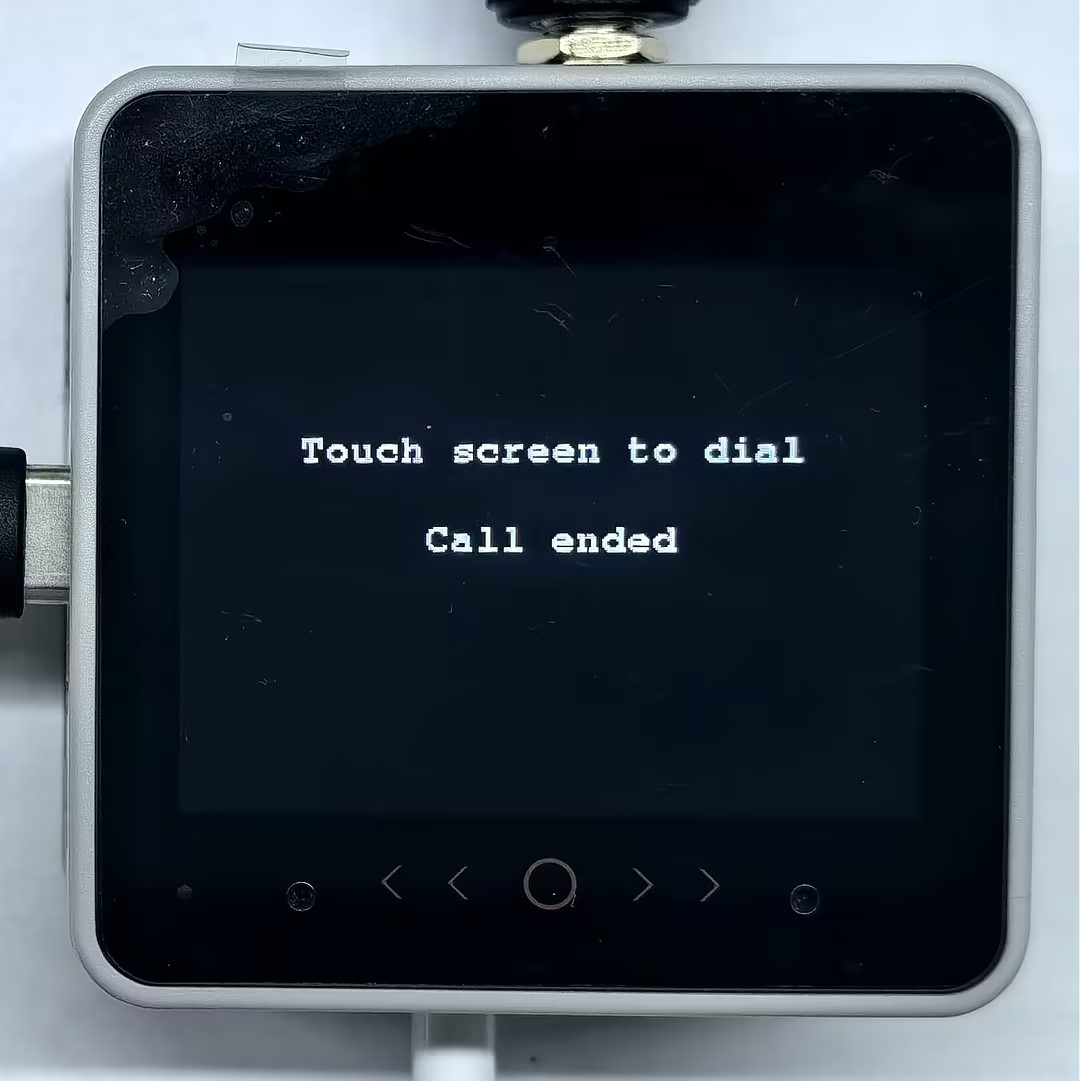
- 上电后,Module COMX LTE 模块会自动初始化,并尝试连接网络,连接成功后触摸主控屏幕即可拨号,通话过程中再次触摸主控屏幕即可挂断,并且在屏幕上会显示当前的通话状态。
- 以下为串口监视器的输出示例:
[COMX LTE] Start
[COMX LTE] Waiting for module ready...
[COMX LTE TX] AT
[COMX LTE RSP] AT

OK
[COMX LTE] Module ready.
[COMX LTE] Waiting for network...
[COMX LTE TX] AT+CGATT?
[COMX LTE RSP]
AT+CGATT?

+CGATT: 1

OK
[COMX LTE TX] AT+CEREG?
[COMX LTE RSP]
AT+CEREG?

+CEREG: 0,1

OK
[COMX LTE] Network registered.
[COMX LTE] Touch screen to dial/stop
[COMX LTE] Dialing...
[COMX LTE TX] ATDXXXXXXXXXX;
[COMX LTE RSP] ATDXXXXXXXXXX;

OK
[DIAL RESULT] OK
[COMX LTE URC] CALL CONNECTED (VOICE CALL: BEGIN)
[COMX LTE] Hangup
[COMX LTE TX] AT+CHUP
[COMX LTE RSP] AT+CHUP

VOICE CALL: END: 000008

OKPage Tools