

Arduino Quick Start
2. Devices & Examples
3. M5Unified
4. M5GFX
5. Extensions
Unit
Module
Atomic
Tab5
IoT
Accessories
Unit ID Arduino Tutorial
1. Preparations
- Environment Setup: Refer to the Arduino IDE Getting Started Guide to complete IDE installation, and install the corresponding board manager and required driver libraries for the development board used.
- Required Driver Libraries:
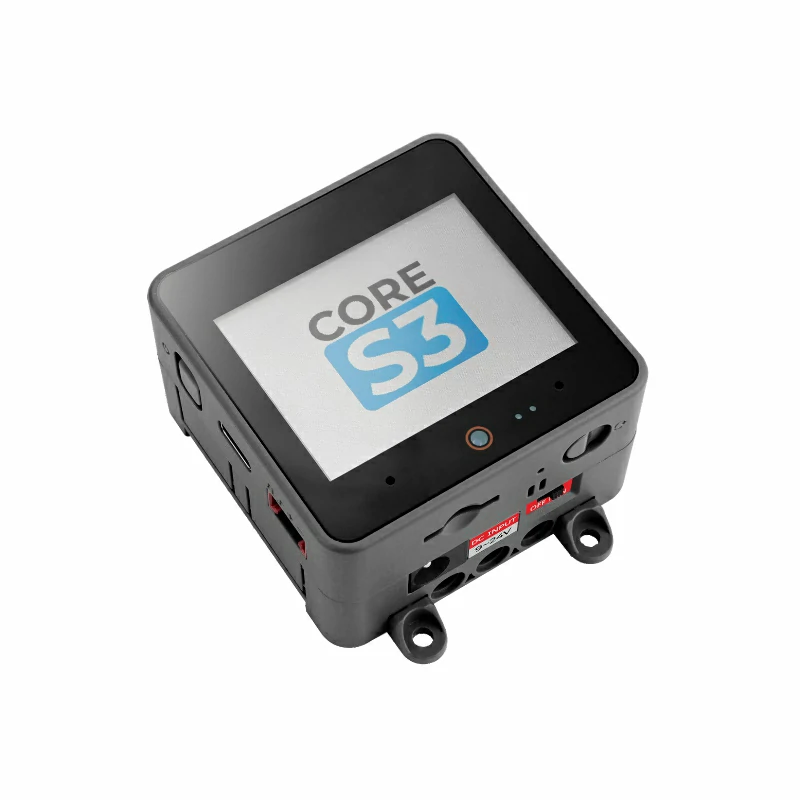
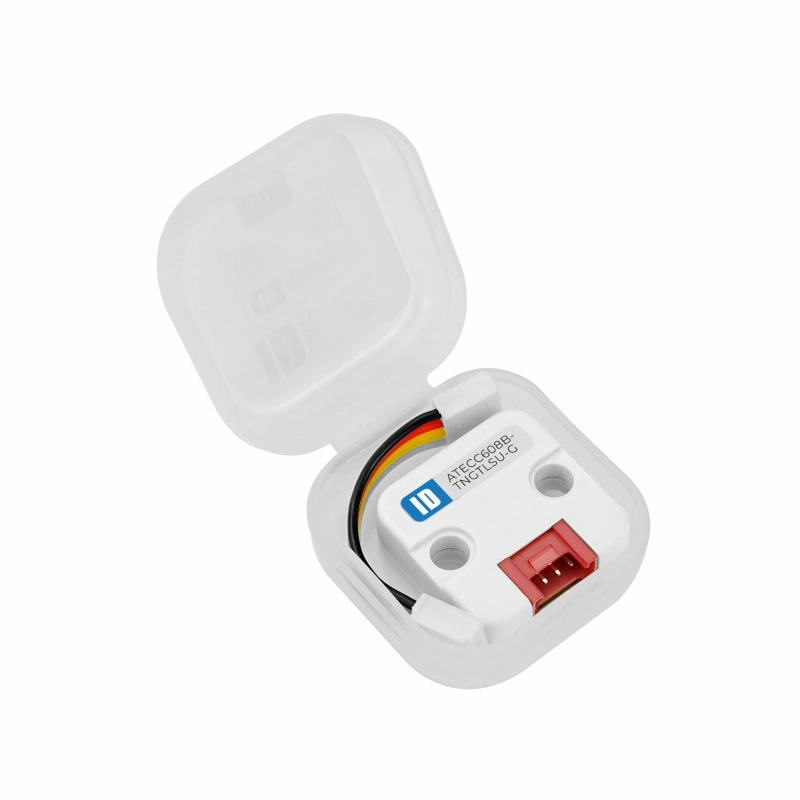
- Required Hardware Products:
2. Notes
Pin Compatibility
Since pin configurations vary across host devices, M5Stack provides a pin compatibility table for reference. Modify the example program according to your actual pin connections.
3. Example Program
- This tutorial uses a CoreS3 as the main controller with a Unit ID for local signing and verification. Unit ID communicates over I2C with a default address of
0x35; its corresponding pins after connection areG2 (SDA)andG1 (SCL).
Note
This example performs signing and verification locally between the Unit ID and CoreS3. Use the Trust&GO secure element according to the chip status and key configuration requirements.
cpp
1 2 3 4 5 6 7 8 9 10 11 12 13 14 15 16 17 18 19 20 21 22 23 24 25 26 27 28 29 30 31 32 33 34 35 36 37 38 39 40 41 42 43 44 45 46 47 48 49 50 51 52 53 54 55 56 57 58 59 60 61 62 63 64 65 66 67 68 69 70 71 72 73 74 75 76 77 78 79 80 81 82 83 84 85 86 87 88 89 90 91 92 93 94 95 96 97 98 99 100 101 102 103 104 105 106 107 108 109 110 111 112 113 114 115 116 117 118 119 120 121 122 123 124 125 126 127 128 129 130 131 132 133 134 135 136 137 138 139 140 141 142 143 144 145 146 147 148 149 150 151 152 153 154 155 156 157 158 159 160 161 162 163 164 165 166 167 168 169 170 171 172 173 174 175 176 177 178 179 180 181 182 183 184 185 186 187 188 189 190 191 192 193 194 195 196 197 198 199 200 201 202 203 204 205 206 207 208 209 210 211 212 213 214 215 216 217 218 219 220 221 222 223 224 225 226 227 228 229 230 231 232 233 234 235 236 237 238 239 240 241 242 243 244 245 246 247 248 249 250 251 252 253 254 255 256 257 258 259 260 261 262 263 264 265 266 267 268 269 270 271 272 273 274 275 276 277 278 279 280 281 282 283 284 285 286 287 288 289 290 291 292 293 294 295 296 297 298 299 300 301 302 303 304 305 306 307 308 309 310 311 312 313 314 315 316 317 318 319 320 321 322 323 324 325 326 327 328 329 330 331 332 333 334 335 336 337 338 339 340 341 342 343 344 345 346 347 348 349 350 351 352 353 354 355 356 357 358 359 360 361 362 363 364 365 366 367 368 369 370 371 372 373 374 375 376 377 378 379
#include <M5Unified.h>
#include <M5GFX.h>
#include <Wire.h>
#include <SparkFun_ATECCX08a_Arduino_Library.h>

constexpr uint8_t UNIT_ID_I2C_ADDR = 0x35;
constexpr uint16_t BUTTON_H = 34;
constexpr uint16_t BUTTON_W = 98;
constexpr uint16_t BUTTON_GAP = 12;
constexpr uint16_t BUTTON_ROW1_X = 1;
constexpr uint16_t BUTTON_ROW1_Y = 164;
constexpr uint16_t BUTTON_ROW2_Y = 204;
constexpr uint16_t BUTTON_ROW2_X = 56;
constexpr uint8_t BUTTON_COUNT = 5;
constexpr uint8_t SIGNING_SLOT = 0;

const char SIGNING_MESSAGE[] = "Unit ID local authentication demo";

M5Canvas canvas(&M5.Display);
ATECCX08A unitId;

String deviceSerial;
String resultTitle = "READY";
String resultLine1 = "Touch a function below";
String resultLine2 = "ATECC608B local control";
String resultData;

bool unitReady = false;
bool configLocked = false;
bool dataLocked = false;
bool slot0Locked = false;
bool publicKeyReady = false;
bool signatureReady = false;

uint8_t publicKey[64] = {};
uint8_t signedDigest[32] = {};
uint8_t signature[64] = {};

String toHex(const uint8_t *data, size_t length)
{
  // Convert binary data to uppercase hexadecimal text.
  String result;
  result.reserve(length * 2);
  for (size_t i = 0; i < length; ++i)
  {
    if (data[i] < 0x10) result += '0';
    result += String(data[i], HEX);
  }
  result.toUpperCase();
  return result;
}

void drawHexLines(const String &value, int y)
{
  // 32 hex characters fit in the 320-pixel display only when the same
  // FreeMonoBold9pt7b font is rendered at a smaller fixed scale.
  canvas.setTextSize(0.8f);
  for (size_t offset = 0; offset < value.length(); offset += 32)
  {
    canvas.setCursor(8, y + static_cast<int>(offset / 32) * 14);
    canvas.print(value.substring(offset, offset + 32));
  }
  canvas.setTextSize(1.0f);
}

bool digestMessage(uint8_t digest[32])
{
  return unitId.sha256(reinterpret_cast<uint8_t *>(const_cast<char *>(SIGNING_MESSAGE)),
                       sizeof(SIGNING_MESSAGE) - 1, digest);
}

void drawButton(uint8_t index, const char *label, uint16_t color)
{
  const bool secondRow = index >= 3;
  const uint8_t rowIndex = secondRow ? index - 3 : index;
  const int x = secondRow ? BUTTON_ROW2_X + rowIndex * (BUTTON_W + BUTTON_GAP)
                          : BUTTON_ROW1_X + rowIndex * (BUTTON_W + BUTTON_GAP);
  const int y = secondRow ? BUTTON_ROW2_Y : BUTTON_ROW1_Y;
  canvas.fillRoundRect(x, y, BUTTON_W, BUTTON_H, 7, color);
  canvas.setTextColor(TFT_BLACK, color);
  canvas.drawCenterString(label, x + BUTTON_W / 2, y + 9);
}

void drawScreen()
{
  // Render the current authentication result and touch controls.
  canvas.fillSprite(TFT_BLACK);
  canvas.setFont(&fonts::FreeMonoBold9pt7b);
  canvas.setTextSize(1);

  canvas.fillRoundRect(90, 1, 140, 22, 6, 0x1082);
  canvas.setTextColor(TFT_CYAN, 0x1082);
  canvas.drawCenterString("Unit ID Test", canvas.width() / 2, 5);
  canvas.setTextColor(TFT_DARKGREY, TFT_BLACK);
  canvas.drawFastHLine(8, 25, 74, TFT_DARKGREY);
  canvas.drawFastHLine(238, 25, 74, TFT_DARKGREY);

  canvas.fillRoundRect(4, 30, canvas.width() - 8, 126, 8, 0x1082);
  canvas.setTextColor(TFT_WHITE, 0x1082);
  canvas.drawString(resultTitle, 10, 39);

  const bool compactSuccess = resultTitle.endsWith("OK") ||
                              resultTitle == "LOCAL VERIFIED";
  canvas.setTextColor(compactSuccess ? TFT_WHITE : TFT_LIGHTGRAY, 0x1082);
  canvas.drawString(resultLine1, 10, 60);
  if (!compactSuccess)
  {
    canvas.drawString(resultLine2, 10, 80);
  }

  if (resultData.length() > 0)
  {
    canvas.setTextColor(TFT_GREEN, 0x1082);
    drawHexLines(resultData, compactSuccess ? 86 : 100);
  }

  drawButton(0, "INFO", TFT_DARKGREY);
  drawButton(1, "RANDOM", TFT_ORANGE);
  drawButton(2, "SHA256", TFT_YELLOW);
  drawButton(3, "SIGN", TFT_GREEN);
  drawButton(4, "VERIFY", TFT_BLUE);

  canvas.pushSprite(0, 0);
}

void showDeviceInfo()
{
  // Read the device ID, lock states and public key status.
  resultTitle = unitReady ? "DEVICE READY" : "UNIT NOT FOUND";
  resultData = "";

  if (!unitReady)
  {
    resultLine1 = "Check PORT.A and Unit ID power";
    resultLine2 = "I2C address: 0x35";
    drawScreen();
    return;
  }

  if (!unitId.readConfigZone(false))
  {
    resultTitle = "CONFIG READ FAILED";
    resultLine1 = "Unit ID responded, config did not";
    resultLine2 = "Check ATECC608B state";
    drawScreen();
    return;
  }

  deviceSerial = toHex(unitId.serialNumber, 9);
  configLocked = unitId.configLockStatus;
  dataLocked = unitId.dataOTPLockStatus;
  slot0Locked = unitId.slot0LockStatus;
  publicKeyReady = unitId.generatePublicKey(SIGNING_SLOT, false);
  if (publicKeyReady)
  {
    memcpy(publicKey, unitId.publicKey64Bytes, sizeof(publicKey));
  }

  resultLine1 = String("ID ") + deviceSerial;
  resultLine2 = String("C:") + (configLocked ? "L" : "O") +
                " D:" + (dataLocked ? "L" : "O") +
                " S0:" + (slot0Locked ? "L" : "O") +
                (publicKeyReady ? "  KEY OK" : "  KEY N/A");
  drawScreen();

  Serial.println();
  Serial.println("ATECC608B local Unit ID information");
  Serial.println(String("DEVICE_ID=") + deviceSerial);
  Serial.println(String("CONFIG=") + (configLocked ? "LOCKED" : "OPEN"));
  Serial.println(String("DATA_OTP=") + (dataLocked ? "LOCKED" : "OPEN"));
  Serial.println(String("SLOT0=") + (slot0Locked ? "LOCKED" : "OPEN"));
  Serial.println(String("PUBLIC_KEY=") +
                 (publicKeyReady ? toHex(publicKey, sizeof(publicKey)) : "UNAVAILABLE"));
}

void runRandom()
{
  // Generate 32 bytes using the hardware random number generator.
  uint8_t randomData[32] = {};
  resultTitle = "HARDWARE RANDOM";
  resultLine1 = "ATECC608B hardware RNG";
  resultLine2 = "Generating 32 bytes...";
  resultData = "";
  drawScreen();

  if (!unitReady || !unitId.updateRandom32Bytes(false))
  {
    resultTitle = "RANDOM FAILED";
    resultLine1 = "Check Unit ID connection";
    resultLine2 = "";
  }
  else
  {
    memcpy(randomData, unitId.random32Bytes, sizeof(randomData));
    resultTitle = "RANDOM OK";
    resultLine2 = "32 bytes generated";
    resultData = toHex(randomData, sizeof(randomData));
    Serial.println(String("RANDOM=") + resultData);
  }
  drawScreen();
}

void runSha256()
{
  // Calculate a local SHA-256 digest for the test message.
  uint8_t digest[32] = {};
  resultTitle = "SHA-256";
  resultLine1 = "Local test message";
  resultLine2 = "ATECC608B local digest";
  resultData = "";
  drawScreen();

  if (!unitReady || !digestMessage(digest))
  {
    resultTitle = "SHA256 FAILED";
    resultLine1 = "Check Unit ID connection";
    resultLine2 = "";
  }
  else
  {
    resultTitle = "SHA256 OK";
    resultData = toHex(digest, sizeof(digest));
    Serial.println(String("SHA256=") + resultData);
  }
  drawScreen();
}

void runSignature()
{
  // Create an ECDSA signature in signing slot 0.
  resultTitle = "ECDSA SIGNATURE";
  resultLine1 = "Signing with Slot 0...";
  resultLine2 = "Private key stays in Unit ID";
  resultData = "";
  drawScreen();

  signatureReady = false;
  if (!unitReady || !digestMessage(signedDigest) ||
      !unitId.createSignature(signedDigest, SIGNING_SLOT))
  {
    resultTitle = "SIGNATURE FAILED";
    resultLine1 = "Slot 0 signing unavailable";
    resultLine2 = "Check Unit ID configuration";
  }
  else
  {
    memcpy(signature, unitId.signature, sizeof(signature));
    signatureReady = true;
    resultTitle = "SIGNATURE OK";
    resultLine1 = "ECDSA signature created";
    resultLine2 = "Private key never leaves Unit ID";
    resultData = toHex(signature, sizeof(signature));
    Serial.println(String("SIGNATURE=") + resultData);
  }
  drawScreen();
}

void runLocalVerification()
{
  // Verify the last signature locally with the public key.
  resultTitle = "LOCAL VERIFY";
  resultLine1 = "Verifying last signature...";
  resultLine2 = "No network or server used";
  resultData = "";
  drawScreen();

  if (!unitReady || !signatureReady)
  {
    resultTitle = "VERIFY UNAVAILABLE";
    resultLine1 = "Touch SIGN first";
    resultLine2 = "";
    drawScreen();
    return;
  }

  if (!publicKeyReady)
  {
    publicKeyReady = unitId.generatePublicKey(SIGNING_SLOT, false);
    if (publicKeyReady)
    {
      memcpy(publicKey, unitId.publicKey64Bytes, sizeof(publicKey));
    }
  }

  const bool verified = publicKeyReady &&
                        unitId.verifySignature(signedDigest, signature, publicKey);
  resultTitle = verified ? "LOCAL VERIFIED" : "LOCAL REJECTED";
  resultLine1 = verified ? "Signature is valid" : "Signature check failed";
  resultLine2 = "ATECC608B verified on CoreS3";
  Serial.println(verified ? "LOCAL VERIFY=OK" : "LOCAL VERIFY=FAILED");
  drawScreen();
}

void setup()
{
  // Initialize CoreS3 and its display.
  Serial.begin(115200);

  auto cfg = M5.config();
  cfg.output_power = true;
  cfg.external_imu = false;
  cfg.external_rtc = false;
  M5.begin(cfg);
  M5.Display.setRotation(1);

  canvas.createSprite(M5.Display.width(), M5.Display.height());
  canvas.setFont(&fonts::FreeMonoBold9pt7b);
  canvas.setTextSize(1);

  // Resolve the board-specific PORT.A I2C pins.
  const int sda = M5.getPin(m5::pin_name_t::port_a_sda);
  const int scl = M5.getPin(m5::pin_name_t::port_a_scl);
  if (sda < 0 || scl < 0)
  {
    resultTitle = "PORT.A ERROR";
    resultLine1 = "CoreS3 I2C pins unavailable";
    resultLine2 = "";
    drawScreen();
    return;
  }

  // verifySignature() sends 128 bytes of signature+public-key data plus
  // the ATECC command overhead, so the ESP32 Wire buffer must exceed 128.
  // Reserve enough I2C buffer space for signature verification.
  Wire.setBufferSize(256);
  Wire.begin(sda, scl, 100000U);
  unitReady = unitId.begin(UNIT_ID_I2C_ADDR, Wire, Serial);
  if (unitReady)
  {
    Serial.println("ATECC608B wake-up successful");
  }
  else
  {
    Serial.println("ATECC608B not found; check PORT.A wiring and power");
  }

  showDeviceInfo();
}

void loop()
{
  // Map each completed touch to one of the five actions.
  M5.update();
  const auto touch = M5.Touch.getDetail();
  if (!touch.wasClicked())
  {
    delay(10);
    return;
  }

  int button = -1;
  if (touch.y >= BUTTON_ROW1_Y && touch.y < BUTTON_ROW1_Y + BUTTON_H)
  {
    if (touch.x >= BUTTON_ROW1_X &&
        touch.x < BUTTON_ROW1_X + 3 * BUTTON_W + 2 * BUTTON_GAP)
    {
      button = (touch.x - BUTTON_ROW1_X) / (BUTTON_W + BUTTON_GAP);
    }
  }
  else if (touch.y >= BUTTON_ROW2_Y && touch.y < BUTTON_ROW2_Y + BUTTON_H)
  {
    if (touch.x >= BUTTON_ROW2_X && touch.x < BUTTON_ROW2_X + 2 * BUTTON_W + BUTTON_GAP)
    {
      button = 3 + (touch.x - BUTTON_ROW2_X) / (BUTTON_W + BUTTON_GAP);
    }
  }

  if (button < 0 || button >= BUTTON_COUNT) return;

  switch (button)
  {
    case 0: showDeviceInfo(); break;
    case 1: runRandom(); break;
    case 2: runSha256(); break;
    case 3: runSignature(); break;
    case 4: runLocalVerification(); break;
    default: break;
  }
}4. Compile and Upload
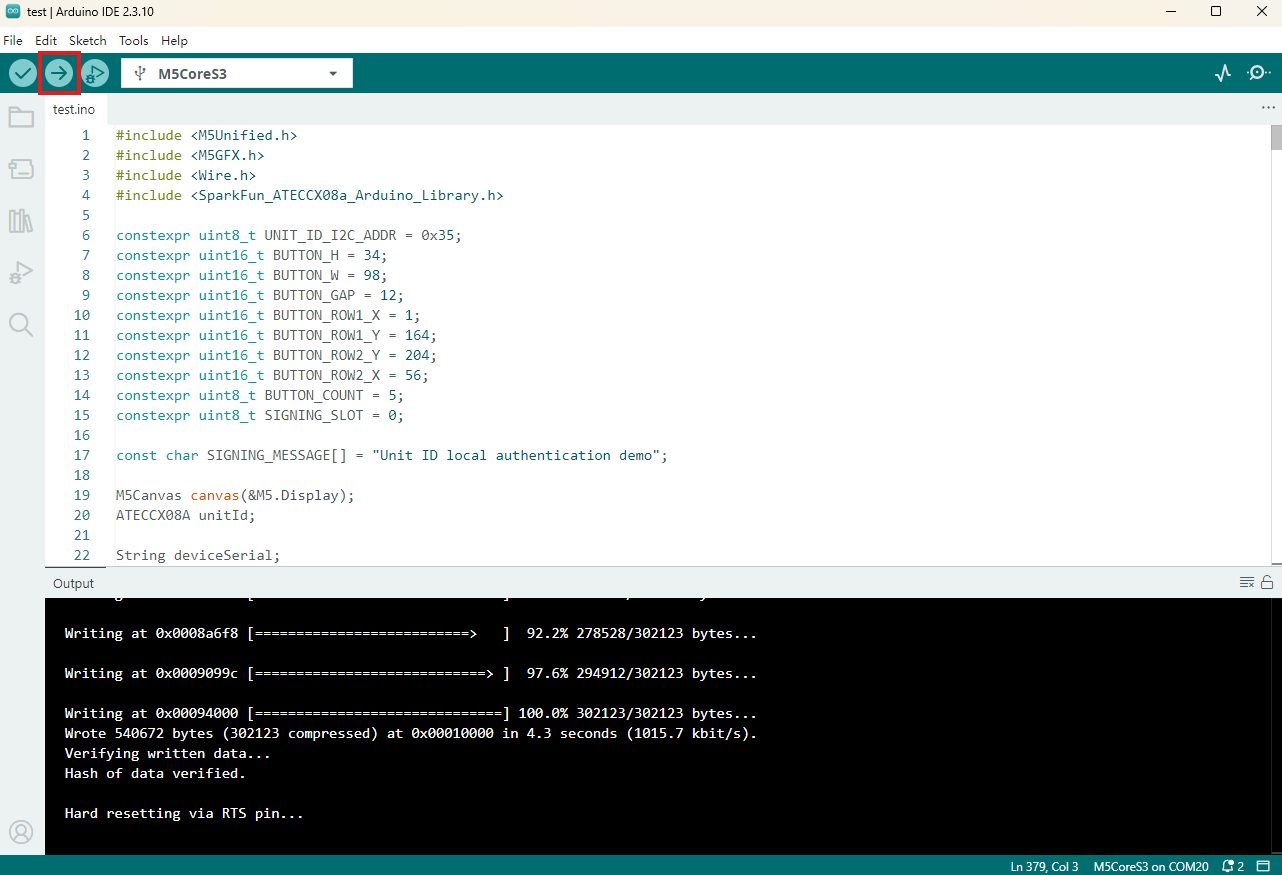
- Copy and paste the example code above into the project code area, select the device port (for details, refer to Compile and Upload), and click the compile and upload button in the upper-left corner of Arduino IDE. Wait for the program to compile and upload to the device.
5. Unit ID Security Function Test
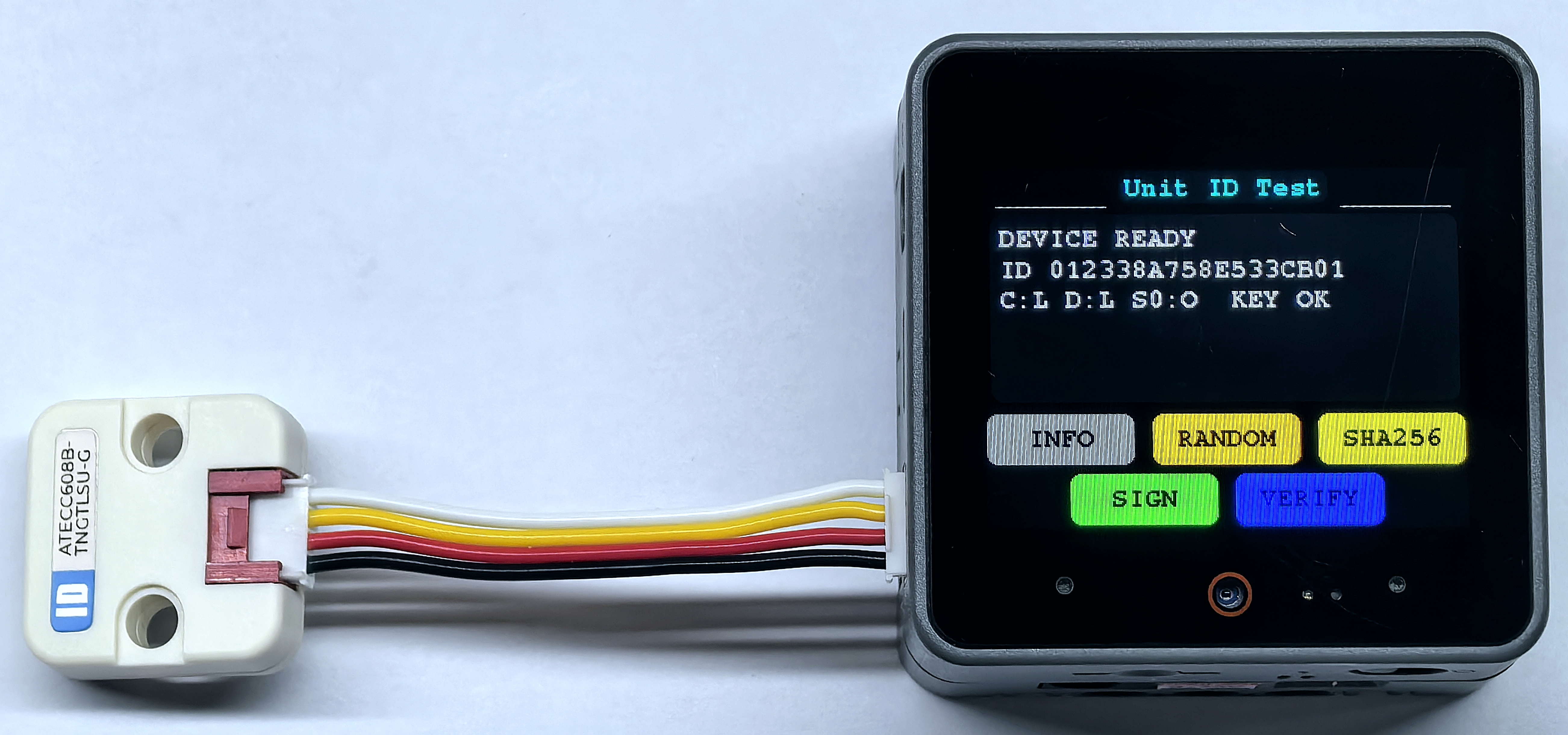
- After startup, the program automatically reads the Unit ID device ID, configuration-zone lock status, data-zone lock status, Slot 0 status, and public key information, then displays them on the CoreS3 screen and serial monitor.
- Touch
RANDOMto generate 32 bytes of hardware random data,SHA256to calculate a digest of the local test message,SIGNto create an ECDSA signature with Slot 0, orVERIFYto verify the most recent signature locally on the CoreS3 with the public key. - Complete
SIGNbefore usingVERIFY. If the Unit ID is not connected, the chip configuration does not support the requested operation, or the key state is unsuitable, the display shows the reason for the failure.
- Touch
Page Tools